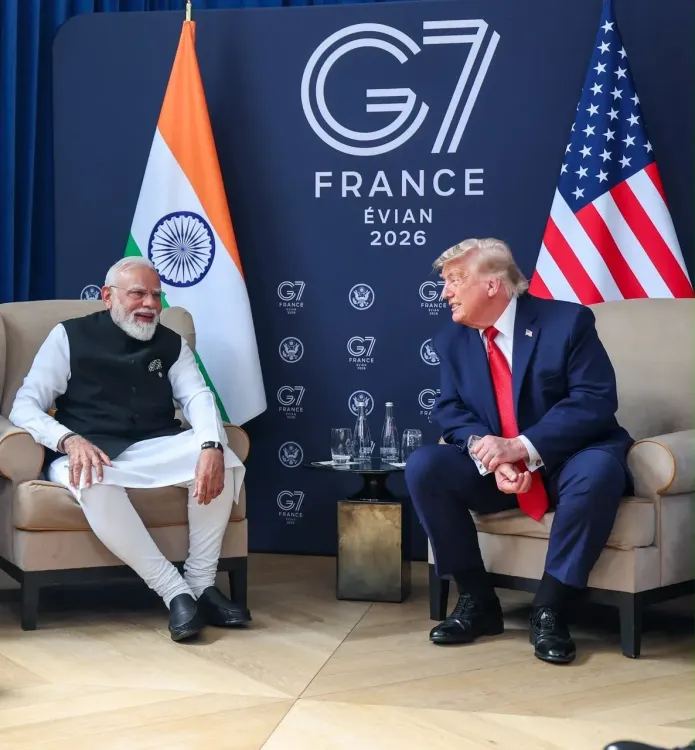
PM Modi Meets President Trump in Evian, Reviews Bilateral Ties
Synopsis
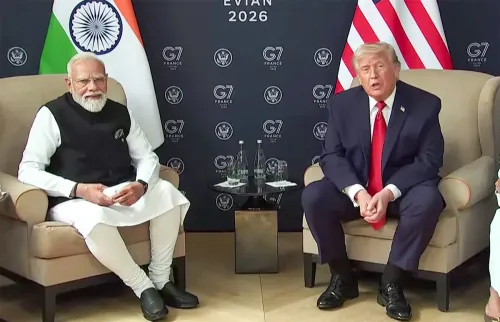
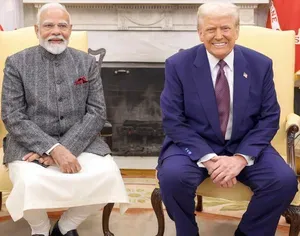
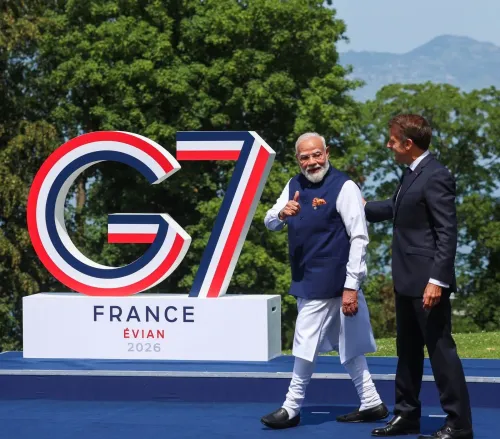
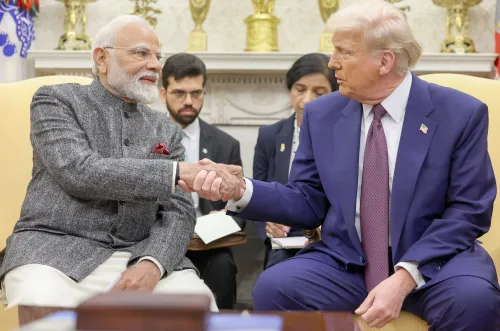
Prime Minister Narendra Modi met US President Donald Trump in Evian on June 17, 2026, reviewing India-US cooperation across trade, energy, defence, and technology, while conveying India's appreciation for West Asia peace efforts.
Key Takeaways
PM Modi and President Trump met in Evian, France on June 17, 2026 .
The two leaders reviewed 'sustained progress' in bilateral cooperation across trade, energy, defence, technology , and people-to-people ties.
Modi conveyed India's appreciation for progress in efforts to restore peace and stability in West Asia .
India-US cumulative defence trade crossed $20 billion by 2023 , underpinned by foundational agreements COMCASA and BECA .
The meeting continues a pattern of informal leader-level reviews alongside formal institutional dialogues such as the India-US 2+2 Ministerial .
Follow-up outcomes on technology-sharing pacts and trade negotiations will be closely watched.
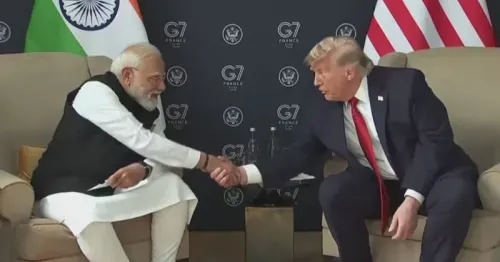
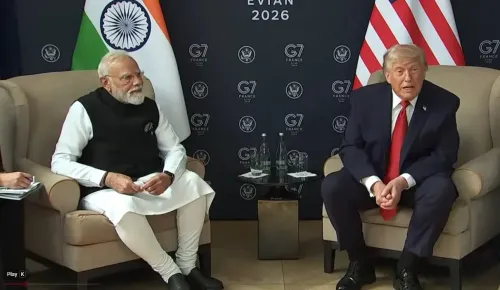
Prime Minister Narendra Modi met United States President Donald Trump in Evian, France on Wednesday, June 17, 2026, reviewing the full breadth of the India-US relationship spanning trade, energy, defence, technology, and people-to-people ties. Modi also conveyed India's appreciation for progress in efforts to restore peace and stability in West Asia.
Context
In a post on X, Prime Minister Modi described the meeting as an opportunity to review 'sustained progress in our bilateral cooperation in trade, energy, defence, technology and people-to-people ties.' He added that he 'conveyed India's appreciation on the progress in the efforts for restoring peace and stability in West Asia.' The Evian meeting represents an informal leader-level review — a format both governments have used alongside formal institutional dialogues to maintain momentum in the relationship.
Policy Backdrop
India-US ties have deepened steadily across successive administrations through layered institutional mechanisms. The India-US 2+2 Ministerial Dialogue, launched in 2018, institutionalised annual consultations on defence and security, while foundational defence agreements including COMCASA and BECA, signed between 2018 and 2020, enabled deeper interoperability between the two militaries. Cumulative India-US defence trade crossed $20 billion by 2023, reflecting the expanding strategic partnership.
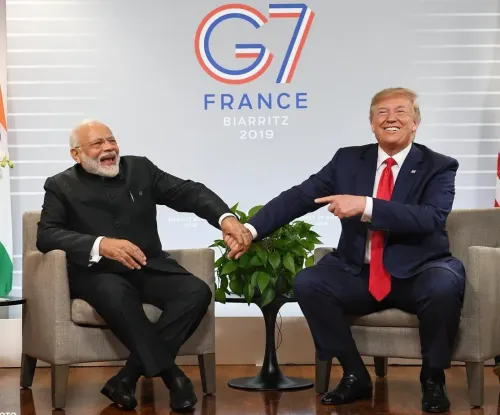
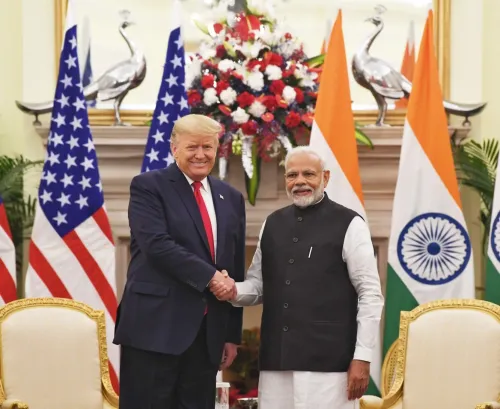
Earlier high-profile Modi-Trump engagements — including the 'Howdy Modi' rally in Houston in 2019 and the 'Namaste Trump' event in Ahmedabad in 2020 — underscored the people-to-people dimension of the relationship. The current Evian meeting continues this pattern of personal leader-level engagement reinforcing formal diplomatic architecture.
Stakeholders and Impact
The sectors highlighted by PM Modi — trade, energy, defence, and technology — span a wide range of stakeholders in both countries. Indian defence manufacturers and energy importers stand to benefit from continued cooperation, as does India's large technology sector, which maintains deep linkages with the United States. India's energy security calculus is also closely tied to stability in West Asia, a region that supplies a significant share of the country's crude oil and hosts millions of Indian diaspora workers.
The reference to West Asia signals that the two leaders engaged on regional security beyond the Indo-Pacific, reflecting India's long-standing interest in diplomatic stability in that neighbourhood. India has consistently advocated dialogue and de-escalation in the region across multiple international forums.
What's Next
Observers will watch for follow-up outcomes from any planned 2+2 Ministerial Dialogue or Quad leaders' summit that may build on the Evian discussions. Progress on pending technology-sharing agreements and ongoing bilateral trade negotiations will be closely tracked as tangible deliverables from the renewed leader-level engagement. The Evian meeting is likely to set the tone for the India-US diplomatic calendar in the months ahead.
Point of View
With personal leader-level engagement consistently used to inject momentum into formal diplomatic channels. Modi's explicit mention of West Asia alongside the standard trade-defence-technology axis signals that India is positioning itself as a stakeholder in broader regional security conversations, not merely an Indo-Pacific actor. The appreciation conveyed for West Asia peace efforts also suggests India is calibrating its public diplomacy to acknowledge US-led mediation efforts in the region. Together, these signals point to a relationship expanding in geographic and thematic scope well beyond its original strategic-partnership framework.
NationPress
18 Sept 2026
Frequently Asked Questions
Where did PM Modi meet President Trump in June 2026?
PM Modi met President Trump in Evian, France on June 17, 2026 , on the sidelines of an international gathering.
What did PM Modi and Trump discuss at the Evian meeting?
The two leaders reviewed progress in India-US cooperation on trade, energy, defence, technology , and people-to-people ties, and discussed efforts to restore peace and stability in West Asia .
What is India's interest in West Asia stability?
India has significant energy security interests in West Asia , which supplies a large share of its crude oil, and millions of Indian diaspora workers live and work in the region.
What is the India-US 2+2 Ministerial Dialogue?
The India-US 2+2 Ministerial Dialogue , launched in 2018 , is an annual forum involving the foreign and defence ministers of both countries to coordinate on security and strategic issues.
How large is India-US defence trade?
Cumulative India-US defence trade crossed $20 billion by 2023 , supported by foundational agreements including COMCASA and BECA signed between 2018 and 2020.