PM Modi, Trump Review India-US Strategic Partnership
Synopsis
Prime Minister Narendra Modi spoke with US President Donald Trump on September 30, 2026, reviewing bilateral cooperation in trade, defence, energy and critical technologies, and reaffirming commitment to the Comprehensive Global Strategic Partnership.
Key Takeaways
PM Modi and President Trump held a bilateral call on September 30, 2026 , described by Modi as 'productive'.
The two leaders reviewed cooperation across trade, defence, energy, and critical technologies .
Both sides agreed to maintain close engagement to advance the Comprehensive Global Strategic Partnership , the formal framework governing India-US ties since 2019-2020 .
The Initiative on Critical and Emerging Technology (iCET) , launched in 2023 , forms a key pillar of the technology cooperation strand discussed.
Modi's post was truncated mid-sentence, with fuller readouts expected from the Ministry of External Affairs and the White House .
The call is expected to feed into upcoming meetings such as the India-US 2+2 Ministerial dialogue.
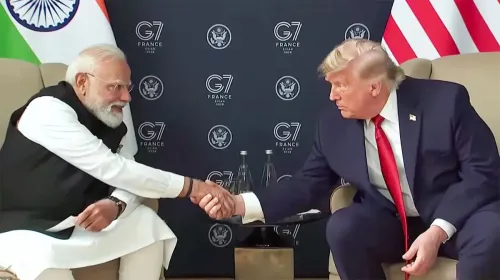
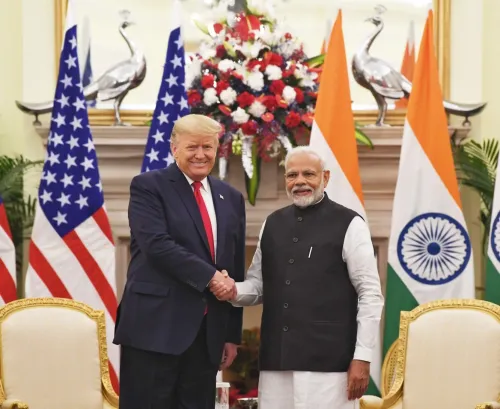
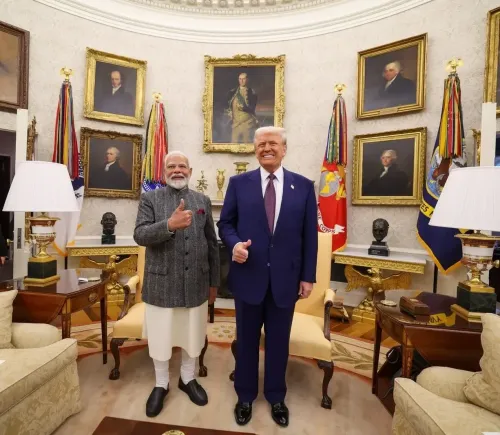
Two of the world's most consequential bilateral relationships just got a fresh check-in. Prime Minister Narendra Modi held a productive conversation with US President Donald Trump on Wednesday, September 30, 2026, reviewing the full sweep of India-US cooperation — from trade and defence to energy and critical technologies — and agreed to keep engagement close to push the Comprehensive Global Strategic Partnership forward.
What Modi and Trump covered in the call
Modi described the exchange as 'productive', with the two leaders going across the breadth of bilateral ties: trade, defence, energy, and critical technologies. The framing — a mutual review rather than a crisis call — signals steady-state diplomacy at the highest level, the kind of leader-to-leader touchpoint designed to sustain momentum between larger ministerial or summit meetings.
The post is notably truncated, with 'We also exchanged' cut off mid-sentence, suggesting additional content — likely views on a regional or global issue — that did not make it into the excerpt. The Ministry of External Affairs and the White House are expected to release fuller readouts.
The architecture behind the 'Comprehensive Global Strategic Partnership'
The label is not ceremonial. India and the United States elevated their relationship to a Comprehensive Global Strategic Partnership in 2019-2020, embedding cooperation across defence procurement, supply-chain security, and advanced technology into a formal bilateral framework. That architecture has since grown: in 2023, the two sides launched the Initiative on Critical and Emerging Technology (iCET), targeting collaboration in semiconductors, artificial intelligence, and other frontier domains.
Regular leader-level calls are the connective tissue that keeps that architecture alive. They signal political will to defence manufacturers, technology companies, and energy exporters on both sides — sectors that watch India-US summitry for cues on procurement cycles and joint-venture windows.
Where the relationship goes from here
The agreed commitment to 'maintain close engagement' points toward near-term follow-up. The bilateral calendar includes the India-US 2+2 Ministerial dialogue — the flagship format that brings together the two countries' foreign and defence ministers — as well as ongoing working groups under iCET. Any specific deliverables on trade tariffs, pending defence contracts, or technology transfer frameworks will likely surface in those forums.
For now, the call itself is the signal: at the leader level, the India-US partnership remains a live and tended relationship — not one left to drift between summits.
Point of View
This kind of high-frequency summit diplomacy is less ceremonial maintenance and more a live policy instrument. The truncated post, hinting at views exchanged on an unnamed topic, may point to a geopolitical dimension — regional security or multilateral coordination — that the full readout will clarify.
NationPress
30 Sept 2026
Frequently Asked Questions
What did PM Modi and President Trump discuss in their September 2026 call?
Prime Minister Modi described the conversation as 'productive', covering bilateral cooperation in trade, defence, energy, and critical technologies, with both leaders agreeing to sustain close engagement to advance the Comprehensive Global Strategic Partnership.
What is the India-US Comprehensive Global Strategic Partnership?
It is the formal framework governing India-US ties, established in 2019-2020, that covers defence, trade, energy, and technology cooperation. It provides the institutional scaffolding for initiatives like the iCET and the 2+2 Ministerial dialogue.
What is iCET and why does it matter for India-US talks?
The Initiative on Critical and Emerging Technology (iCET), launched in 2023, is a flagship India-US programme to deepen cooperation in semiconductors, artificial intelligence, and other advanced fields, making it central to the technology strand of any bilateral leader-level conversation.
Was this a phone call or an in-person meeting between Modi and Trump?
The exact format — call or meeting — was not specified in the available post excerpt; a full readout from the Ministry of External Affairs or the White House is expected to clarify the details.
What happens next after the Modi-Trump conversation?
Watch for announcements from the Ministry of External Affairs and the White House on specific deliverables, and the next scheduled India-US 2+2 Ministerial dialogue, which is the principal forum for translating leader-level signals into concrete outcomes.