Administrative data must be a national asset, says PM's Principal Secretary

Synopsis
India's top bureaucrat, speaking from the Prime Minister's office, has put data integration at the centre of governance reform — arguing that siloed ministry datasets are holding back policymaking, welfare delivery, and the country's AI ambitions. The call for a 'national data asset' framework at Statistics Day is a signal that a policy push may be imminent.
Key Takeaways
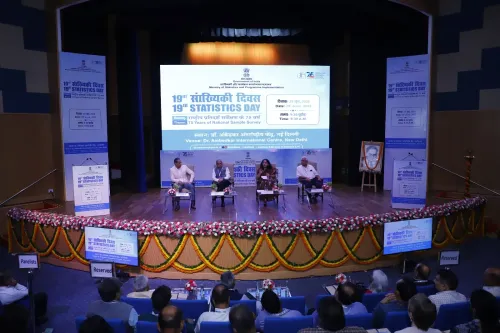
Mishra , Principal Secretary to the PM, addressed the 20th Statistics Day event in New Delhi on Monday, 29 June .
He called for transforming India's fragmented administrative data systems into a strategic national asset .
Mishra warned that valuable datasets on health, education, financial inclusion, and welfare remain siloed across ministries , limiting governance potential.
He stressed that data integration must be guided by privacy by design and existing legal frameworks to protect citizens' trust.
Mishra linked reliable, interoperable datasets to India's readiness for responsible AI adoption in public administration.
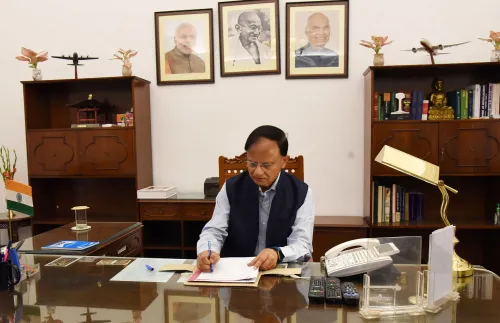
P.K. Mishra, Principal Secretary to the Prime Minister, on Monday called for transforming India's fragmented administrative data systems into a strategic national asset, arguing that better integration of government datasets can significantly improve governance, policymaking, and service delivery — while safeguarding privacy and security. Mishra made the remarks while addressing the 20th Statistics Day event in New Delhi.
The Core Argument
Mishra noted that India's rapid digital transformation has generated vast amounts of administrative data through government programmes, regulatory institutions, and public service delivery mechanisms. However, he pointed out that much of this information remains siloed within individual ministries and departments, preventing its effective use at scale.
'These datasets contain valuable insights on economic activity, social development, infrastructure creation, financial inclusion, health, education and welfare delivery. Despite their richness and scale, much of this data remains fragmented across ministries, departments and organisations, limiting its full potential for governance and policymaking,' he said.
From Byproduct to Strategic Resource
Mishra was emphatic that administrative data should no longer be treated as a mere byproduct of routine departmental processes. 'Instead such information must evolve into a strategic national resource that can help bridge critical data gaps, strengthen policy design and improve the targeting of government schemes,' he said.
He added that better use of administrative datasets could enhance programme implementation and enable more efficient delivery of public services — a direct pitch for cross-ministerial data sharing that India's governance architecture has historically resisted.
Privacy and Security Guardrails
Even as he advocated for greater data integration, Mishra cautioned that efforts to promote data sharing and interoperability must not compromise citizens' trust. He underscored the importance of maintaining privacy, security, and confidentiality while expanding data integration across government agencies.
According to him, principles such as privacy by design and adherence to existing legal and policy frameworks should guide all initiatives aimed at improving data interoperability — a nod to India's evolving data protection landscape.
Link to Artificial Intelligence
Mishra also connected the push for trusted and interoperable data systems with India's growing ambitions in artificial intelligence. He said reliable datasets would serve as the foundation for the responsible and effective adoption of AI in governance and public administration — signalling that data integration is not merely a statistical exercise but a prerequisite for the country's AI-readiness.
What This Signals
The remarks from the Prime Minister's office at a high-profile statistics event carry policy weight. This comes amid India's broader push to leverage its digital public infrastructure — including Aadhaar, DigiLocker, and the Unified Payments Interface (UPI) — as building blocks for smarter governance. The call for a national data asset framework is likely to inform upcoming policy discussions on data governance architecture.
Point of View
And individual ministries have strong institutional incentives to guard their datasets. The reference to 'privacy by design' is welcome, but without a binding legal architecture — India's Digital Personal Data Protection Act is still being operationalised — the framework risks remaining aspirational. The AI angle is the most consequential subtext: if India's AI-in-government push is to be credible, the data plumbing has to be fixed first, and that requires political will beyond a Statistics Day speech.
NationPress
28 Sept 2026
Frequently Asked Questions
What did PM's Principal Secretary P.K. Mishra say at Statistics Day 2025?
P.K. Mishra called for transforming India's fragmented administrative data systems into a strategic national asset, arguing that siloed ministry datasets limit governance, policymaking, and welfare delivery. He made these remarks at the 20th Statistics Day event in New Delhi on 29 June.
Why does administrative data integration matter for India?
Administrative data generated through government programmes holds insights on economic activity, health, education, and financial inclusion. Better integration across ministries can improve policy targeting, programme implementation, and public service delivery — but currently this data remains fragmented and underutilised.
How does data integration connect to India's AI ambitions?
Mishra explicitly linked trusted and interoperable data systems to India's AI readiness, saying reliable datasets are the foundation for responsible AI adoption in governance and public administration. Without unified data infrastructure, AI applications in government cannot be effectively deployed.
What privacy safeguards did Mishra emphasise?
Mishra stressed that data sharing and interoperability initiatives must not compromise citizens' trust. He called for adherence to principles such as privacy by design and existing legal and policy frameworks to ensure security and confidentiality are maintained throughout data integration efforts.
What is Statistics Day and why is it significant?
Statistics Day is observed annually in India to promote the use of statistics in economic planning and policy development. The 20th edition, addressed by the PM's Principal Secretary, signals the government's intent to elevate data governance as a national priority.