PoK protests deepen Pakistan's Kashmir crisis, J&K comparisons mount

Synopsis
As the JAAC-led protest movement in PoK refuses to die down, demonstrators are doing something Pakistan finds harder to counter than any foreign policy manoeuvre: holding up a mirror to Jammu and Kashmir's post-Article 370 development and asking why their own region lags so far behind. The numbers — 2,312 hospitals vs 23, ₹33,127 crore vs ₹60 crore in allocations — are making Islamabad's narrative management increasingly untenable.
Key Takeaways
The JAAC -led protest movement in Pakistan-occupied Kashmir (PoK) is drawing direct comparisons with development and governance in Jammu and Kashmir .
J&K has 2,312 government hospitals providing free care; PoK has just 23 such facilities.
Development allocations stand at ₹33,127 crore for J&K versus ₹60 crore for PoK , according to officials.
PoK generates approximately 3,500 MW of hydropower but officials allege most is diverted to Pakistan's national grid, causing chronic blackouts.
A 2022 visit to PoK by US Congresswoman Ilhan Omar , later revealed to be fully government-sponsored, illustrates Pakistan's past narrative strategy — one experts say will be harder to repeat.
Experts say Islamabad is unlikely to address core grievances soon and may instead attempt to redirect international attention toward J&K .
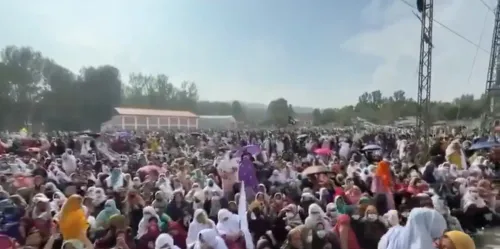
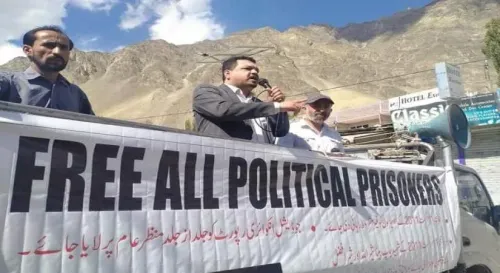
The crisis in Pakistan-occupied Kashmir (PoK) is intensifying, with protests led by the Joint Awami Action Committee (JAAC) drawing both regional and international attention — and putting Islamabad firmly on the defensive. What has made the situation particularly uncomfortable for the Pakistani establishment is that demonstrators are openly drawing comparisons between living conditions in Jammu and Kashmir (J&K) and those in PoK, a contrast that officials say is increasingly difficult to suppress.
Pakistan's Narrative Management Under Scrutiny
In the past, Pakistan attempted to shape international opinion on Kashmir by facilitating visits from foreign political figures who would amplify its position. A notable instance came in 2022, when US Congresswoman Ilhan Omar undertook a four-day visit to PoK during a period of growing unrest. During the trip, she endorsed Pakistan's stance on the dispute, stating: 'On the question of Kashmir, we held a hearing in the Foreign Affairs Committee of Congress to look at the reports of human rights violations.' She also backed Islamabad's call for third-party intervention following talks with the Prime Minister and Minister of State for Foreign Affairs.
The visit later came under scrutiny after annual financial disclosures filed before the US House of Representatives revealed that Omar's trip had been fully sponsored by the Pakistani government, covering travel, accommodation, and hospitality expenses.
Why This Time Is Different, According to Officials
Despite those past efforts, officials believe that replicating such a strategy would be far harder today. The JAAC movement has shown no signs of abating and has succeeded in pushing PoK's governance grievances onto the international stage. According to officials, there is 'far greater awareness today than there was in 2022.' They attribute part of this shift to the changes in Jammu and Kashmir following the abrogation of Article 370 by the Narendra Modi government in 2019, citing expanded development, increased tourism, and a reportedly significant reduction in terrorism-related incidents.
The Development Divide: J&K vs PoK
Officials point to a stark infrastructure and services gap between the two sides of the Line of Control. According to figures cited by officials, J&K has 2,312 government hospitals providing free medical care, compared to just 23 such facilities in PoK. On medical education, J&K has 10 medical colleges against PoK's three. In higher education, J&K hosts 35 universities versus PoK's six. On connectivity, J&K is served by four airports with railway links, while PoK has only two airports. Development expenditure figures cited show J&K receiving an allocation of ₹33,127 crore compared to ₹60 crore for PoK.
Power Diversion and Recurring Blackouts
PoK hosts several major hydropower projects generating around 3,500 MW of electricity, against a regional requirement estimated at 400 MW. Officials allege that the bulk of this electricity is diverted to Pakistan's national grid, leaving residents to endure prolonged blackouts and purchase power at higher rates. Local accounts suggest outages can last several hours each day, a grievance that has fuelled much of the current unrest.
What Comes Next
Observers tracking the situation describe it as one of the most serious governance challenges Pakistan has faced in PoK in recent memory. Experts say Islamabad is unlikely to address the underlying concerns in the near term and may instead attempt to internationalise the Kashmir issue — encouraging foreign voices to highlight alleged concerns in J&K while deflecting scrutiny from the unrest at home. Whether that strategy can succeed against the backdrop of a sustained, visible protest movement remains, according to analysts, an open question.
Point of View
Without New Delhi needing to orchestrate the conversation. Pakistan's traditional counter, sponsoring foreign visits to amplify its position, looks threadbare after the Ilhan Omar disclosure. The deeper problem for Islamabad is structural: PoK's hydropower surplus being exported to the national grid while the region endures daily blackouts is not a messaging problem — it is a governance one, and no amount of narrative management resolves it.
NationPress
17 Sept 2026
Frequently Asked Questions
What is the JAAC and why is it protesting in PoK?
The Joint Awami Action Committee (JAAC) is a civil society-led movement in Pakistan-occupied Kashmir agitating over long-standing grievances including power shortages, high electricity costs, and the diversion of locally generated hydropower to Pakistan's national grid. The movement has grown into a broader debate about governance, development, and living standards in the region.
How does development in J&K compare to PoK according to officials?
According to officials, Jammu and Kashmir has 2,312 government hospitals, 35 universities, 10 medical colleges, and four airports with railway connectivity, against PoK's 23 hospitals, 6 universities, 3 medical colleges, and 2 airports. Development allocations stand at ₹33,127 crore for J&K versus ₹60 crore for PoK. These figures are cited by Indian officials and have not been independently verified.
What was the controversy surrounding Ilhan Omar's 2022 visit to PoK?
US Congresswoman Ilhan Omar visited PoK in 2022 and endorsed Pakistan's position on Kashmir, calling for third-party intervention. Annual financial disclosures filed before the US House of Representatives subsequently revealed that the trip was fully sponsored by the Pakistani government , covering travel, accommodation, and hospitality — raising questions about the independence of her assessment.
Why is Pakistan finding it harder to manage the PoK narrative now?
Officials say the JAAC movement has sustained momentum and succeeded in placing PoK's governance failures in the international spotlight. Experts argue that with greater global awareness of post- Article 370 changes in J&K since 2019 , Pakistan's strategy of facilitating foreign visits to amplify its Kashmir narrative faces far more scrutiny than it did previously.
What is the electricity situation in PoK?
PoK hosts hydropower projects generating approximately 3,500 MW of electricity against a regional requirement of around 400 MW . Officials allege that the surplus is diverted to Pakistan's national grid, leaving residents to endure prolonged daily blackouts and purchase power at elevated rates — a central grievance driving the current protests.