What Impact Will 'The Kerala Story 2' Trailer Have on Politics?
Synopsis
The trailer for the controversial sequel 'The Kerala Story 2: Goes Beyond' has ignited a political firestorm in Kerala, with leaders across party lines denouncing its themes. As accusations of propaganda and attempts to destabilize the state's secular values fly, the upcoming elections loom large, making this a pivotal moment in Kerala's political landscape.
Key Takeaways
Release of 'The Kerala Story 2' trailer stirs political controversy.
Leaders criticize the film for promoting divisive narratives.
BJP defends the film as a matter of free speech.
Debate highlights issues of censorship and artistic freedom.
Political ramifications loom with upcoming elections.
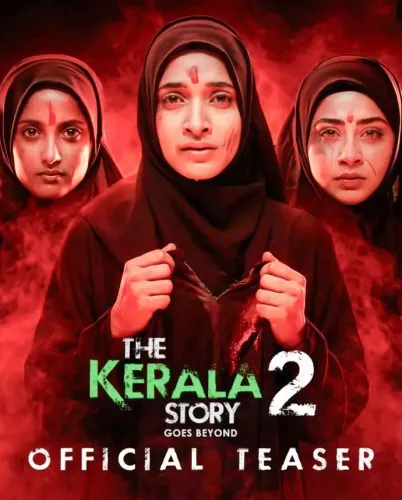
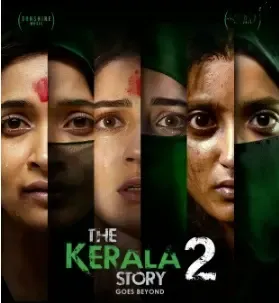
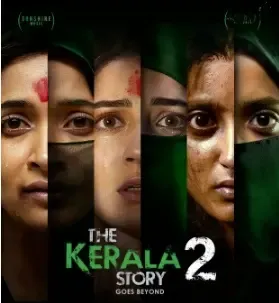
Thiruvananthapuram, Feb 19 (NationPress) The unveiling of the trailer for the contentious Hindi movie 'The Kerala Story 2: Goes Beyond', a sequel to 'The Kerala Story', has sparked intense political reactions throughout the country, especially in Kerala, where leaders from various parties are exchanging accusations regarding its content and purpose.
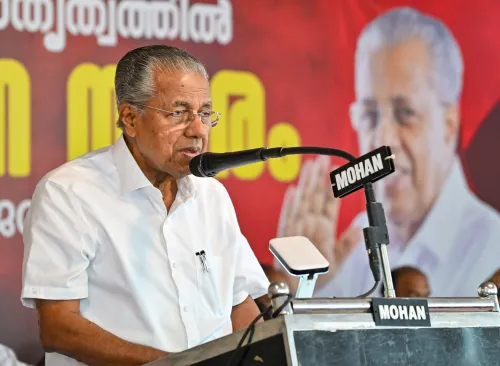
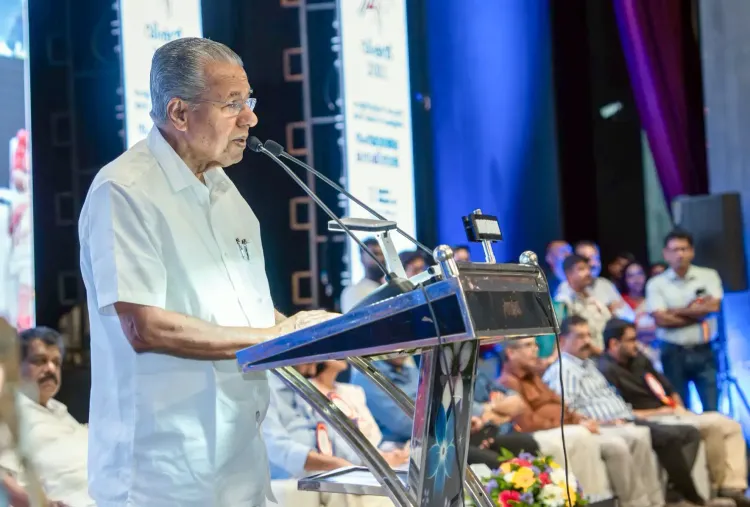
Chief Minister Pinarayi Vijayan condemned the film as a calculated effort to incite hatred against the state and to erode its secular principles.
He asserted that the social fabric of Kerala, which is founded on communal harmony and democratic values, cannot be compromised by what he describes as propaganda-driven narratives.
The Chief Minister cautioned that systematic attempts are being made to tarnish Kerala’s image both nationally and internationally through misleading information and divisive themes.
Previously, State Minister for Culture and Fisheries Saji Cherian remarked that just as the first installment was rejected by the populace, the sequel would likely experience the same backlash.
He claimed that entities envious of Kerala’s secular reputation and developmental successes are behind this project.
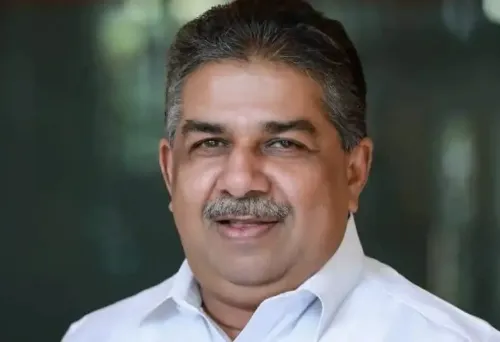
Congress leader K.C. Venugopal also launched a vigorous critique, arguing that fabricated narratives cannot undermine Kerala’s secular ethos.
In a post on social media, he accused the film of aiming to foster communal divisions and suggested that a broader Sangh Parivar agenda is involved.
In response to the backlash, BJP president Rajeev Chandrasekhar defended the film, emphasizing the need to uphold freedom of expression.
The BJP contended that “love jihad” is a real issue, not a mere fictional concept, and stated that those who wish to view the film are free to do so.
Chandrasekhar added, “Individuals, including the Chief Minister, are equally entitled to abstain from watching it if they disagree with its themes.”
As the debate heats up, the controversy has reignited discussions concerning censorship, artistic freedom, and political accountability.
With social media campaigns escalating nationwide over the contentious film, this situation highlights how cinema continues to serve as a flashpoint in the state’s polarized political landscape, particularly with crucial elections looming on the horizon.
Point of View
It's clear that the release of 'The Kerala Story 2' has not only reignited long-standing tensions within the state's political framework but also raises pressing questions about artistic freedom and political accountability. The reactions highlight the ongoing struggle for narrative control in Kerala's diverse society, a battle that continues to shape its political discourse.
NationPress
26 Sept 2026
Frequently Asked Questions
What is 'The Kerala Story 2' about?
It is a sequel to the controversial film 'The Kerala Story', focusing on themes that have sparked political debate.
Why is the trailer controversial?
The trailer has been criticized for allegedly spreading propaganda that undermines Kerala's secular values.
What have political leaders said about the film?
Political leaders, including the Chief Minister, have called the film an attempt to incite communal hatred.
What is the BJP's stance on the film?
The BJP has defended the film, emphasizing the importance of freedom of expression.
How is social media reacting to the trailer?
Social media campaigns are intensifying, reflecting the polarized political climate surrounding the film.