Pradhan Receives IIT Madras Handbook on Sri Ramayantram Replica
Synopsis
Union Education Minister Dharmendra Pradhan received a handbook on the Sri Ramayantram from IIT Madras Director Prof. V. Kamakoti, celebrating the institute's interdisciplinary feat of re-manufacturing a 3D replica of the ancient Kanchipuram yantra — a milestone for India's Indian Knowledge Systems policy agenda.
Key Takeaways
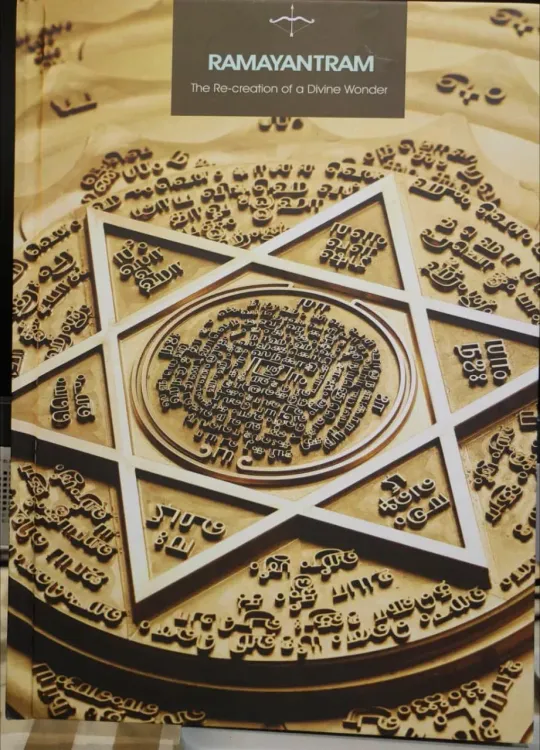
IIT Madras successfully re-manufactured an exact three-dimensional replica of the Sri Ramayantram originally installed at Kanchipuram .
The project integrated Material Science , Mechanical Engineering , Engineering Design , and Humanities in a single interdisciplinary effort.
The work was guided by Jagadguru Sri Sankara Vijayendra Saraswati Swamigal of the Sri Kanchi Kamakoti Peetam .
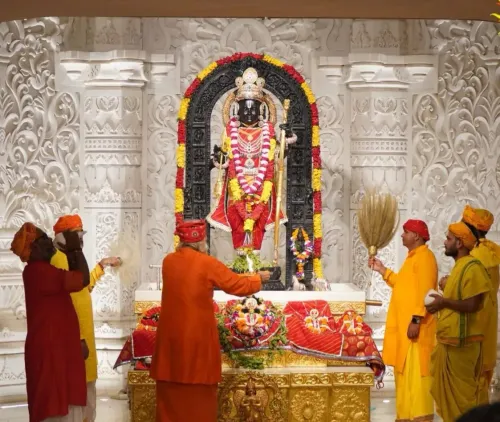
A two-dimensional version of the Sri Ramayantram was separately installed at the Shri Ram Janmabhoomi Mandir in Ayodhya in the presence of the President of India .
The initiative aligns with the Indian Knowledge Systems framework under NEP 2020 , which mandates integration of ancient knowledge into higher education research.
Minister Pradhan commended Prof.
Kamakoti and the IIT Madras team, signalling continued ministerial support for heritage-engineering projects at premier institutions.
Union Education Minister Dharmendra Pradhan on Friday, June 19, 2026, received a handbook on the Sri Ramayantram from IIT Madras Director Prof. V. Kamakoti, marking the occasion of the Yantra Pratishtai of the Sri Ramayantram at the Sri Jalakanteswarar Temple on the IIT Madras campus. The handbook documents the institute's achievement in re-manufacturing an exact three-dimensional replica of the Sri Ramayantram originally installed at Kanchipuram.
Context
The Sri Ramayantram project is an interdisciplinary undertaking at IIT Madras that brought together researchers from Material Science, Mechanical Engineering, Engineering Design, and Humanities to recreate the ancient yantra with scientific precision. Minister Pradhan described the effort as 'a powerful testament to the transformative potential of Indian Knowledge Systems when examined through the lens of modern science, research and innovation.'
The project was carried out under the guidance of His Holiness Jagadguru Sri Sankara Vijayendra Saraswati Swamigal of the Sri Kanchi Kamakoti Peetam, one of India's most prominent Shaiva religious institutions. Prof. Kamakoti, who has overseen the institute's growing engagement with heritage-linked engineering, presented the handbook to the Minister at the campus ceremony.
Policy Backdrop
The Ramayantram project sits squarely within the Indian Knowledge Systems (IKS) framework promoted under the National Education Policy 2020, which directed higher education institutions to integrate ancient Indian knowledge traditions into curricula and research. Since the early 2020s, several IITs and central universities have launched projects applying engineering disciplines to traditional artifacts, texts, and practices.
Minister Pradhan has been a consistent advocate for the IKS agenda, frequently positioning it as a bridge between India's civilisational heritage and its ambitions in science and technology. His reception of the handbook and public commendation of the team signals continued ministerial backing for such interdisciplinary initiatives at premier technical institutions.
Significance of the Replica and Ayodhya Connection
Beyond the campus installation, a two-dimensional version of the Sri Ramayantram was installed at the Shri Ram Janmabhoomi Mandir in Ayodhya in the presence of the President of India, lending the project national visibility and symbolic weight. The dual installations — one at a heritage site in Tamil Nadu and one at the newly consecrated temple in Uttar Pradesh — underscore the project's pan-India cultural reach.
Pradhan noted that 'such initiatives reaffirm the vitality of Indian Knowledge Systems and demonstrate how ancient wisdom can be preserved, studied and revitalised through modern science and engineering.' The three-dimensional replica at Kanchipuram and its documentation in the handbook are intended to serve as models for future heritage-engineering collaborations.
What's Next
The Ministry of Education is expected to expand dedicated IKS research centres to additional IITs and central universities, with heritage-engineering projects of this nature likely to feature in future policy announcements and budget allocations. The IIT Madras model — combining material science with humanistic scholarship under religious institutional guidance — could become a template for similar efforts at other campuses.
As India's higher education system deepens its engagement with the IKS framework, projects that produce tangible, documented artifacts like the Sri Ramayantram replica are likely to attract both academic interest and government funding, reinforcing the policy argument that ancient knowledge and modern engineering are complementary rather than competing domains.
Point of View
Minister Pradhan reinforces the government's narrative that Indian Knowledge Systems are not peripheral to modern science but central to it. The dual installation at Kanchipuram and Ayodhya also gives the project a symbolic geography that spans Tamil Nadu and Uttar Pradesh, broadening its political resonance. Expect this model to be cited as a template when the next round of IKS research centre approvals is announced.
NationPress
19 Sept 2026
Frequently Asked Questions
What is the Sri Ramayantram that IIT Madras recreated?
The Sri Ramayantram is an ancient yantra — a geometric ritual instrument — originally installed at a temple in Kanchipuram. IIT Madras re-manufactured an exact three-dimensional replica using modern material science and mechanical engineering, and installed it at the Sri Jalakanteswarar Temple on its campus.
Why did Dharmendra Pradhan visit IIT Madras?
Minister Pradhan received a handbook on the Sri Ramayantram project from IIT Madras Director Prof. V. Kamakoti on the occasion of the Yantra Pratishtai ceremony at the Sri Jalakanteswarar Temple on the IIT Madras campus on June 19, 2026.
What is the Indian Knowledge Systems policy in NEP 2020?
The National Education Policy 2020 directed higher education institutions to incorporate Indian Knowledge Systems — the study and revival of ancient Indian knowledge traditions — into their curricula and research programmes, encouraging interdisciplinary projects that connect classical learning with modern science.
Was a Ramayantram also installed at Ayodhya's Ram temple?
Yes. A two-dimensional version of the Sri Ramayantram was installed at the Shri Ram Janmabhoomi Mandir in Ayodhya in the presence of the President of India, extending the project's reach beyond the IIT Madras campus.
Who guided the IIT Madras Ramayantram project?
The project was undertaken under the guidance of His Holiness Jagadguru Sri Sankara Vijayendra Saraswati Swamigal of the Sri Kanchi Kamakoti Peetam, with Prof. V. Kamakoti, Director of IIT Madras, leading the institutional effort.