Pradhan Hails 52 Indian Institutions in QS World Rankings
Synopsis
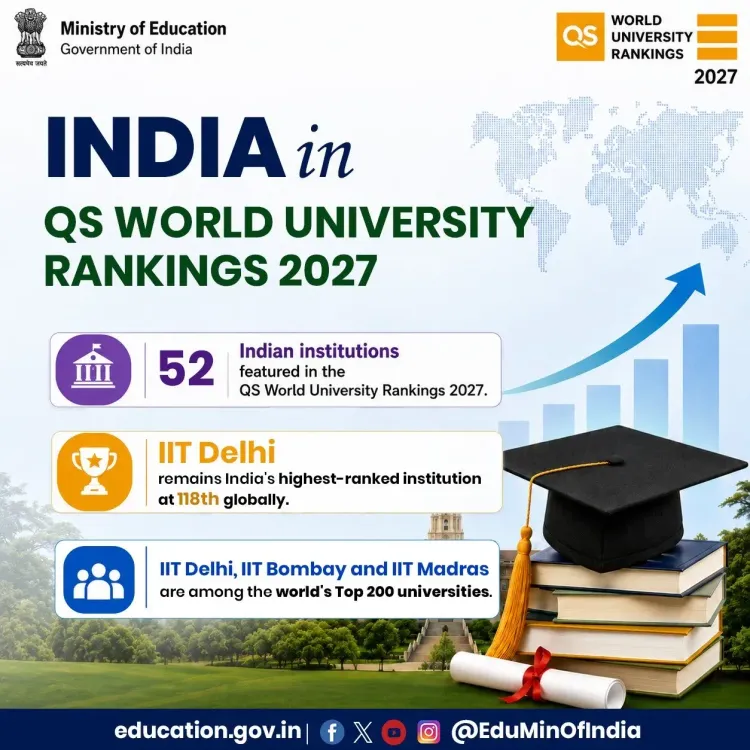
Union Education Minister Dharmendra Pradhan has welcomed the inclusion of 52 Indian institutions in the QS World University Rankings, with 13 among the global top 550, citing NEP 2020 reforms and the Viksit Bharat 2047 vision as drivers of India's growing academic global footprint.
Key Takeaways
52 Indian institutions have been featured in the latest QS World University Rankings .
13 Indian universities have secured a place among the global top 550 in the rankings.
Union Education Minister Dharmendra Pradhan attributed the gains to reforms under NEP 2020 and the vision of PM Narendra Modi .
The achievement is framed as integral to the Viksit Bharat 2047 goal of developed-nation status by India's independence centenary.
Pending NEP 2020 milestones — including foreign university campuses and four-year undergraduate programmes — are expected to shape future ranking outcomes.
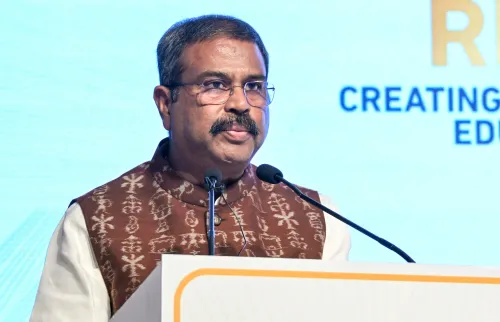
Union Education Minister Dharmendra Pradhan on Thursday, 18 June 2026, lauded the performance of Indian universities in the latest QS World University Rankings, noting that 52 Indian institutions have been featured and 13 have secured a place among the global top 550.
Context
In his post on X, Pradhan described the result as a reflection of 'the growing strength of our higher education ecosystem and the commitment of our institutions, faculty, researchers and students towards excellence.' He framed the achievement within India's broader ambition of becoming a 'global hub of knowledge and innovation.'
The QS World University Rankings, published annually by Quacquarelli Symonds, evaluate institutions on metrics including academic reputation, employer reputation, and research output. India's presence in the rankings has expanded steadily over the past decade, with each successive edition drawing official acknowledgement from the government.
Policy Backdrop
The minister explicitly linked the rankings performance to the National Education Policy 2020 (NEP 2020), the overarching reform framework approved in July 2020 that replaced India's 1986 education policy. NEP 2020 introduced targets for gross enrolment ratio, multidisciplinary institutions, and global competitiveness, and has been the central legislative plank of the current government's education agenda.
Pradhan also invoked the Viksit Bharat 2047 vision — the official long-term goal to achieve developed-nation status by India's independence centenary — stating that 'a robust and globally competitive higher education ecosystem is central to our resolve of building a Viksit Bharat by 2047.' The framing ties academic rankings directly to the government's macroeconomic and civilisational narrative.
Under NEP 2020, key pending milestones include the rollout of four-year undergraduate programmes across institutions and the operationalisation of foreign university campuses in India — both of which are expected to influence future ranking cycles.
Stakeholders and Impact
The institutions, faculty, and student communities across India's higher education sector are the primary beneficiaries of improved global standing. A stronger ranking profile can influence inbound international student mobility, research collaborations, and faculty recruitment — all priorities under the government's Study in India initiative.
For students, a widening pool of ranked Indian universities signals improving domestic options as an alternative to expensive overseas education. For researchers and faculty, institutional recognition in global indices can open doors to international grants and partnerships.
What's Next
The government's messaging is consistent with a broader pattern of anchoring education benchmarks to the 2047 development target, suggesting that ranking progress will continue to be highlighted as a policy deliverable. Subsequent editions of the QS and Times Higher Education rankings will serve as the next checkpoints for assessing whether the gains are sustained or accelerated.
With NEP 2020 implementation still unfolding — particularly on internationalisation and research funding — the trajectory of Indian institutions in global rankings will be a closely watched indicator of whether reform rhetoric is translating into measurable academic outcomes.
Point of View
The messaging serves a dual purpose: validating an ongoing policy investment and reinforcing the 2047 developed-nation narrative ahead of future electoral cycles. The consistency of this framing since the mid-2010s suggests it has become a durable feature of Indian education governance, regardless of which party holds office. The real test will be whether subsequent ranking cycles show acceleration rather than incremental improvement, particularly as NEP 2020's more ambitious structural changes — foreign campuses, research funding overhauls — begin to take effect.
NationPress
19 Sept 2026
Frequently Asked Questions
How many Indian universities are in the QS World University Rankings 2026?
According to Union Education Minister Dharmendra Pradhan, 52 Indian institutions have been featured in the latest QS World University Rankings, with 13 of them placing among the global top 550.
What is NEP 2020 and how does it relate to university rankings?
The National Education Policy 2020 is India's overarching higher education reform framework, approved in July 2020 , that replaced the 1986 policy. It introduced targets for gross enrolment, multidisciplinary learning, and global competitiveness — factors that directly influence performance in global rankings such as QS.
What is Viksit Bharat 2047?
Viksit Bharat 2047 is the Indian government's official long-term vision to achieve developed-nation status by 2047 , the centenary of India's independence. Education and research competitiveness are cited as central pillars of this goal.
What is the QS World University Rankings and who publishes it?
The QS World University Rankings is an annual global assessment of universities published by Quacquarelli Symonds . It evaluates institutions on academic reputation, employer reputation, faculty-to-student ratio, research citations, and international diversity metrics.
What is the Study in India initiative?
Study in India is a government initiative aimed at attracting international students to Indian universities by improving the quality, visibility, and global recognition of Indian higher education institutions.