Dharmendra Pradhan Calls on Global Envoys for Educational Collaboration
Synopsis
Union Education Minister Dharmendra Pradhan invites envoys from over 50 nations to enhance partnerships in India's thriving educational ecosystem, emphasizing innovation and collaboration for a brighter future.
Key Takeaways
Union Minister Dharmendra Pradhan emphasized collaboration with global envoys.
India's educational landscape is driven by innovation and quality.
The NEP 2020 aims for a transformative education system.
India seeks to become a trusted innovation partner in various fields.
International partnerships can enhance student mobility and research initiatives.
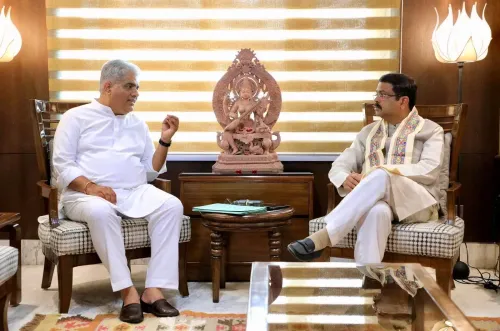
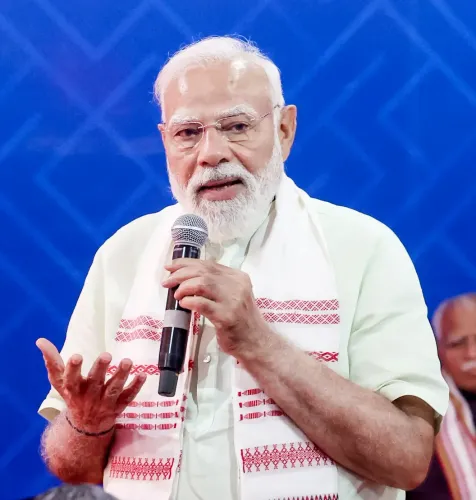
New Delhi, March 2 (NationPress) In a bid to highlight India's dynamic educational landscape, Union Education Minister Dharmendra Pradhan urged representatives from over 50 nations to strengthen ties with India's innovative and multidisciplinary educational framework.
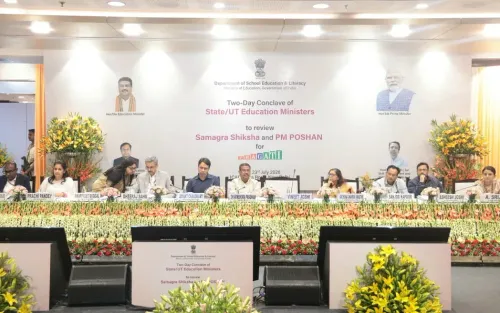
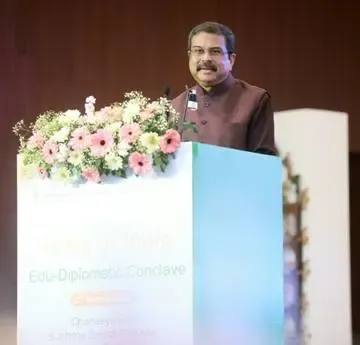
Addressing the Study in India Edu-Diplomatic Conclave 2026 hosted by the Ministry of Education at Sushma Swaraj Bhawan, Minister Pradhan emphasized that India remains a beacon in the global economy, providing vast opportunities for learning, research, and innovation.
Reflecting on Prime Minister Narendra Modi's aspiration for India to evolve into a developed nation by 2047, coinciding with the centenary of Independence, he discussed the significant reforms in India's education sector under the National Education Policy (NEP), 2020.
He noted the considerable progress made in the internationalization of education, emphasizing India's commitment to quality, innovation, and affordability.
The Minister pointed out that India's core strength lies in its vibrant knowledge ecosystem, its youthful demographic, and its rapidly growing economy.
Through NEP 2020 and the Study in India initiative, Minister Pradhan stated that India is broadening global opportunities for students, researchers, and institutions.
He mentioned that across fields such as artificial intelligence, biotechnology, and sustainable energy, India is positioning itself as a reliable partner for innovation, promoting a model for the Global South based on collaboration and shared knowledge.
Emphasizing the vital role of education as a lasting connection between societies amid uncertainty and rapid transformation, Minister Pradhan expressed India's desire to forge strong educational ties with partner nations.
He encouraged diplomats to engage with India's expanding, innovation-focused, multidisciplinary, and accessible educational framework.
Higher Education Secretary Vineet Joshi remarked that the NEP 2020 has provided a clear roadmap for reforms in higher education, particularly in enhancing multidisciplinary education, integrating skills training, and boosting international collaboration.
He added that Indian institutions are increasingly engaging globally through joint and dual programs, and leading universities are extending their international presence.
Joshi highlighted that the University Grants Commission (UGC) has implemented a transparent and efficient regulatory framework for foreign universities to establish campuses in India, with applications from top institutions in Australia, Italy, the UK, and the USA being processed swiftly.
The discussions at the conclave emphasized India's advancing higher education landscape and explored collaborative opportunities, including student mobility, joint initiatives, research partnerships, and campus establishments.
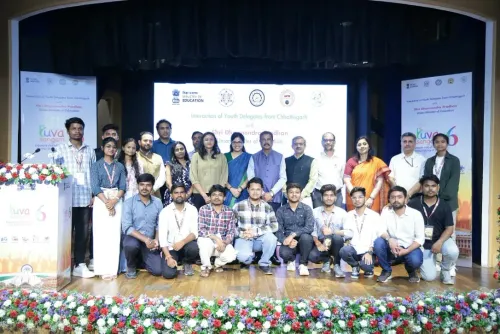
The Study in India Edu-Diplomatic Conclave 2026 served as a dedicated platform to enhance India's diplomatic ties in education by inviting students from partner nations to pursue higher education and short-term programs in India, fostering institutional collaborations, and encouraging prestigious universities to set up campuses in India.
Point of View
India aims to foster educational partnerships that align with its National Education Policy and broader development goals.
NationPress
5 Oct 2026
Frequently Asked Questions
What is the Study in India initiative?
The Study in India initiative aims to attract international students to Indian universities by enhancing educational opportunities and fostering global partnerships.
Who attended the Edu-Diplomatic Conclave?
The conclave was attended by envoys from over 50 countries, as well as Indian education officials and representatives from various institutions.
What opportunities does India offer for international students?
India offers diverse opportunities in research, innovation, and quality education, making it an attractive destination for international students.
How can foreign universities collaborate with Indian institutions?
Foreign universities can collaborate through joint programs, research partnerships, and by establishing campuses in India, facilitated by the UGC's framework.