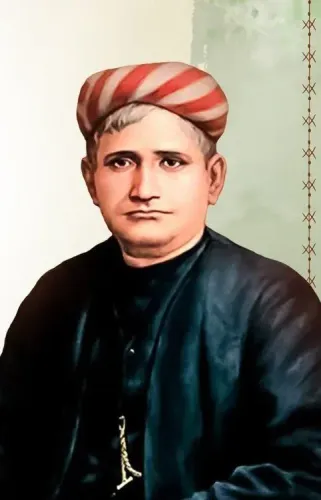
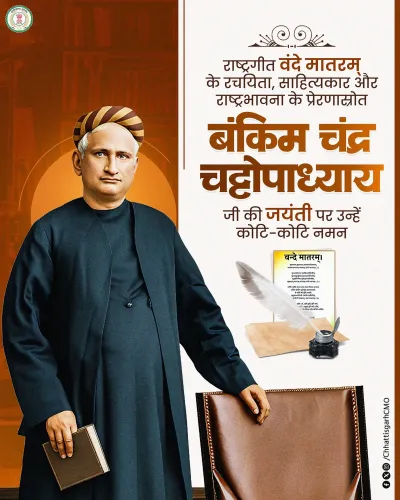
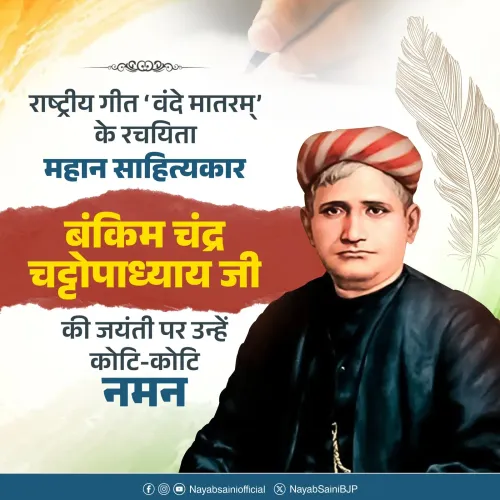
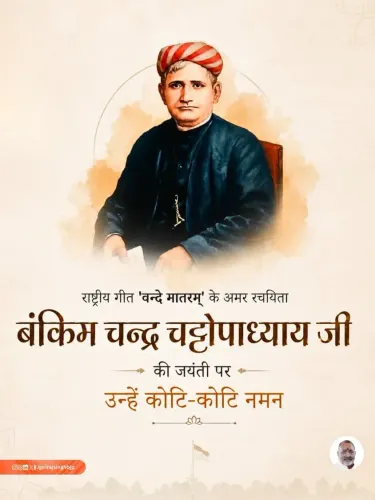
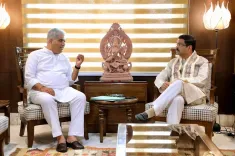
Pradhan Pays Tribute to Bankim Chandra on Birth Anniversary
Synopsis
Union Education Minister Dharmendra Pradhan on 27 June 2026 honoured Bankim Chandra Chattopadhyay, composer of India's national song Vande Mataram, on his birth anniversary, calling his writings an enduring source of patriotic inspiration for Indian youth and connecting the tribute to NEP 2020's cultural-education agenda.
Key Takeaways
Union Education Minister Dharmendra Pradhan paid tribute to Bankim Chandra Chattopadhyay on his birth anniversary on 27 June 2026 .
Bankim Chandra Chattopadhyay , born in 1838 , composed Vande Mataram , which was first published in his 1882 novel Anandamath .
Vande Mataram was formally adopted as India's national song by the Constituent Assembly in 1950 .
Pradhan described Chattopadhyay's words as an 'invaluable source of inspiration for youth and patriots' and credited him with strengthening Indian cultural identity.
The tribute aligns with the National Education Policy 2020 's emphasis on integrating freedom-struggle icons into school curricula to foster national consciousness.
Potential follow-through could include NCERT textbook updates or state education circulars expanding coverage of Chattopadhyay's writings.
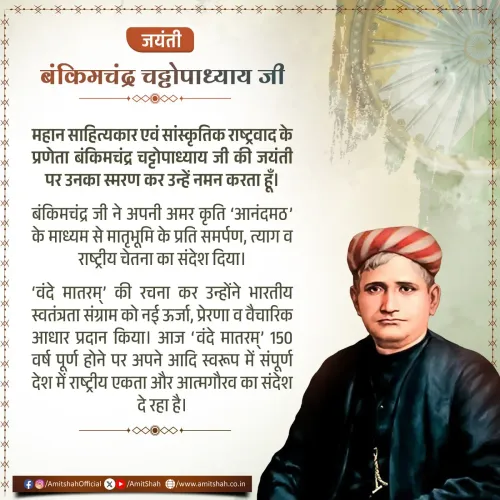
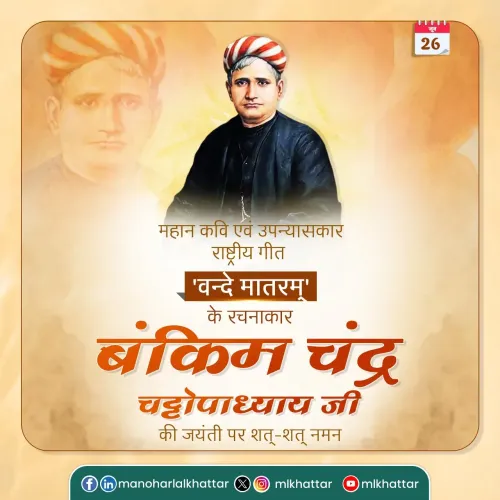
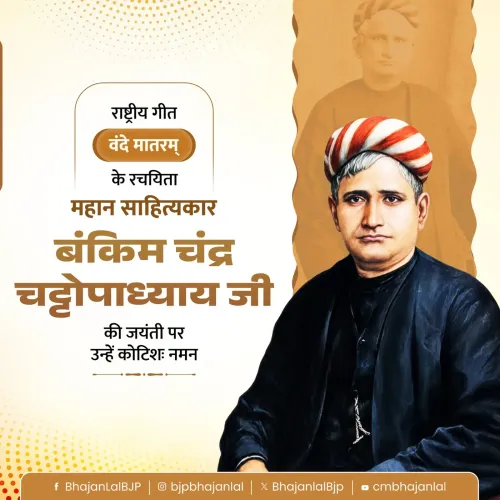
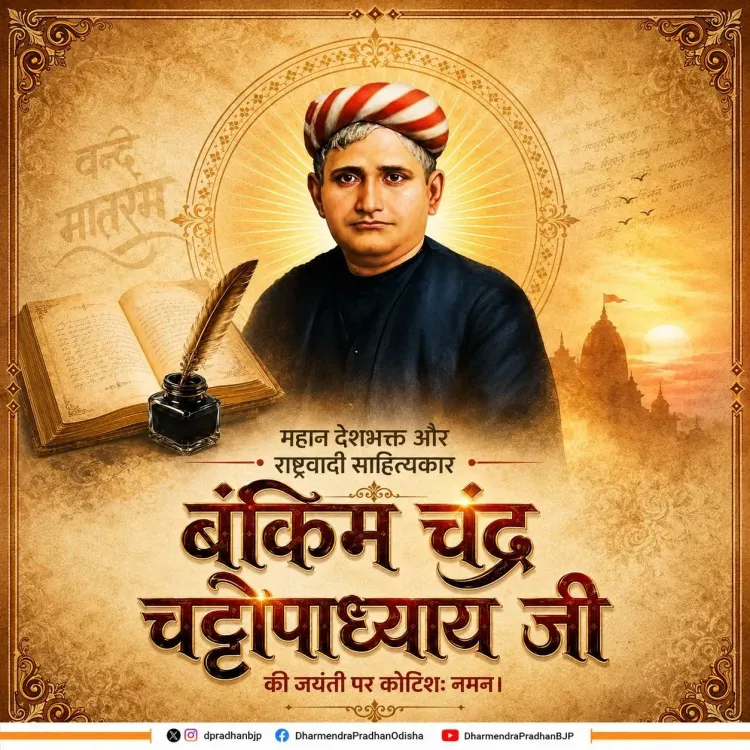
Union Education Minister Dharmendra Pradhan on Friday, 27 June 2026, paid tribute to Bankim Chandra Chattopadhyay, the composer of India's national song Vande Mataram, on the occasion of the writer's birth anniversary, honouring him as a supreme patriot whose words continue to inspire generations of Indians.
Context
Posting in Hindi on X, Minister Pradhan wrote: 'राष्ट्रीय गीत 'वंदे मातरम्' के रचनाकार, परम राष्ट्रभक्त बंकिम चन्द्र चट्टोपाध्याय जी की जयंती पर उन्हें कोटि-कोटि नमन करता हूँ' ('I bow in countless salutations to Bankim Chandra Chattopadhyay, the composer of the national song Vande Mataram and a supreme patriot, on his birth anniversary'). He added that Chattopadhyay's writings spread the spirit of patriotism to every citizen and strengthened Indian culture and national identity.
The minister further noted that Chattopadhyay's words 'continue to kindle the flame of love for the nation in the heart of every Indian and remain an invaluable source of inspiration for youth and patriots alike.'
Policy Backdrop
Bankim Chandra Chattopadhyay, born in 1838 in Bengal, composed the poem Vande Mataram in the 1870s; it was first published in his landmark 1882 novel Anandamath. The song became a rallying cry during India's independence movement and was formally adopted as the national song by the Constituent Assembly in 1950, alongside Jana Gana Mana as the national anthem.
The tribute comes in the context of the National Education Policy 2020, which explicitly calls for integrating Indian knowledge systems and icons of the freedom struggle into school curricula to foster what the policy terms 'rashtriya chetna' — national consciousness. The Ministry of Education under Pradhan has linked such commemorations to ongoing NCERT curriculum reviews and teacher-training programmes aimed at deepening students' awareness of India's cultural and literary heritage.
Stakeholders and Impact
Ministerial tributes to 19th-century nationalist writers have become a consistent feature of cultural outreach by successive central governments, with the current administration particularly emphasising literary figures whose work intersects with patriotism and Indian identity. For Indian students and youth — the primary stakeholders the minister invoked — such commemorations signal continued policy attention to embedding freedom-movement narratives in formal education.
Chattopadhyay's literary legacy extends well beyond Vande Mataram; his novels and essays shaped modern Bengali prose and influenced a generation of nationalist thinkers across the subcontinent. His work remains part of curricula in several states, and any future NCERT textbook revision could expand its presence at the national level.
What's Next
Observers will watch for follow-through from the Ministry of Education or the Ministry of Culture in the form of curriculum circulars, commemorative events, or NCERT content updates that translate such tributes into concrete policy action. The birth anniversary provides a natural moment for state education departments to announce supplementary reading lists or school-level programmes centred on Chattopadhyay's writings. Whether the commemoration remains a symbolic gesture or feeds into a broader curricular push under NEP 2020 will be the key question in the weeks ahead.
Point of View
' the minister signals that the commemoration is not merely ceremonial but is linked to NEP 2020's stated goal of embedding 'rashtriya chetna' in classrooms. The framing of a 19th-century Bengali writer as an inspiration for contemporary youth also reflects the administration's broader effort to build a pan-Indian cultural canon that transcends regional boundaries. Whether this translates into tangible curriculum changes will test how far the government is willing to push the policy levers it controls through NCERT and state education boards.
NationPress
26 Jun 2026
Frequently Asked Questions
Who was Bankim Chandra Chattopadhyay?
Bankim Chandra Chattopadhyay was a Bengali writer born in 1838 who composed the poem Vande Mataram, later adopted as India's national song, and is widely regarded as one of the foundational figures of modern Indian literature and nationalism.
What is Vande Mataram and why is it significant?
Vande Mataram is India's national song, originally composed by Bankim Chandra Chattopadhyay in the 1870s and first published in his 1882 novel Anandamath. It became a rallying cry during the independence movement and was formally adopted by the Constituent Assembly in 1950.
Why did Dharmendra Pradhan pay tribute to Bankim Chandra Chattopadhyay?
Dharmendra Pradhan paid tribute on the occasion of Bankim Chandra Chattopadhyay's birth anniversary on 27 June 2026, honouring him as the composer of Vande Mataram and a source of patriotic inspiration for Indian youth.
How does NEP 2020 relate to Bankim Chandra Chattopadhyay?
The National Education Policy 2020 emphasises integrating Indian knowledge systems and freedom-struggle icons into school curricula to foster national consciousness, a framework under which figures like Bankim Chandra Chattopadhyay are highlighted by the Ministry of Education.
What could follow from this ministerial tribute?
Observers are watching for NCERT textbook revisions, state education department circulars, or Ministry of Culture events that could expand the coverage of Bankim Chandra Chattopadhyay's writings in formal school curricula following the birth anniversary commemoration.