Pradhan pays tribute to 'Bihar Kokila' Dr. Sharda Sinha
Synopsis
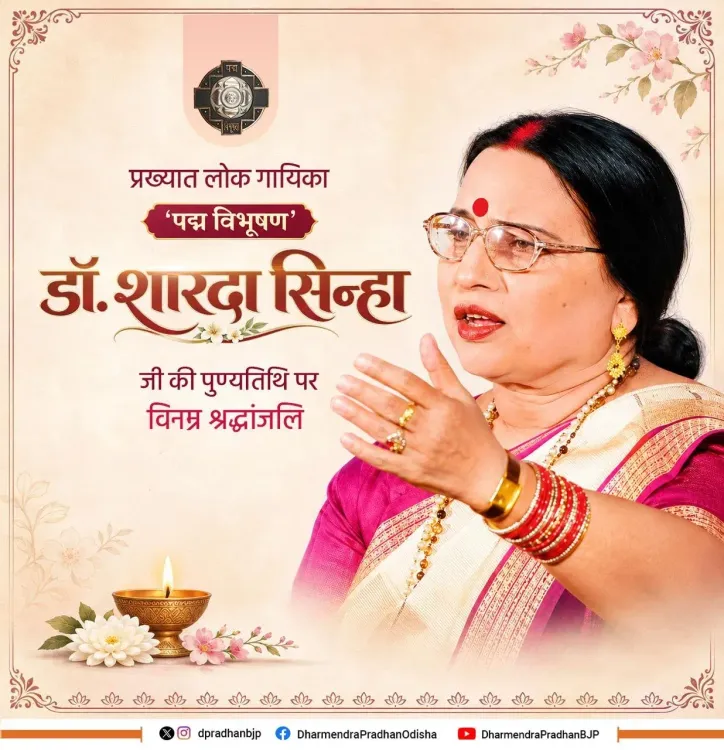
Union Education Minister Dharmendra Pradhan honoured 'Bihar Kokila' Dr. Sharda Sinha on her death anniversary, calling her a devoted practitioner of Indian folk music whose songs wove regional tradition into national memory. Dr. Sinha held the Padma Vibhushan for her transformative contribution to Bihari and broader Indian folk culture.
Key Takeaways
Union Education Minister Dharmendra Pradhan paid tribute to Dr.
Sharda Sinha on her death anniversary, 5 November 2026 .
Sinha was popularly known as 'Bihar Kokila' and was a celebrated vocalist in Maithili, Bhojpuri and Magahi folk traditions.
She was honoured with the Padma Vibhushan , India's second-highest civilian award, for her contribution to folk music.
Her Chhath Puja songs became a defining cultural soundtrack for Bihari communities across India and the diaspora.
Pradhan described her as someone who gave regional folk culture a national identity through her artistry.
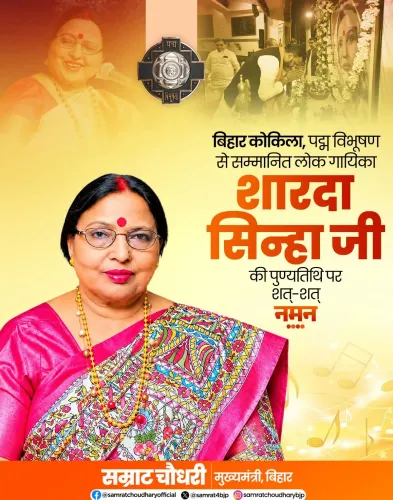
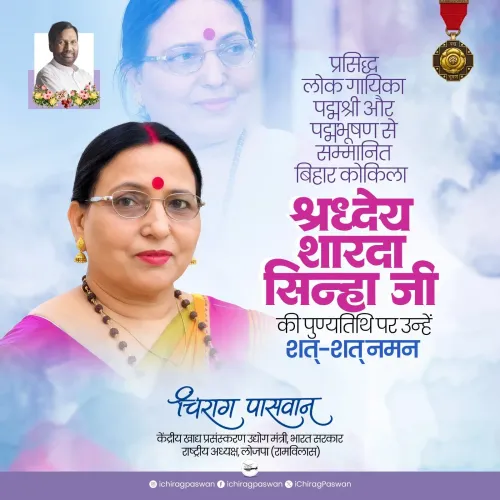
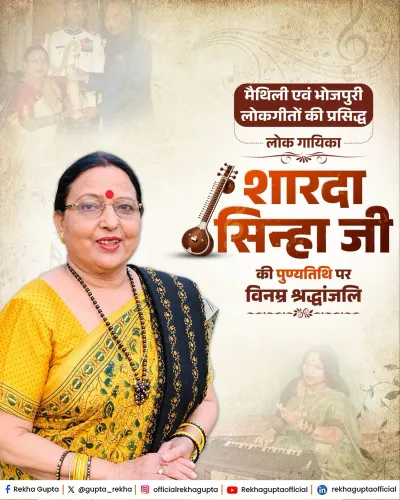
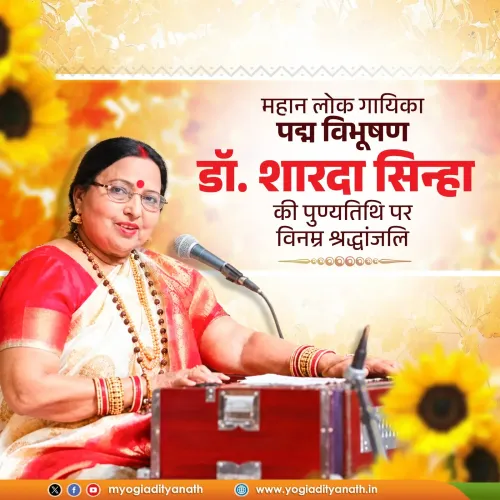
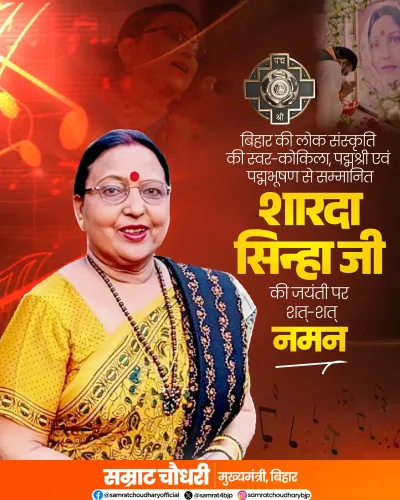
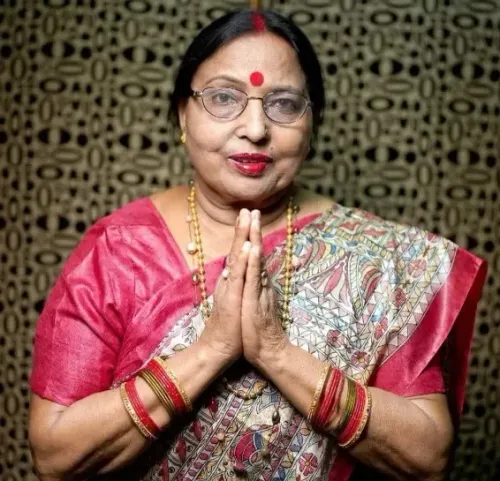
A voice that turned Chhath and Vivah folk songs into a shared national memory is remembered today — Union Education Minister Dharmendra Pradhan offered a heartfelt tribute on Thursday, 5 November 2026, marking the death anniversary of 'Bihar Kokila' Dr. Sharda Sinha, the Padma Vibhushan-decorated folk singer who carried the soul of Bihar into every corner of India.
Posting in Hindi on X, Minister Pradhan described her as 'भारतीय लोकसंगीत की स्वर-साधिका' — 'a devoted practitioner of Indian folk music' — and saluted her role in giving regional folk culture a national identity. 'The Indian folk tradition woven into her songs will always remain alive in our memories,' he wrote.
The voice that made Bihar's folk soul universal
Dr. Sharda Sinha was widely regarded as the defining voice of Bihari folk music, celebrated above all for her renditions of Chhath Puja songs that became indispensable to the festival's atmosphere across India and among the diaspora worldwide. Her maithili, Bhojpuri and Magahi recordings bridged the gap between village courtyards and national stages, ensuring traditions that could have faded into obscurity instead found millions of devoted listeners.
The Government of India recognised her contribution with the Padma Vibhushan, the country's second-highest civilian honour — a distinction that underscored how profoundly her artistry shaped India's cultural fabric beyond Bihar's borders.
Why tributes to folk artists carry a policy undertone
When a Union minister invokes a folk singer's legacy, it is rarely only personal sentiment. Senior BJP leaders have consistently framed the preservation of regional folk forms as integral to a broader 'one India' cultural narrative — presenting figures like Dr. Sinha as proof that local traditions are not merely parochial but are threads in a larger national tapestry.
Minister Pradhan, who oversees the education portfolio and has championed mother-tongue-based learning under the National Education Policy 2020, has a particular institutional interest in honouring artists who demonstrated that vernacular languages and oral traditions command national dignity.
Bihar's cultural community and folk musicians across the Gangetic plain mark her anniversary each year — and watchers of state-level cultural programming will note whether the tribute today is followed by any announced memorial events or institutional recognition in Bihar.
Dr. Sharda Sinha sang for generations that grew up hearing her voice rise with the morning mist over the Ganga on Chhath morning. That she is missed, not archived, is the truest measure of her legacy.
Point of View
Framing artists like Dr. Sharda Sinha as proof that vernacular India is central — not peripheral — to national identity. For Minister Pradhan, who stewards an education policy explicitly built around mother-tongue learning, honouring a folk singer is consistent with his institutional brief, not incidental to it. The tribute reinforces the party's sustained outreach to Bihar, a politically consequential state where Chhath sentiment runs deep. Whether the gesture translates into concrete institutional memory — a chair, a scholarship, a festival — will be the real measure of its sincerity.
NationPress
5 Nov 2026
Frequently Asked Questions
Who was Dr. Sharda Sinha?
Dr. Sharda Sinha was a celebrated Indian folk singer known as 'Bihar Kokila' who popularised Maithili, Bhojpuri and Magahi folk traditions nationally. She is best remembered for her iconic Chhath Puja songs and was awarded the Padma Vibhushan, India's second-highest civilian honour.
Why is Dr. Sharda Sinha called Bihar Kokila?
'Bihar Kokila' — meaning 'the nightingale of Bihar' — is an honorary title given to Dr. Sharda Sinha in recognition of her melodious voice and her lifelong service to Bihar's folk music heritage, which she elevated to national and international prominence.
What did Dharmendra Pradhan say about Sharda Sinha?
Union Education Minister Dharmendra Pradhan described Dr. Sharda Sinha as a 'devoted practitioner of Indian folk music' who gave regional folk culture a national identity. He said the Indian folk tradition woven into her songs would always remain alive in collective memory.
What award did Dr. Sharda Sinha receive?
Dr. Sharda Sinha was awarded the Padma Vibhushan, the Government of India's second-highest civilian honour, recognising her exceptional contribution to Indian folk music and cultural heritage.
What is the significance of Sharda Sinha's Chhath Puja songs?
Dr. Sharda Sinha's Chhath Puja recordings became the defining soundtrack of the festival for generations of Bihari families across India and the global diaspora, transforming local oral tradition into a widely shared cultural experience.