Pradhan shops Sambalpuri handloom in his own constituency
Synopsis
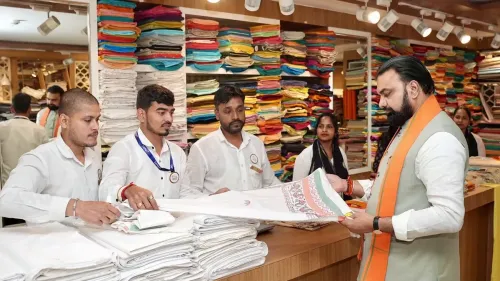
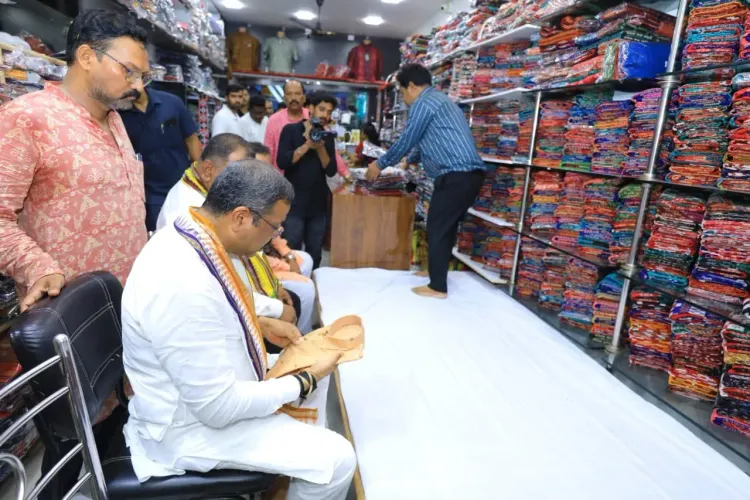
Union Education Minister Dharmendra Pradhan bought Sambalpuri handloom during a visit to his Sambalpur parliamentary constituency on 8 August 2026, calling it a meaningful act to honour local weavers and strengthen the Atmanirbhar Bharat resolve. Sambalpuri sarees hold a GI tag since 2010.
Key Takeaways
Dharmendra Pradhan purchased Sambalpuri handloom during his Sambalpur constituency visit on 8 August 2026 .
He linked the gesture to the Atmanirbhar Bharat initiative, framing it as support for indigenous products and rural artisans.
Sambalpuri sarees received a Geographical Indication tag in 2010 , protecting the region's distinctive weaving techniques.
Pradhan is the sitting MP from Sambalpur in western Odisha, making the act one of direct constituency engagement.
The post highlights a recurring political pattern of linking GI-tagged textile promotion with self-reliance messaging.
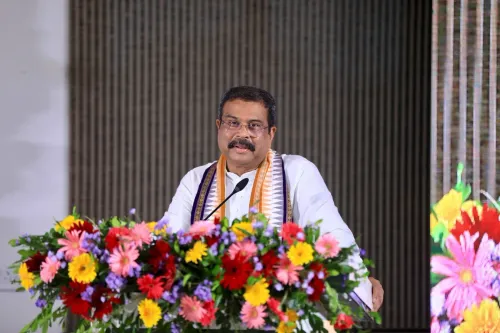
In the heart of western Odisha, Union Education Minister Dharmendra Pradhan made a point of pausing his parliamentary constituency visit to Sambalpur on 8 August 2026 — not for a rally or a ribbon-cutting, but to buy local. He picked up Sambalpuri handloom fabric, turning a routine constituency tour into a small, deliberate act of cultural advocacy.
Posting in Hindi, Pradhan wrote: 'Aaj apne sansadiya kshetra Sambalpur pravas ke dauran sthaniya Sambalpuri Handloom kharidne ka avsar mila' — 'Today, during my visit to my parliamentary constituency Sambalpur, I got the opportunity to buy local Sambalpuri handloom.' He called the craft the identity of Odisha's rich art, culture, tradition, and the extraordinary skill of its weavers.
A GI tag and the weavers behind it
Sambalpuri weaving is not just a craft — it is a certified heritage. Sambalpuri sarees received a Geographical Indication tag in 2010, legally recognising the region's distinctive tie-and-dye bandha technique as uniquely Odishan. The GI tag was meant to protect weavers from imitation products and help them command better prices in national and global markets. Pradhan's public purchase puts that certification back in the spotlight.
The minister framed his gesture in explicitly political-economic language, linking it to the Atmanirbhar Bharat initiative — the Central government's self-reliance drive launched in May 2020. Honouring the labour and skill of local artisans and promoting indigenous products, he said, is 'a meaningful effort to preserve our cultural heritage and strengthen the resolve of Atmanirbhar Bharat.'
Constituency optics, national messaging
Pradhan represents Sambalpur in Parliament, making this more than symbolic tourism — he is, in effect, a local patron of the craft his constituents produce. Leaders combining constituency visits with regional-craft promotion has become a recognisable pattern in Indian politics, particularly as the Centre has pushed GI-tagged textiles as both cultural assets and economic engines for rural artisans.
For Odisha's handloom weavers — a community that has navigated decades of competition from power-loom imitations — visibility from a Union Cabinet minister carries weight. Whether that visibility translates into cluster development funding or expanded market linkages will be the real test.
A minister buying a saree is a gesture. What the weavers of Sambalpur need next is a policy follow-through to match it.
Point of View
Where handloom weaving communities have faced sustained pressure from cheaper power-loom alternatives, Cabinet-level visibility matters — but it also raises the bar: any optics-driven gesture invites scrutiny of whether concrete cluster development or market-linkage schemes follow. The post is light on specifics, but the symbolism is deliberate and politically legible.
NationPress
9 Aug 2026
Frequently Asked Questions
What is Sambalpuri handloom?
Sambalpuri handloom refers to traditional hand-woven textiles — most famously sarees — produced in the Sambalpur region of western Odisha, distinguished by a tie-and-dye technique called 'bandha'. The craft received a Geographical Indication tag in 2010.
Why did Dharmendra Pradhan buy Sambalpuri handloom?
Pradhan bought Sambalpuri handloom during a visit to his parliamentary constituency Sambalpur on 8 August 2026, framing it as a gesture to honour local weavers and promote indigenous products under the Atmanirbhar Bharat initiative.
What is the GI tag for Sambalpuri sarees?
Sambalpuri sarees received a Geographical Indication tag in 2010, legally recognising the distinctive weaving technique as unique to the Sambalpur region of Odisha and protecting weavers from imitation products.
What is Atmanirbhar Bharat and how does it relate to handloom?
Atmanirbhar Bharat Abhiyan is a Central government self-reliance initiative launched in May 2020 that encourages the use of locally made products. Promoting handloom and other traditional crafts is frequently cited as part of this mission.
Which constituency does Dharmendra Pradhan represent?
Dharmendra Pradhan is the Member of Parliament from the Sambalpur parliamentary constituency in western Odisha.