Pradhan blasts Congress for Parliament disruptions, 'false propaganda'
Synopsis
Union Education Minister Dharmendra Pradhan accused Congress and the INDIA alliance of disrupting Parliament and spreading false propaganda against electoral institutions, arguing that repeated electoral defeats — including in Odisha — are behind the opposition's outrage over voter-roll revision and alleged vote theft.
Key Takeaways
Dharmendra Pradhan accused Congress and the INDIA alliance of paralysing Parliament and spreading 'false propaganda' against democracy, the Constitution, and the Election Commission on November 12, 2026 .
Pradhan cited repeated electoral defeats — including in Odisha — as the root cause of opposition frustration and disruption.
He dismissed opposition complaints over vote theft and the SIR (Special Intensive Revision) voter-roll exercise as 'crocodile tears.' The INDIA alliance , formed in July 2023 , has repeatedly raised concerns over electoral processes, triggering parliamentary disruptions.
The BJP's counter-framing consistently uses electoral victories as evidence of public mandate against opposition allegations.
Proceedings in the ongoing winter session of Parliament and any formal Election Commission response remain key developments to watch.
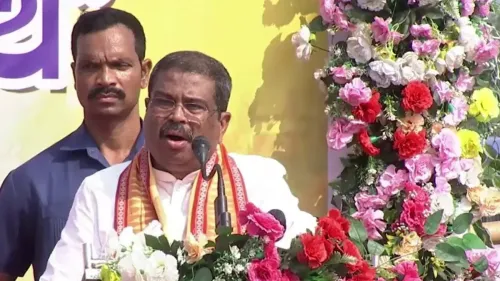
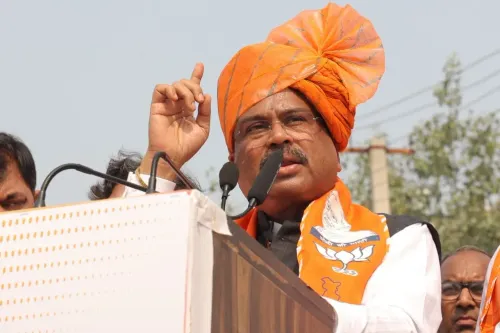
Frustration at the ballot box, Union Education Minister Dharmendra Pradhan argued on Thursday, November 12, is driving the Congress and the INDIA alliance to paralyse Parliament and wage what he called 'false propaganda' against democracy, the Constitution, the Election Commission, and the public mandate itself.
Posting in Odia, Pradhan wrote that people across many states — including his home state of Odisha — have 'repeatedly rejected Congress.' He charged that leaders of Congress and the 'INDI' alliance, 'frustrated by repeated electoral defeats,' are today 'disrupting Parliament and spreading false propaganda against democracy, the Constitution, the Election Commission, and the will of the people.' On the specific charge of vote theft and the SIR (Special Intensive Revision) exercise for voter rolls, Pradhan was blunt: the opposition is shedding 'crocodile tears.'
A pattern of defeat Pradhan says explains the outrage
The minister's sharpest line of attack is a simple electoral scoreboard. The BJP swept Odisha's assembly elections and the NDA retained national power in the 2024 Lok Sabha elections, while the Congress has seen its state-level footprint erode across the country over the past decade. Pradhan's framing follows an established BJP strategy: when opposition parties allege irregularities, cite their own vote tallies as the decisive rebuttal.
The INDIA alliance — formed in July 2023 to consolidate opposition forces ahead of the general election — has periodically raised concerns about voter-list revisions and electronic voting processes. Those complaints have translated into parliamentary disruptions, which the ruling bloc routinely frames as anti-democratic theatre rather than legitimate oversight.
Parliament in the cross-fire of an old accusation
Opposition-led walkouts and disruptions are a recurring feature of Indian parliamentary sessions, but the intensity of the exchange has sharpened as voter-roll processes become contested political terrain. The Election Commission of India, a constitutional body, has in the past defended its revision exercises as routine administrative updates. Whether it formally responds to the current opposition allegations is among the key things to watch as the winter session unfolds.
Pradhan's broadside, delivered to what is clearly a Odia-speaking audience, also signals the BJP's intent to hold ground in eastern India — a region where the party invested heavily over multiple election cycles before breaking through. When a senior minister frames parliamentary disruption as the last resort of the electorally vanquished, the message is as much to voters back home as it is to rivals in the House.
India's democracy has seen this argument before — but in a moment when the credibility of electoral institutions is openly contested, the charge carries weight beyond the usual partisan noise.
Point of View
And use the scoreboard of state elections as a shield against institutional critique. The timing — during what appears to be a contentious parliamentary session — suggests the ruling party is moving quickly to frame any disruption as anti-democratic rather than allow it to build momentum. The specific mention of the SIR voter-roll process is significant: voter-list integrity has become a recurring flashpoint in Indian electoral politics, and by pre-emptively labelling opposition concerns 'crocodile tears,' Pradhan is seeking to delegitimise scrutiny before it gains traction. How the Election Commission responds — or chooses not to — will shape whether this remains partisan noise or escalates into a genuine institutional debate.
NationPress
12 Nov 2026
Frequently Asked Questions
Why is Dharmendra Pradhan criticising Congress over Parliament disruptions?
Pradhan accused Congress and the INDIA alliance of disrupting Parliament out of frustration over repeated electoral defeats in Odisha and other states, calling their complaints about vote theft and voter-roll revision 'crocodile tears.'
What is the SIR voter roll exercise that Congress is protesting?
SIR stands for Special Intensive Revision, an Election Commission process to update and clean voter rolls. The opposition has raised concerns about alleged irregularities in this process, while the BJP has dismissed those concerns as politically motivated.
What is the INDIA alliance and why is it in the news?
The INDIA alliance is an opposition coalition formed in July 2023 to challenge the BJP-led government. It has been accused by BJP leaders of disrupting Parliament and spreading misinformation about electoral institutions following a series of electoral setbacks.
What has been the BJP's record in Odisha elections?
The BJP secured significant victories in Odisha's assembly elections, breaking through in a state where it invested heavily over multiple election cycles, which Pradhan cites as evidence of the Congress's diminishing public support.
What could happen next in Parliament after these disruptions?
Key developments to watch include the continued proceedings of the winter session of Parliament and any formal response from the Election Commission of India regarding the voter-roll revision exercise at the centre of the opposition's allegations.