Pradhan in Dhenkanal: Congress Treated Power as Family Property
Synopsis
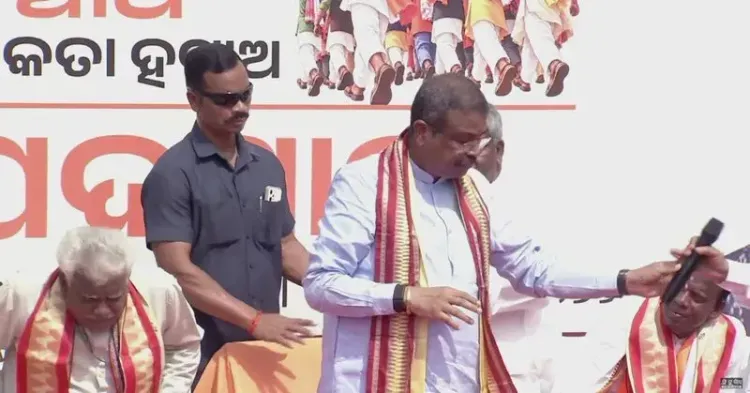
Union Education Minister Dharmendra Pradhan launched a sharp attack on Congress from Dhenkanal, Odisha on November 12, accusing its leaders of treating years of power as a feudal family estate and asserting that the electorate has firmly rejected them.
Key Takeaways
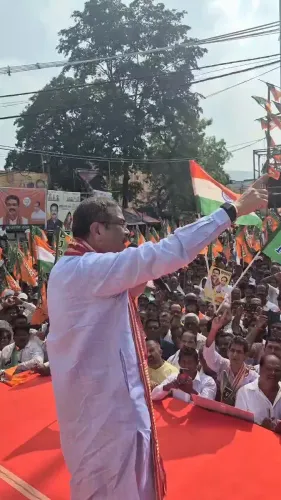
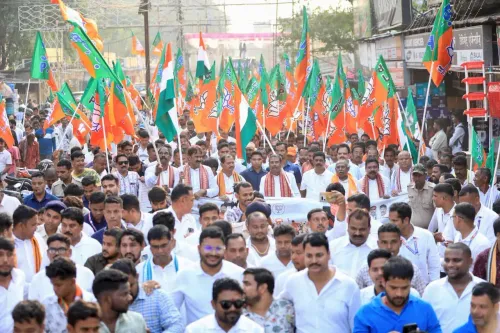
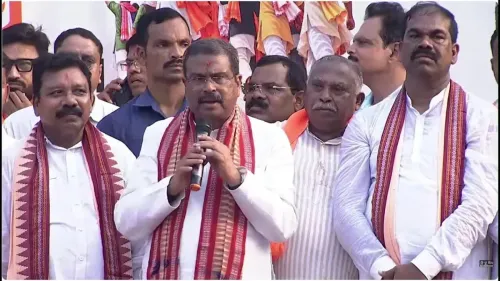
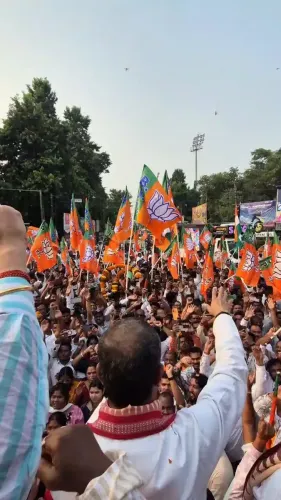
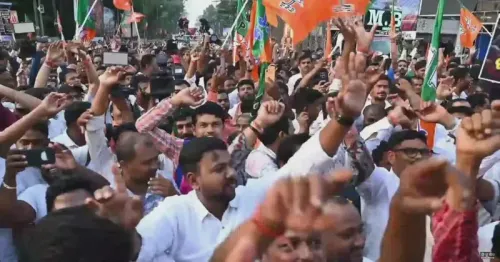
Dharmendra Pradhan addressed a live gathering in Dhenkanal, Odisha on November 12, 2026 under the hashtag #LoktantraBachaoArajaktaHatao .
He accused Congress leaders of treating long years in power as a personal family jagir (feudal estate) rather than an opportunity to serve.
Pradhan declared that the people of the country have today rejected such leaders.
BJP has consistently deployed the dynasty-versus-democracy contrast since 2014 across state and national elections, including in Odisha.
Pradhan is the party's senior-most face in Odisha , adding strategic weight to his choice of Dhenkanal as the broadcast location.
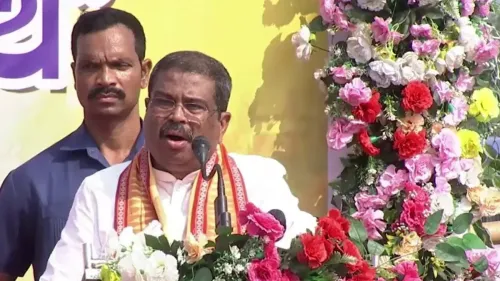
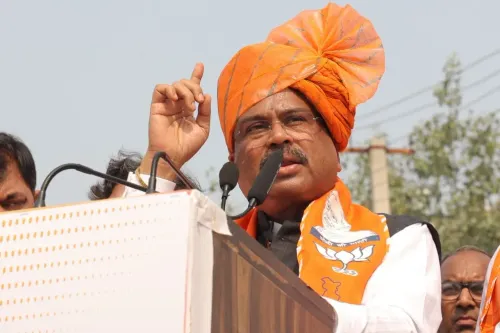
In Dhenkanal, Odisha, on Thursday, November 12, 2026, Union Education Minister Dharmendra Pradhan took the electoral battle directly to Congress, telling a live gathering that the country's voters have decisively rejected leaders who spent decades in power serving only their own families rather than the nation.
Posting from the live broadcast under the hashtag #LoktantraBachaoArajaktaHatao — 'Save Democracy, Remove Anarchy' — Pradhan was blunt: 'ଦୀର୍ଘବର୍ଷର ଶାସନ କାଳରେ ସେବା ନକରି କେବଳ ନିଜ ପରିବାରର ଜାଗିର ଭାବୁଥିବା' — 'those who, across years of rule, never served the people but treated power as a personal family estate.' The people, he said, have today rejected them.
The 'Jagir' charge: dynasty as BJP's core attack line
The word jagir — a feudal land grant, earned through loyalty rather than merit — is not casual rhetoric. It is a precisely chosen image: Congress, in this framing, did not win power; it inherited it, like a medieval fiefdom. BJP has deployed this dynasty-versus-democracy contrast consistently since 2014, but in Odisha, where Pradhan is the party's most prominent face, it carries the additional weight of a home-state reckoning.
Dhenkanal has historically been a district where Congress once held influence. Pradhan choosing to broadcast live from there is itself a signal — the party is contesting every pocket of the state, not conceding any ground as a Congress stronghold.
Why Dhenkanal, why now
Pradhan, a senior BJP leader who represented Odisha in both the Lok Sabha and Rajya Sabha before moving to the Union Cabinet, is widely regarded as the party's chief mobiliser in the state. His presence at a live ground event — not a press conference, but a direct-to-crowd broadcast — underscores how central Odisha is to the current electoral calculus.
The hashtag framing doubles down on the message: democracy is not merely at stake, it is being actively protected — from what the BJP characterises as dynastic disorder. That binary — democratic service versus feudal entitlement — is designed to cut across caste and regional lines with a single, legible charge.
Congress's long innings in government, particularly at the Centre before 2014, is the reference point Pradhan leans on. The implication for Odisha voters is direct: the party that treated the country as a family estate cannot be trusted to serve a state's people either.
With BJP now firmly embedded in Odisha's political landscape and no longer content to play second fiddle in the state, Pradhan's Dhenkanal broadcast is a marker: the party is in campaign mode, the message is sharpened, and the ground has been chosen deliberately. The voters, he insists, already know what to do with it.
Point of View
He anchors a modern electoral critique in a visceral historical metaphor that resonates in Odisha's agrarian heartland. The live-broadcast format also signals a shift in BJP's Odisha strategy: ground energy, not just institutional messaging. Whether this sharpened anti-dynasty framing translates into vote-share movement in Dhenkanal and similar districts will be a key indicator of how potent the narrative remains in a state BJP has recently made its own.
NationPress
12 Nov 2026
Frequently Asked Questions
What did Dharmendra Pradhan say about Congress in Dhenkanal?
Pradhan accused Congress leaders of spending years in power treating governance as a personal family estate rather than a service to the nation, and said voters have now rejected them.
What does #LoktantraBachaoArajaktaHatao mean?
The hashtag translates from Hindi as 'Save Democracy, Remove Anarchy' — it was the campaign slogan under which Pradhan's Dhenkanal live broadcast was organised.
Why is Dharmendra Pradhan campaigning in Dhenkanal, Odisha?
Pradhan is BJP's most prominent leader in Odisha and uses district-level live events to mobilise voters directly; Dhenkanal is a district where BJP is contesting Congress influence.
What is BJP's anti-dynasty argument against Congress?
Since 2014, BJP has argued that Congress governed India not as a public service but as an inherited privilege, concentrating power within one family rather than distributing democratic accountability.
What is Dharmendra Pradhan's political background in Odisha?
Pradhan is a senior BJP leader who represented Odisha in Parliament before becoming Union Minister; he has served as Union Petroleum Minister and currently holds the Education portfolio.