Pradhan's resignation a student movement victory, says Karnataka Cong chief Hariprasad
Synopsis
Karnataka Congress chief B.K. Hariprasad framed Dharmendra Pradhan's exit not as a political scalp but as proof that sustained student pressure can force accountability. With 152 alleged paper leaks, 22 student deaths, and FIRs against protesters still pending, the Congress says the resignation is only the first step — and its agitation is far from over.
Key Takeaways
Hariprasad declared Dharmendra Pradhan's resignation a victory for the student movement at a press conference in Bengaluru on 25 July .
Hariprasad alleged examination papers were leaked on 152 occasions under the current government.
Congress demanded compensation for families of 22 students who allegedly died by suicide, withdrawal of FIRs against protesters, and revocation of expanded Delhi Police NSA powers .
Hariprasad compared Pradhan unfavourably to former Education Ministers including Maulana Abul Kalam Azad , who served for nine years .
India's literacy rate has risen from 11 per cent at Independence to over 76 per cent , which Hariprasad credited to pre-BJP governments.
Congress said its agitation will continue until all student demands — including those raised by Rahul Gandhi — are fulfilled.
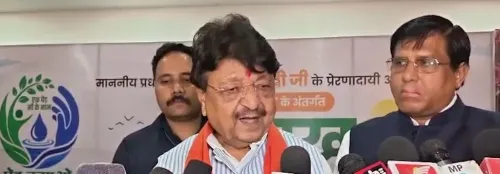
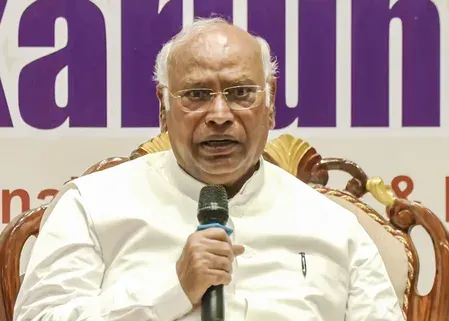
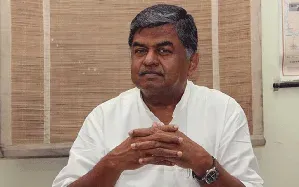
Karnataka Pradesh Congress Committee (KPCC) President and MLC B.K. Hariprasad on Saturday, 25 July declared the resignation of Union Education Minister Dharmendra Pradhan a victory for students who had been protesting alleged examination irregularities and paper leaks across the country. Speaking at a press conference at Indira Gandhi Bhavan, the KPCC headquarters in Bengaluru, Hariprasad launched a sharp attack on the Narendra Modi-led Union government over what he described as a systemic failure in the education sector.
Hariprasad's Verdict on the Resignation
Hariprasad described Pradhan's departure as the culmination of sustained student agitation rather than a standalone political development. 'Students have demonstrated the power of collective action. This is a victory for the student movement, not for any political party,' he said. He added that Pradhan's resignation letter — in which the outgoing minister reportedly highlighted his own achievements — had become a subject of public ridicule.
Calling the resignation 'not a major issue in itself', Hariprasad framed it as a consequence of mounting pressure from student protests over alleged examination malpractices and question paper leaks, which he claimed had occurred on 152 occasions.
Comparing Past and Present Education Ministers
Hariprasad drew pointed comparisons between Pradhan and former Education Ministers, arguing that the post had historically been held by figures of considerable academic standing. He cited Maulana Abul Kalam Azad, who served as Education Minister for nine years and contributed to institutions including Visva-Bharati, Banaras Hindu University, Aligarh Muslim University, and Jawaharlal Nehru University.
'It is unfortunate that people like Dharmendra Pradhan have occupied the post today,' Hariprasad said. He also named former ministers V.K.R.V. Rao, S.R. Bommai, and Arjun Singh as examples of scholarship-driven leadership in education. He credited successive governments since Jawaharlal Nehru's tenure for building the country's educational infrastructure, pointing to literacy rising from 11 per cent at Independence to over 76 per cent, alongside the establishment of the IITs, IIMs, and AIIMS.
Key Demands from the Congress
Hariprasad outlined a set of demands that he said the government must fulfil before Congress would halt its agitation. These included compensation for the families of 22 students who allegedly died by suicide amid the examination controversy, withdrawal of FIRs filed against student protesters, and revocation of additional powers granted to the Delhi Police under the National Security Act (NSA).
'Dharmendra Pradhan's resignation alone is not enough. The demands raised by Rahul Gandhi and various student organisations must also be fulfilled,' Hariprasad said. He also criticised the prolonged detention of activist Umar Khalid, questioning why charges had not been conclusively established despite his years in custody.
Allegations of Protest Infiltration and Police Action
Hariprasad dismissed government claims that more than 400 people with criminal backgrounds had infiltrated the student protests, alleging instead that these were attempts to discredit an otherwise peaceful movement. He claimed that students who demonstrated against examination irregularities had faced baton charges and criminal cases.
Responding to a question about Prime Minister Modi's recent advice to youth to use social media reels for communication, Hariprasad described the Prime Minister as a 'master of political messaging' and accused him of relying on scripted public appearances — a remark that drew applause from party workers present at the briefing.
What Comes Next
Congress has indicated it will sustain its agitation until the full slate of student demands is addressed. With the examination irregularity controversy still unresolved and opposition pressure mounting, the government faces continued scrutiny over the integrity of national-level examinations and the future direction of education policy.
Point of View
The party distances itself from any perception of opportunism while still claiming moral credit. But the demands that follow — NSA rollback, FIR withdrawals, compensation for 22 families — are far harder to deliver than a ministerial exit, and the government has shown no sign of conceding them. The Congress risks overplaying its hand if protests lose momentum before those demands are met. Meanwhile, the unresolved examination integrity crisis — with 152 alleged leaks on the record — is the real story that neither side has yet answered for.
NationPress
24 Oct 2026
Frequently Asked Questions
Why did B.K. Hariprasad call Pradhan's resignation a student movement victory?
Hariprasad argued that the resignation was the direct result of sustained student protests over alleged examination malpractices and paper leaks, not a political concession to any party. He said students had demonstrated the power of collective action, and the credit belonged to them, not to Congress.
What are Congress's demands following Dharmendra Pradhan's resignation?
Congress has demanded compensation for the families of 22 students who allegedly died by suicide, withdrawal of FIRs filed against student protesters, and revocation of expanded powers granted to the Delhi Police under the National Security Act (NSA). Hariprasad said the party's agitation would continue until all demands are met.
How many times were examination papers allegedly leaked under the current government?
Hariprasad alleged that examination papers had been leaked on 152 occasions under the Narendra Modi-led government. He also claimed that students who protested against these irregularities faced baton charges and criminal cases.
How did Hariprasad compare Pradhan to earlier Education Ministers?
Hariprasad cited Maulana Abul Kalam Azad, who served as Education Minister for nine years and contributed to institutions such as Visva-Bharati, BHU, AMU, and JNU, as a benchmark. He also named V.K.R.V. Rao, S.R. Bommai, and Arjun Singh as ministers known for scholarship, contrasting them with Pradhan.
What did Hariprasad say about allegations of criminal infiltration into the student protests?
Hariprasad dismissed government claims that over 400 people with criminal backgrounds had entered the protests, alleging instead that these were deliberate attempts to discredit a peaceful movement. He said the student agitation had been targeted by authorities rather than supported.