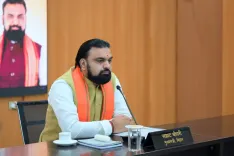
Pralhad Joshi Fires Back at Rahul Gandhi Over 'Jokers' Remark
Synopsis
Union Consumer Affairs Minister Pralhad Joshi sharply rebuked Congress leader Rahul Gandhi on 13 August 2026 for calling the BJP government 'jokers and clowns,' arguing the remark insulted millions of voters who elected PM Modi to three consecutive terms and reflected Gandhi's failure to accept democratic outcomes.
Key Takeaways
Union Minister Pralhad Joshi publicly rebuked Rahul Gandhi on 13 August 2026 over remarks calling the BJP government 'jokers and clowns.' Joshi argued the remark insulted not just PM Modi but the millions of voters who chose him for three consecutive terms .
He invoked the BJP's longstanding 'dynastic politics' charge to explain Congress's electoral losses.
The minister accused Gandhi of calling citizens 'cowards' for dismissing the Congress narrative.
No formal response from Rahul Gandhi or the Indian National Congress had emerged at the time of publication.
A sharp volley in Indian politics' most enduring rivalry landed on Thursday, 13 August 2026, when Union Consumer Affairs Minister Pralhad Joshi publicly rebuked Congress leader Rahul Gandhi for calling the BJP-led government 'jokers and clowns' — demanding he show respect for the democratic mandate that has returned Prime Minister Narendra Modi to power three consecutive times.
The Charge: Insulting Voters, Not Just the PM
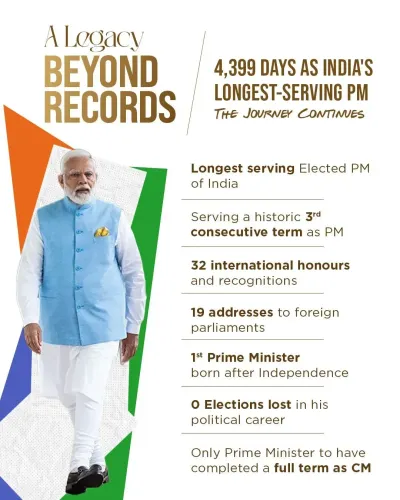
Joshi's broadside went beyond defending the Prime Minister. His central argument was that Gandhi's language — labelling the government 'jokers and clowns' and, by Joshi's reading, calling citizens 'cowards' for rejecting the Congress narrative — amounted to an attack on the electorate itself. 'By insulting the Prime Minister, you mock millions of voters who chose Modi ji for three historic terms,' Joshi wrote, framing the criticism as contempt for democratic choice rather than legitimate political opposition.
The minister also invoked the recurring BJP charge of 'dynastic politics,' arguing that Gandhi's frustration stems from voters repeatedly rejecting a political inheritance rather than earned leadership. The phrase 'amateur dramatics' set the register: dismissive, pointed, and calibrated to undercut Gandhi's credibility as a serious opposition figure.
BJP's Familiar Playbook — and Why It Still Lands
This exchange follows a well-worn script in Indian politics. Since 2014, BJP leaders have consistently paired two arguments when responding to Congress attacks: the triple electoral mandate as proof of public approval, and the dynastic-politics charge as an explanation for Congress's losses. Joshi deployed both in a single post, which is itself a measure of how rehearsed — and how effective — the framing has become.
The reference to 'almost a hundred electoral defeats' for Gandhi personally is a figure the research flagged as unverified, but the broader pattern it points to — Congress's declining electoral footprint since 2014 — is part of the established political record. Joshi's post is less a policy argument than a morale-and-mandate argument: we won, repeatedly, and the public knew what it was choosing.
Congress Yet to Respond
As of publication, no formal response from Rahul Gandhi or the Indian National Congress had emerged to Joshi's post. With state assembly election cycles and parliamentary sessions on the horizon, the intensity of such exchanges is unlikely to ease — each side has strong incentive to keep the base energised and the opponent on the defensive.
The BJP's message to Gandhi is blunt: grow up, or keep losing. Whether Congress finds a counter-frame sharp enough to break through is the question that will define the next phase of this rivalry.
Point of View
And reframe opposition criticism as elite contempt for ordinary voters. The move is strategically sound — it shifts the debate from the substance of Gandhi's criticism to the propriety of making it at all. For Congress, the challenge is that this framing has proven durable across multiple election cycles, and a sharp, policy-grounded counter-narrative remains elusive. The exchange signals that with assembly elections and a parliamentary session approaching, both sides are already sharpening their messaging for the next round.
NationPress
13 Aug 2026
Frequently Asked Questions
What did Pralhad Joshi say about Rahul Gandhi?
Union Minister Pralhad Joshi publicly rebuked Rahul Gandhi on 13 August 2026, accusing him of 'amateur dramatics' and demanding he respect the democratic mandate after Gandhi reportedly called the BJP-led government 'jokers and clowns.'
What did Rahul Gandhi say that triggered Pralhad Joshi's response?
Rahul Gandhi reportedly referred to the BJP-led government as 'jokers and clowns.' Joshi's post was a direct response to that characterisation, arguing it insulted millions of Indian voters.
Why does BJP keep bringing up dynastic politics against Rahul Gandhi?
BJP leaders have consistently used the dynastic politics charge since 2014 to argue that Gandhi's political position is inherited rather than earned, and that Congress's electoral losses reflect public rejection of that model.
How many times has Narendra Modi been elected Prime Minister?
Narendra Modi has led BJP-led governments since 2014. Joshi's post refers to 'three historic terms,' consistent with Modi's electoral wins in 2014, 2019, and a subsequent term.
Has Congress responded to Pralhad Joshi's remarks?
As of publication, no formal response from Rahul Gandhi or the Indian National Congress had emerged to Joshi's 13 August 2026 post.