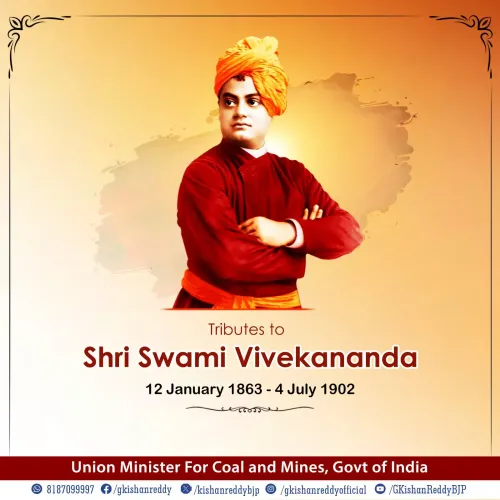
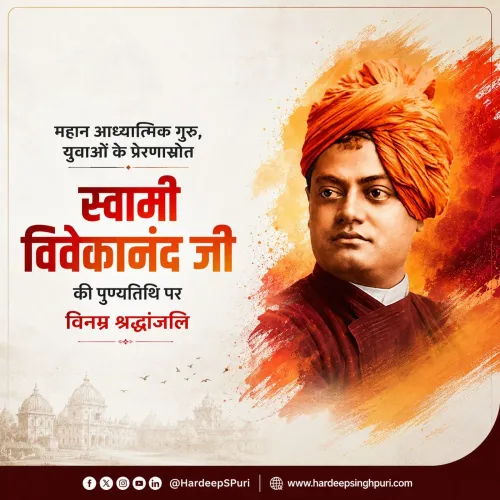
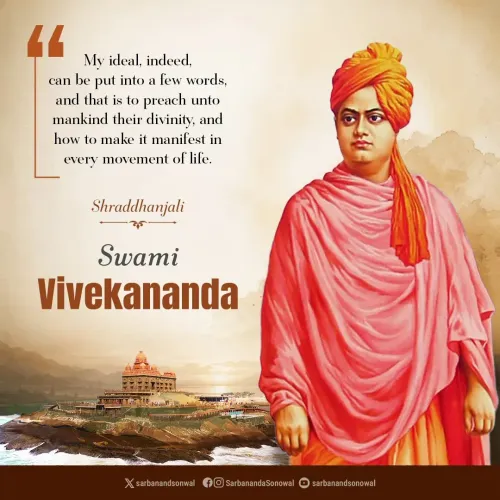
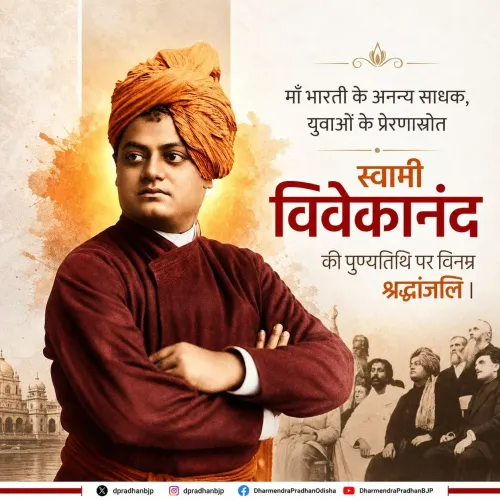
Pralhad Joshi Pays Tribute to Swami Vivekananda on Punya Tithi
Synopsis
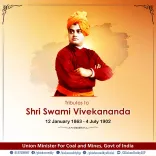
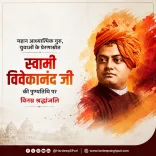
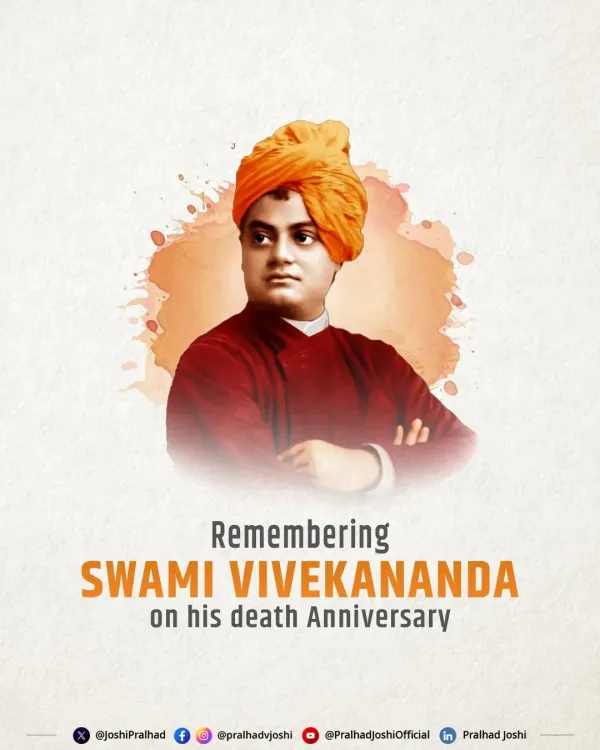
Union Minister Pralhad Joshi marked Swami Vivekananda's Punya Tithi on 4 July 2026 with a bilingual English-Kannada tribute, invoking the monk's message of strength, unity and self-reliance as a guiding force for building modern Bharat.
Key Takeaways
Pralhad Joshi , Union Minister of Consumer Affairs and New and Renewable Energy, paid tribute to Swami Vivekananda on his Punya Tithi, 4 July 2026 .
Joshi quoted Vivekananda's aphorism 'Strength is life, weakness is death' to anchor his tribute.
The post was bilingual, with a Kannada section describing Vivekananda as an epoch-maker who spread Sanatana culture worldwide.
Joshi linked Vivekananda's philosophy to the goal of a 'strong, compassionate and self-reliant Bharat,' aligning with the Atmanirbhar Bharat policy theme.
The Government of India has observed 12 January as National Youth Day since 1985 to honour Vivekananda's birth anniversary.
Vivekananda passed away on 4 July 1902 at Belur Math , Kolkata .
Union Consumer Affairs Minister Pralhad Joshi on Saturday, 4 July 2026 paid homage to Swami Vivekananda on the monk's Punya Tithi — the death anniversary observed as a day of reverent remembrance — calling his life 'a beacon of courage, wisdom and selfless service.'
Context
Swami Vivekananda passed away on 4 July 1902 at Belur Math near Kolkata, making this date his Punya Tithi. Minister Joshi opened his post with one of Vivekananda's most cited aphorisms — 'Strength is life, weakness is death' — before offering tributes in both English and Kannada. The Kannada portion describes Vivekananda as 'Bharatabhumi kanda mahana adhyatma santaru' (a great spiritual saint seen by the land of Bharat) and a 'yugapravartaka' (epoch-maker) who spread Sanatana culture across the world, adding that his principles remain 'a perennial source of inspiration for our youth.'Policy Backdrop
The Government of India has, since 1985, observed 12 January — Vivekananda's birth anniversary — as National Youth Day, institutionalising his ideals as a framework for youth development. Ministers from the BJP-led government have consistently invoked Vivekananda's message of inner strength and self-confidence in tandem with policy themes such as Atmanirbhar Bharat (self-reliant India), drawing a direct line between the monk's 19th-century philosophy and contemporary goals of national unity and economic independence. Joshi's reference to building 'a strong, compassionate and self-reliant Bharat' echoes that established rhetorical pattern.Stakeholders and Impact
Vivekananda's legacy holds particular resonance for Indian youth, who are the stated audience of National Youth Day programmes and numerous government skill and entrepreneurship initiatives. As a senior BJP leader from Karnataka, Joshi's bilingual tribute — addressing both a national English-speaking audience and a Kannada-speaking constituency — underscores the political and cultural weight attached to such commemorations. The monk's philosophy of self-confidence and service has been adopted across the ideological spectrum, though the current government has been especially deliberate in weaving it into its 'New India' narrative.What's Next
The annual National Youth Day on 12 January is the next major occasion on which ministerial tributes and policy statements linked to Vivekananda's teachings are expected. Observers will watch whether Joshi or other ministers use that platform to tie Vivekananda's message of self-reliance explicitly to youth-focused programmes or to the renewable energy transition agenda that Joshi also oversees. The enduring invocation of Vivekananda's philosophy in official discourse suggests his Punya Tithi will continue to serve as a moment for reaffirming the government's cultural and developmental priorities.Point of View
Unity, compassion — signals a cultural continuity argument that the government has been building for years. Addressing audiences in both English and Kannada also reflects a calculated regional outreach by a Karnataka-based minister. As long as Atmanirbhar Bharat remains a central policy plank, such commemorations are likely to serve a dual purpose: reverence and political messaging.
NationPress
4 Jul 2026
Frequently Asked Questions
When is Swami Vivekananda's Punya Tithi?
Swami Vivekananda's Punya Tithi falls on 4 July each year, marking the anniversary of his death on 4 July 1902 at Belur Math near Kolkata.
What did Pralhad Joshi say about Swami Vivekananda?
Minister Pralhad Joshi called Vivekananda's life 'a beacon of courage, wisdom and selfless service' and quoted the monk's saying 'Strength is life, weakness is death,' adding that his teachings remain a guiding force for building a self-reliant Bharat.
What is National Youth Day and how is it connected to Vivekananda?
National Youth Day is observed on 12 January every year — Swami Vivekananda's birth anniversary — to promote his ideals among Indian youth. The Government of India has marked this day since 1985 .
Why do BJP ministers frequently quote Swami Vivekananda?
BJP ministers regularly invoke Vivekananda's message of inner strength and self-confidence because it aligns with the government's Atmanirbhar Bharat policy narrative and the broader theme of cultural nationalism rooted in pre-independence spiritual figures.
Who is Pralhad Joshi?
Pralhad Joshi is a senior BJP leader from Karnataka serving as Union Minister of Consumer Affairs, Food and Public Distribution, and Minister of New and Renewable Energy in the Government of India.