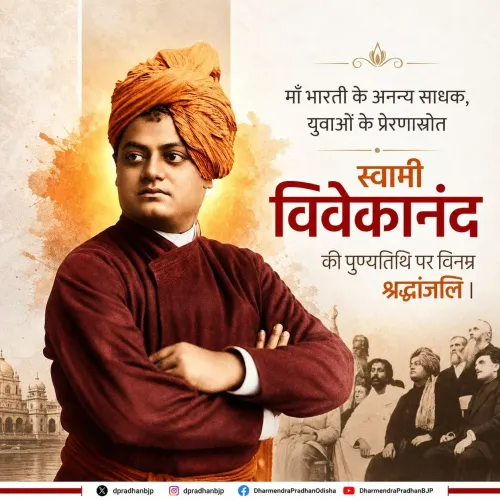
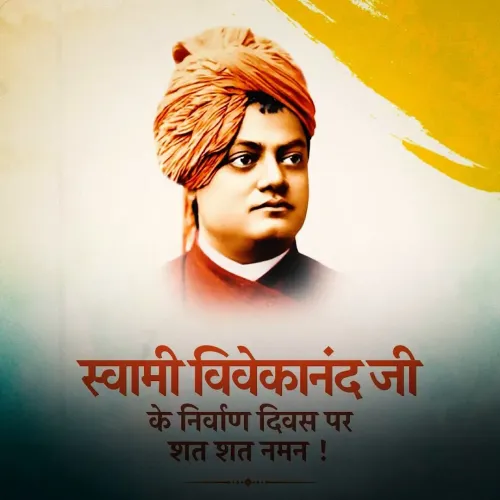
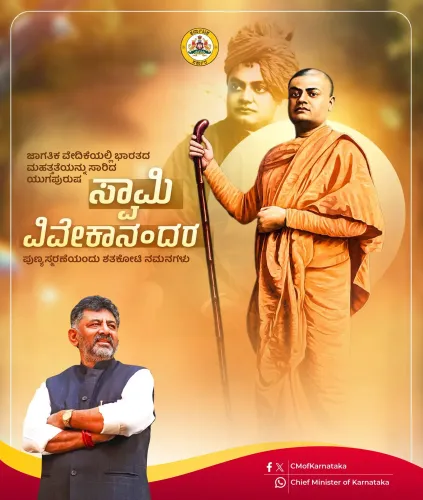
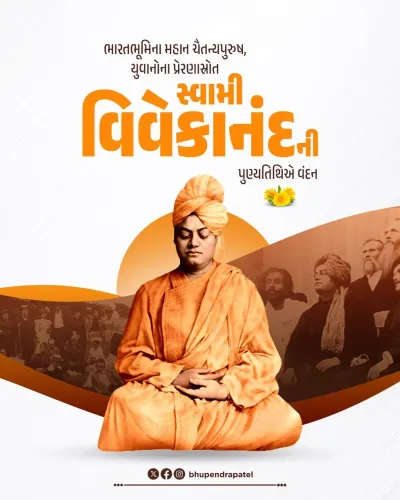
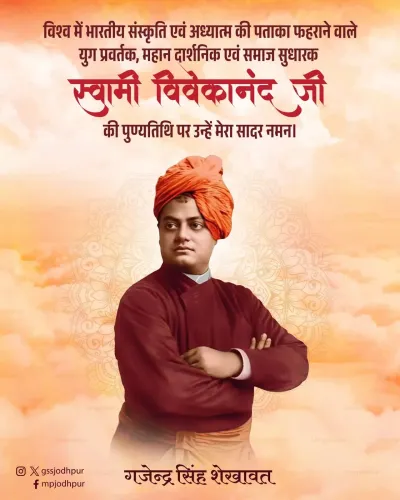
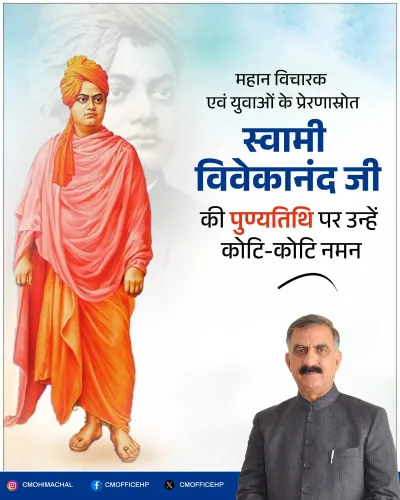
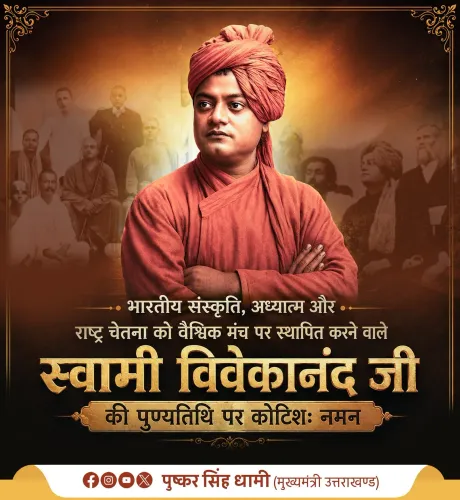
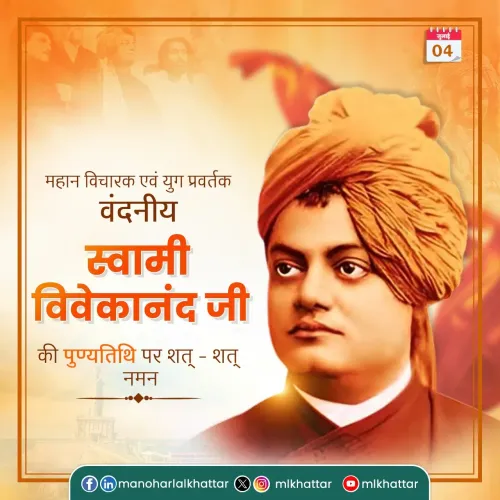
Puri pays tribute to Swami Vivekananda on death anniversary
Synopsis
Union Petroleum Minister Hardeep Singh Puri marked Swami Vivekananda's death anniversary on July 4, 2026, calling the monk a 'nation's sage' and linking his philosophy of cultural self-confidence to India's Viksit Bharat development vision for 2047.
Key Takeaways
Hardeep Singh Puri posted a Hindi tribute to Swami Vivekananda on his death anniversary, July 4, 2026 .
Puri described Vivekananda as 'Rashtra Rishi' (nation's sage) and a 'great source of empowerment for Indian youth.' The tribute explicitly linked Vivekananda's teachings to the Viksit Bharat vision of a developed India by 2047 .
Puri invoked the need to shed a 'colonial mentality' and prioritise India's own heritage and ideas — a recurring theme in BJP political messaging.
Vivekananda's birth date, January 12 , is observed as National Youth Day in India, reflecting his enduring role in state-led youth policy.
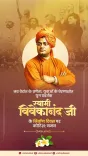
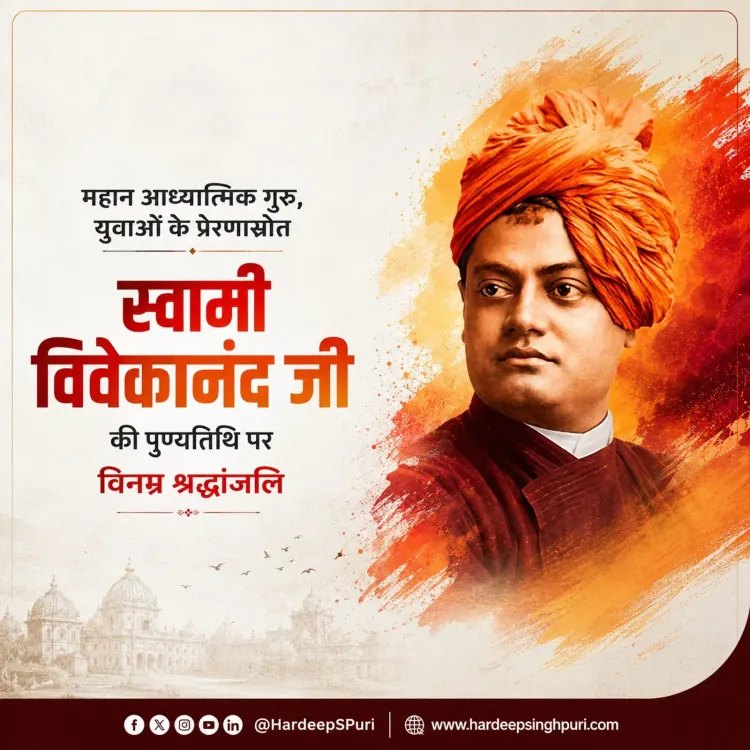
Union Petroleum Minister Hardeep Singh Puri on Saturday, July 4, 2026 paid tribute to Swami Vivekananda on his death anniversary, invoking the 19th-century monk's teachings as a living inspiration for India's youth and the nation's development ambitions.
Posting in Hindi, Puri described Vivekananda as 'राष्ट्रऋषि' ('the nation's sage') and a 'great source of empowerment for Indian youth.' He wrote that Vivekananda's life teaches Indians to 'step out of the mentality of servitude and always keep our heritage and our ideas at the forefront' — a pointed reference to the colonial mindset the ruling dispensation frequently urges citizens to shed.
Context
Swami Vivekananda was born on January 12, 1863 and died on July 4, 1902, making each July 4 his punyatithi (death anniversary). He is best remembered internationally for his address at the Parliament of the World's Religions in Chicago in 1893, where he introduced Vedanta philosophy to a global audience. Domestically, he is revered as a symbol of self-confidence, cultural pride, and the spiritual rejuvenation of a colonised people.
Puri's tribute called Vivekananda's ideas a source of 'continuous new energy' for the resolve of a Viksit Bharat (Developed India), directly linking a 19th-century reformist thinker to the government's flagship vision of a fully developed India by 2047.
Policy Backdrop
The Viksit Bharat vision, championed by Prime Minister Narendra Modi, frames India's centenary of independence as a development milestone anchored not just in economic metrics but in civilisational confidence. Senior BJP leaders have consistently cited Vivekananda to argue that this aspiration draws from indigenous philosophical traditions rather than imported development models.
The government had earlier marked Vivekananda's 150th birth anniversary in 2013 with nationwide programmes centred on youth empowerment and cultural heritage. His birth date, January 12, is officially observed as National Youth Day across India, reflecting the state's long-standing effort to channel his legacy into youth policy.
Stakeholders and Impact
The tribute speaks most directly to Indian youth, whom Vivekananda himself addressed as the transformative force of the nation. By connecting his philosophy to Viksit Bharat, Puri reinforces a narrative that positions young Indians as inheritors of a confident, self-reliant civilisation rather than beneficiaries of a purely technocratic growth agenda.
The invocation of 'colonial mentality' as something to be discarded resonates with a broader cultural messaging strategy the ruling party has pursued — one that frames contemporary policy choices, from infrastructure to education, as acts of civilisational reclamation. BJP supporters and cultural organisations aligned with Vivekananda's Vedanta legacy are the primary audience for this framing.
What's Next
Commemorations of Vivekananda's death anniversary typically coincide with renewed calls for youth-focused policy action. Forthcoming parliamentary sessions and national youth festivals may see references to his philosophy as a moral anchor for schemes targeting skill development, entrepreneurship, and cultural education. Puri's post signals that the government intends to keep Vivekananda's intellectual legacy active in its political communication through the run-up to 2047.
Point of View
The minister frames a technocratic development target as a civilisational project — lending it moral and cultural weight beyond GDP numbers. The consistency of this messaging across the party's senior leadership suggests a deliberate strategy to make Vivekananda a philosophical cornerstone of the 2047 narrative. For the opposition, the challenge lies in contesting the policy record without appearing to contest the icon himself.
NationPress
4 Jul 2026
Frequently Asked Questions
When did Swami Vivekananda die?
Swami Vivekananda died on July 4, 1902 , which is why his death anniversary is observed each year on July 4.
Why did Hardeep Singh Puri pay tribute to Swami Vivekananda?
Hardeep Singh Puri paid tribute on Vivekananda's death anniversary, citing his teachings on cultural self-confidence and youth empowerment as an inspiration for India's Viksit Bharat vision.
What is Viksit Bharat?
Viksit Bharat is the Indian government's vision for a fully developed India by 2047 , the centenary of independence, encompassing economic growth, infrastructure, and youth-driven progress.
What is National Youth Day in India?
National Youth Day is observed on January 12 every year, the birth anniversary of Swami Vivekananda, to honour his legacy as an inspiration for Indian youth.
What did Vivekananda say about colonial mentality?
Vivekananda consistently urged Indians to shed self-doubt rooted in colonial subjugation and to take pride in their own heritage, philosophy, and capabilities — a message Puri echoed in his July 4, 2026 tribute.