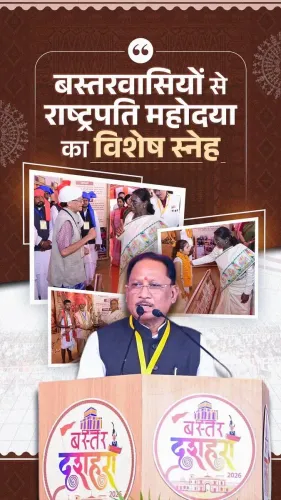
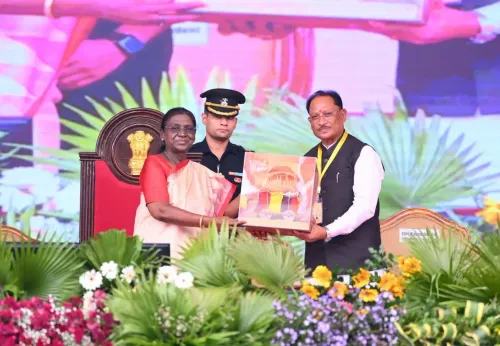
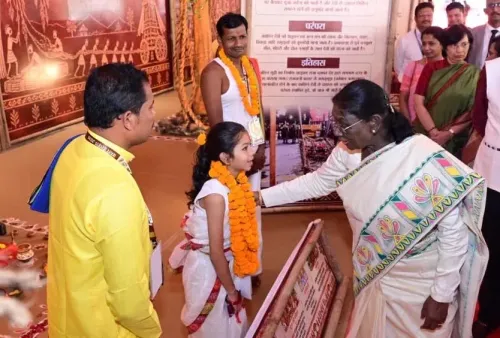
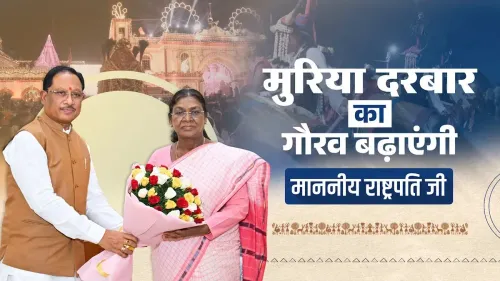
President Murmu graces Bastar Dussehra 2026
Synopsis
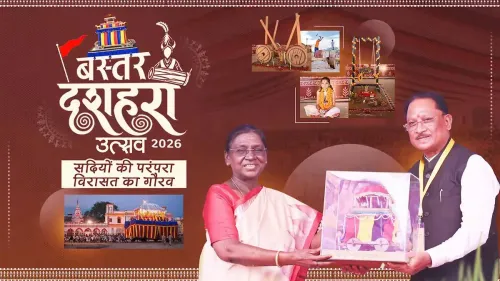
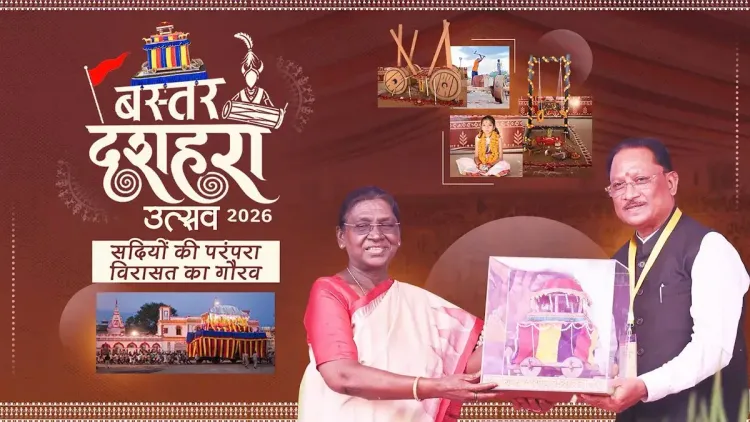
President Draupadi Murmu, India's first tribal-community President, attended the historic 75-day Bastar Dussehra on 23 October 2026. The Chhattisgarh CMO highlighted her dignified presence as a celebration of tribal traditions and folk culture, reinforcing the national Janjatiya Gaurav framework.
Key Takeaways
President Draupadi Murmu attended Bastar Dussehra 2026 in Chhattisgarh on 23 October 2026 .
Bastar Dussehra is a 75-day festival rooted in the indigenous traditions of the Bastar region, distinct from mainstream Dussehra celebrations.
President Murmu is the first person from a Scheduled Tribe community to hold the office of President of India, elected in 2022 .
The visit aligns with the Janjatiya Gaurav Divas framework instituted by the Government of India on 15 November 2021 to honour tribal contributions.
Chhattisgarh has one of the highest tribal population percentages in India, with Bastar as its primary cultural heartland.
India's President graced one of the world's most distinctive folk festivals on Friday, 23 October 2026, as President Draupadi Murmu attended the Bastar Dussehra in Chhattisgarh, lending constitutional dignity to a celebration that has little in common with the mainstream Ram-Leela tradition — and everything to do with the living, breathing tribal soul of central India.
The Chief Minister's Office of Chhattisgarh marked the occasion on X, describing the event as a moment where 'जनजातीय परंपराओं और लोक संस्कृति की अद्भुत झलक' ('a wondrous glimpse of tribal traditions and folk culture') came alive, and noting that President Murmu's 'गरिमामयी उपस्थिति' ('dignified presence') made the programme truly special.
What makes Bastar Dussehra unlike any other
Bastar Dussehra is a 75-day festival — among the longest in the world — rooted entirely in the indigenous traditions of the Bastar region rather than in the Ramayana narrative that defines Dussehra elsewhere in India. Its rituals, processions, and folk performances belong specifically to the tribal communities of southern Chhattisgarh, making it a living archive of a civilisation that predates the modern state. Chhattisgarh carries one of the highest tribal population percentages in the country, and Bastar is its cultural heartland.
Why President Murmu's presence resonates
President Draupadi Murmu, elected in 2022, is the first person from a Scheduled Tribe community to hold India's highest constitutional office. Her attendance at Bastar Dussehra is therefore more than ceremonial — it is symbolic architecture. When the First Citizen of India, herself from a tribal heritage, sits in the audience of a festival defined by that same heritage, the signal to millions of tribal citizens is unmistakable.
This visit fits a clear national pattern. Since the Government of India instituted Janjatiya Gaurav Divas on 15 November 2021 — an annual day to commemorate tribal contributions and leaders — high-level visibility for Scheduled Tribe traditions has become a deliberate policy gesture. Presidential and Prime Ministerial engagements with tribal festivals and regions have grown steadily since, giving constitutional weight to cultural recognition.
Chhattisgarh's tribal identity on the national stage
For the state government, the moment serves a dual purpose: cultural pride and a platform for the #ViksitChhattisgarh (Developed Chhattisgarh) vision it has been projecting publicly. Bastar's extraordinary festival calendar is increasingly positioned as a tourism and soft-power asset — a reason to look at the region not only through the lens of its longstanding security challenges, but through its extraordinary cultural wealth. Presidential attendance supercharges that narrative in a single frame.
The hashtags #JanJatiyaGaurav and #TribalPride anchored the CMO's post — a deliberate alignment of state messaging with the central government's Janjatiya Gaurav framework, underscoring the political and cultural consensus that tribal heritage deserves front-row recognition, not footnotes.
Bastar Dussehra has carried its traditions for centuries. This year, the President of India was watching. The rest of the country should be too.
Point of View
Attaching the President's presence to its flagship festival amplifies both tourism soft power and the state's 'ViksitChhattisgarh' branding. The pattern suggests that high-visibility tribal engagement will remain a structural feature of governance optics through at least the next electoral season.
NationPress
24 Oct 2026
Frequently Asked Questions
What is Bastar Dussehra and how is it different from regular Dussehra?
Bastar Dussehra is a 75-day tribal festival in the Bastar region of Chhattisgarh rooted in indigenous folk traditions, not the Ramayana narrative. Unlike mainstream Dussehra, it features rituals and processions unique to the tribal communities of southern Chhattisgarh and is considered one of the world's longest festivals.
Why did President Draupadi Murmu attend Bastar Dussehra 2026?
President Murmu attended as a gesture of recognition for India's tribal cultural heritage. As the first President from a Scheduled Tribe community, her presence carries deep symbolic weight and aligns with the national Janjatiya Gaurav framework that promotes tribal traditions at the highest levels.
What is Janjatiya Gaurav Divas?
Janjatiya Gaurav Divas is an annual commemoration observed on 15 November, instituted by the Government of India in 2021 to honour the contributions and heritage of tribal communities across the country.
When was Draupadi Murmu elected as President of India?
Draupadi Murmu was elected President of India in 2022, becoming the first person from a Scheduled Tribe community to hold the country's highest constitutional office.
Where is Bastar located and what is its tribal significance?
Bastar is a region in southern Chhattisgarh, a central Indian state with one of the highest tribal population percentages in the country. It is considered the cultural heartland of Chhattisgarh's tribal communities and is home to the historic Bastar Dussehra festival.