Why is Priyanka Chaturvedi questioning UGC’s new regulations?
Click to start listening
Synopsis
Shiv Sena MP Priyanka Chaturvedi raises alarms over the UGC's Promotion of Equity Regulations, 2026, emphasizing the need for comprehensive protection against discrimination on campuses. Her concerns reflect a broader dialogue on ensuring equity and accountability in higher education. What does this mean for students and institutions alike?
Key Takeaways
- Priyanka Chaturvedi questions the UGC's new regulations.
- Concerns over selective application and clarity.
- Calls for equal protection against discrimination.
- Mixed reactions from various stakeholders.
- Importance of institutional accountability emphasized.
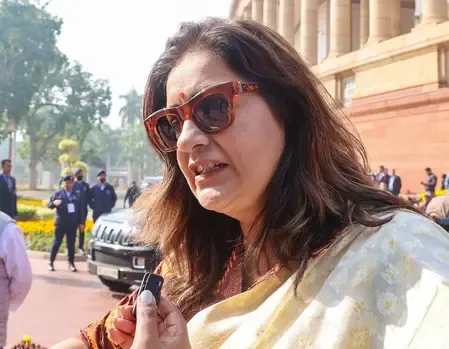
New Delhi, Jan 25 (NationPress) Shiv Sena (UBT) MP Priyanka Chaturvedi has voiced significant concerns regarding the University Grants Commission's Promotion of Equity Regulations, 2026. She has questioned the regulations' scope, clarity, and selective application, warning that inadequately designed rules could exacerbate tensions on university campuses.
In response to the UGC's notification issued in January 2026, Chaturvedi took to the social media platform X to express her worries about the inconsistent legal protections.
In her post, she stated, "While any form of caste discrimination on campus is unacceptable, India has witnessed many students enduring its repercussions; shouldn't legislation be comprehensive and guarantee protection for everyone? Why is there a disparity in how laws are applied?"
She further expressed concern over the lack of safeguards against misuse, asking, "What occurs in the event of false accusations? How do we determine guilt? How is discrimination defined -- through language, actions, or perceptions?"
Emphasizing the necessity of clarity, she added, "The law's applicability must be clear, specific, and equitable for all. Therefore, rather than fostering a negative environment on campuses, I recommend that the UGC notification be either retracted or amended."
The UGC's Promotion of Equity Regulations, 2026 aim to fortify anti-discrimination measures within higher education institutions.
The regulations mandate establishing equity committees, equal opportunity centers, helplines, and monitoring teams in colleges and universities.
They broadly define discrimination to encompass both explicit actions and implicit biases as well as systemic exclusion.
The UGC reported that these regulations were developed following a significant 118 percent increase in discrimination complaints from 2019 to 2023, particularly focusing on safeguarding Scheduled Castes, Scheduled Tribes, and Other Backward Classes.
However, the announcement has led to mixed responses. Critics from the general category have condemned the regulations, labeling them as biased and claiming that protections for the accused are inadequate, potentially leading to unfair targeting of upper-caste students.
Conversely, proponents have defended the regulations as necessary measures to rectify historical marginalization, asserting that they do not constitute reverse discrimination.
The regulations also aim to implement institutional accountability, placing the onus on institutional leaders to address harassment complaints and ensure compliance through regular monitoring.
While the UGC claims that the framework seeks long-term structural reform, critics argue that without equal application and precise definitions, the regulations might increase distrust and conflict on campuses instead of promoting genuine equity.
Point of View
It is imperative to recognize the nuanced discourse surrounding the UGC's Promotion of Equity Regulations, 2026. While the intention to address discrimination is commendable, the application must be equitable to prevent division within academic institutions. Engaging all stakeholders in this discussion is essential for fostering trust and cooperation in higher education.
NationPress
25/01/2026
Frequently Asked Questions
What are the UGC's Promotion of Equity Regulations, 2026?
The UGC's Promotion of Equity Regulations, 2026 aim to strengthen anti-discrimination mechanisms in higher education institutions by establishing equity committees and monitoring systems.
Why is Priyanka Chaturvedi concerned about these regulations?
Priyanka Chaturvedi is concerned about the regulations' scope, clarity, and selective application, arguing they could deepen campus tensions.
What specific issues does she highlight?
She highlights the absence of safeguards against misuse, the potential for false accusations, and the need for clear and equitable legal protections.
What has been the reaction to the UGC regulations?
Reactions are mixed; some criticize the regulations as biased, while supporters view them as necessary measures to address historical injustices.
How do these regulations define discrimination?
The regulations define discrimination broadly, including both explicit acts and implicit biases as well as systemic exclusion.