Kishtwar minor rape-murder probe transferred to J&K Crime Branch
Synopsis
A 15-year-old tribal girl allegedly raped by her school teacher over months died on 20 August during a pregnancy termination procedure. With six arrests made — including a district hospital nurse — and the National Commission for Scheduled Tribes issuing notices to J&K's top officials, the Kishtwar case has escalated into a test of institutional accountability across law enforcement, healthcare, and the education system.
Key Takeaways
The rape and murder probe of a 15-year-old tribal girl in Kishtwar was transferred to the J&K Crime Branch on 29 August .
The victim died on 20 August during a pregnancy termination procedure after allegedly being raped by her school teacher over several months.
Six suspects have been arrested, including Sonika , a nurse at Kishtwar District Hospital , booked under POCSO , BNS , and the SC/ST Atrocities Act .
The National Commission for Scheduled Tribes (NCST) issued notices on 25 August to Chief Secretary Atal Dulloo , DGP Nalin Prabhat , and SSP Sunny Gupta .
IGP Crime Branch Sarah Rizvi confirmed the agency has received communication from Police Headquarters and is in the process of taking over the investigation.
The investigation into the rape and murder of a 15-year-old tribal girl in Jammu and Kashmir's Kishtwar district was transferred to the Crime Branch on Saturday, 29 August, following sustained demands from the victim's family and local residents, officials confirmed. The case, which has drawn national attention and triggered intervention by a constitutional body, marks one of the most disturbing crimes reported from the region this year.
Background of the Case
The teenager was allegedly raped by her school teacher over a period of several months. The victim died on 20 August during a pregnancy termination procedure, according to officials. The case has since widened significantly, with a nurse also arrested in connection with the crime.
Sonika, a nurse at Kishtwar District Hospital, was arrested on Friday following the registration of a First Information Report (FIR) under provisions of the Protection of Children from Sexual Offences (POCSO) Act, the Bharatiya Nyaya Sanhita (BNS), and the Scheduled Castes and Scheduled Tribes (Prevention of Atrocities) Act. Her arrest brought the total number of persons detained in the matter to six.
Why the Case Was Transferred
The Kishtwar district police had earlier constituted a Special Investigation Team (SIT) to handle the probe. However, the victim's family members rejected this arrangement and demanded that the investigation be handed to the Crime Branch, citing concerns over the thoroughness and impartiality of the inquiry. Officials confirmed the transfer was carried out in response to those demands.
Inspector General of Police (IGP), Crime Branch, Sarah Rizvi confirmed that the agency had received formal communication from the Police Headquarters regarding the case transfer. She stated that the Crime Branch is in the process of formally taking over the investigation.
National Commission Steps In
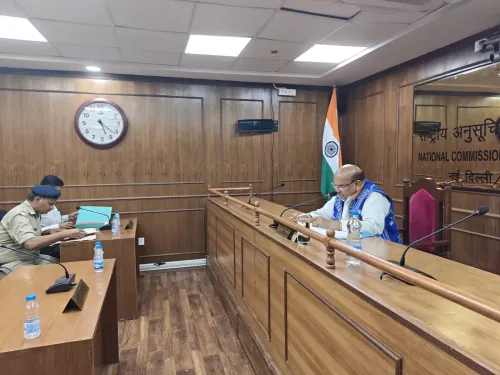
The gravity of the case prompted the National Commission for Scheduled Tribes (NCST) to initiate its own inquiry. On 25 August, the NCST served notices to Jammu and Kashmir Chief Secretary Atal Dulloo, Director General of Police (DGP) Nalin Prabhat, and Kishtwar Senior Superintendent of Police (SSP) Sunny Gupta, warning of mandatory personal appearance if they failed to respond within five days. The commission's intervention underscores the case's significance as a matter of tribal rights and institutional accountability.
What Happens Next
With the Crime Branch now formally in charge, investigators are expected to conduct a comprehensive re-examination of evidence, witness statements, and the chain of custody for any forensic material. The involvement of multiple accused — including a school teacher and a healthcare professional — points to a systemic failure that authorities will need to address. The NCST's parallel probe adds a layer of constitutional scrutiny that will keep pressure on the administration to deliver results.
Point of View
While a concession to the family's demands, raises a harder question: why was a case of this severity — involving a minor, a school teacher, a healthcare worker, and a victim from a scheduled tribe — handled by a district SIT in the first place. The NCST's intervention is not routine; notices to a Chief Secretary and a DGP signal that the commission views the state's initial response as inadequate. The involvement of a hospital nurse also points to possible institutional complicity that a district-level team may have been ill-equipped to pursue. The Crime Branch now inherits not just a case file, but a credibility deficit it will need to overcome through transparent, time-bound action.
NationPress
30 Aug 2026
Frequently Asked Questions
Why was the Kishtwar rape-murder case transferred to the Crime Branch?
The case was transferred to the J&K Crime Branch on 29 August following demands from the victim's family and local residents, who were not satisfied with the Special Investigation Team (SIT) handling the probe. Officials confirmed the transfer was made in response to those demands.
Who are the six people arrested in the Kishtwar case?
Six suspects have been detained so far, including the school teacher accused of raping the minor and Sonika, a nurse at Kishtwar District Hospital arrested on Friday. Sonika was booked under the POCSO Act, the Bharatiya Nyaya Sanhita, and the SC/ST (Prevention of Atrocities) Act.
How did the 15-year-old victim die?
The victim died on 20 August during a pregnancy termination procedure, according to officials. She had allegedly been raped by her school teacher over a period of several months.
What action has the National Commission for Scheduled Tribes taken?
The NCST issued notices on 25 August to J&K Chief Secretary Atal Dulloo, DGP Nalin Prabhat, and Kishtwar SSP Sunny Gupta, warning them of mandatory personal appearance if they failed to respond within five days. The commission has also decided to conduct its own independent probe into the case.
What laws have been invoked in the Kishtwar case?
The FIR has been registered under the Protection of Children from Sexual Offences (POCSO) Act, the Bharatiya Nyaya Sanhita (BNS), and the Scheduled Castes and Scheduled Tribes (Prevention of Atrocities) Act, reflecting the multiple dimensions of the alleged crime.