CM Shivakumar Orders Probe After Ministers Blocked at Mysore Palace Pooja
Synopsis
Chief Minister D.K. Shivakumar has ordered a formal inquiry after police officers blocked four Karnataka cabinet ministers from entering the Nandidhwaja Pooja at Mysore Palace. Chief Secretary Shalini Rajneesh will lead the probe and submit a report on the responsible officials.
Key Takeaways
Four ministers — Shivaraj Thangadagi, K.S.
Narendra Swamy, and H.C.
Balakrishna — were denied entry to the Nandidhwaja Pooja at Mysore Palace .
Shivakumar called the police officers' conduct 'condemnable arrogance' and took the matter with utmost seriousness.
Chief Secretary Shalini Rajneesh has been formally directed to conduct a full inquiry and submit a report naming the responsible officials.
Direct intervention allowed the ministers to eventually access the prayer precinct on the day.
The government has warned that any insolence or arrogance in the name of authority will not be tolerated, and disciplinary action will follow the inquiry report.
Four state ministers were barred at the gates of the Mysore Palace during the sacred Nandidhwaja Pooja ceremony — and Chief Minister D.K. Shivakumar is calling it indefensible. In a strongly-worded statement posted on Thursday, October 22, 2026, the Chief Minister's Office of Karnataka announced that police officials who blocked the ministers' entry have been referred for a full inquiry.
What happened at the Mysore Palace ceremony
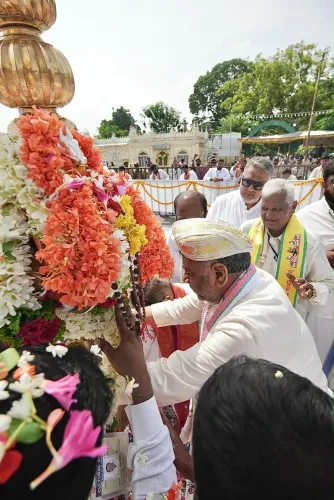
During the Nandidhwaja Pooja held within the Mysore Palace complex, police officers refused to allow ministers Shivaraj Thangadagi, K.S. Basavantappa, P.M. Narendra Swamy, and H.C. Balakrishna to enter the prayer precinct. The situation was resolved only after direct intervention allowed the ministers to finally access the venue — but the incident had already escalated to the Chief Minister's desk.
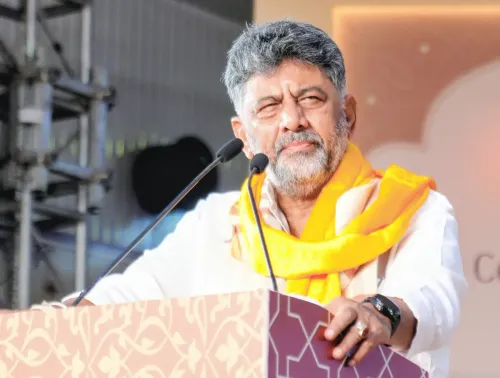
CM Shivakumar's statement did not mince words. He described the officials' conduct as 'condemnable arrogance' (ಉದ್ಧಟತನ) and said he viewed the episode with utmost seriousness. 'Every official has the responsibility to maintain discipline, restraint, and respect for elected representatives in the discharge of their duties,' he stated.
Chief Secretary Shalini Rajneesh directed to lead the inquiry
Chief Secretary Shalini Rajneesh has been formally directed to conduct a comprehensive inquiry into the incident and submit a report identifying the responsible officers. The directive signals that the government intends this to be a structured administrative proceeding, not a quiet internal note.
CM Shivakumar made clear that once the inquiry report is received, action will be taken against the guilty officials 'as per the rules.' His statement closed with a blunt warning: 'The government will not tolerate any insolence or arrogance in the name of authority.'
Protocol, power, and the elected-official-vs-official fault line
Incidents like this sit at one of the oldest fault lines in Indian state administration — the tension between elected representatives who assert primacy and security or administrative officials managing access at heritage and ceremonial sites. The Mysore Palace, one of India's most visited and symbolically weighted landmarks, is managed under state oversight, making the protocol question sharper here than at most venues.
Chief ministers stepping in publicly to rebuke officials for restricting ministers is not unprecedented across Indian states. What gives this episode additional weight is the setting: a formal religious ceremony inside a heritage palace, with four cabinet-rank ministers simultaneously denied entry. The scale of the incident — not a single oversight but a pattern on the day — is precisely what pushed it from an internal complaint to a public directive with a named inquiry officer.
When Chief Secretary Rajneesh submits her report, the names, ranks, and chain-of-command decisions behind the blockade will come into focus. What follows will test whether the government's zero-tolerance language translates into actual disciplinary consequence.
Point of View
Particularly when a protocol lapse becomes publicly visible. Routing the inquiry through the Chief Secretary rather than a lower-level review signals the government wants a credible paper trail — and maximum deterrence. The real test is whether disciplinary action materialises after the report lands, or whether the inquiry quietly fades; Karnataka's political watchers will note the difference. For Shivakumar personally, responding forcefully to a slight against his own cabinet also carries an internal political logic ahead of any legislative session or government review.
NationPress
22 Oct 2026
Frequently Asked Questions
Why were Karnataka ministers blocked at Mysore Palace?
Police officers on duty at the Nandidhwaja Pooja ceremony inside the Mysore Palace complex refused to allow four state ministers — Shivaraj Thangadagi, K.S. Basavantappa, P.M. Narendra Swamy, and H.C. Balakrishna — to enter the prayer precinct. CM Shivakumar described the conduct as indefensible and ordered a formal inquiry.
What is the Nandidhwaja Pooja at Mysore Palace?
The Nandidhwaja Pooja is a religious ceremony conducted within the historic Mysore Palace complex, one of India's most prominent heritage sites managed under Karnataka state oversight. The palace is particularly significant during the annual Dasara celebrations.
Who is conducting the inquiry into the Mysore Palace incident?
Chief Secretary of Karnataka, Shalini Rajneesh, has been directed by CM D.K. Shivakumar to conduct a comprehensive inquiry and submit a report identifying the police officers responsible for denying entry to the ministers.
What action will be taken against the officers involved?
CM Shivakumar stated that once the Chief Secretary's inquiry report is received, disciplinary action will be taken against guilty officials 'as per the rules.' The government has said it will not tolerate arrogance or insolence by officials in the exercise of authority.
Were the ministers eventually allowed into the Nandidhwaja Pooja?
Yes. According to CM Shivakumar's statement, immediate intervention was made on the day to allow the ministers access to the prayer precinct. However, the incident was still escalated and a formal inquiry ordered.