Urdu festival at Vidhana Soudha sparks row; BJP objects, Minister Khader open to changes
Synopsis
Karnataka's Congress government walked into a political storm after announcing the first-ever Urdu Habba at Vidhana Soudha on November 9 — a venue the BJP calls a symbol of Kannada identity. With the Deputy CM saying he had no knowledge of it and the minister now offering to 'make adjustments', the event's fate is suddenly uncertain, and the language politics row it has ignited could shadow the state government well beyond November.
Key Takeaways
Karnataka's Congress government announced the first-ever Urdu Habba at Vidhana Soudha , Bengaluru , on 9 November 2026 to mark Urdu Day.
Khader said the government would seek opinions and was 'ready to make adjustments' amid criticism.
BJP State President B.Y.
Vijayendra accused the government of 'divide and rule' politics and minority appeasement.
Deputy Chief Minister G.
Parameshwara said he had no knowledge of the event, signalling possible cabinet-level disconnect.
Ravi questioned the Congress's consistency, contrasting its opposition to Hindi imposition with its backing of an Urdu festival at a Kannada-identity symbol.
The event's final venue and format remain undecided pending further government consultations.
Karnataka's Congress government has sparked a political controversy by announcing plans to hold the first-ever Urdu Habba (Urdu Festival) on the steps of Vidhana Soudha in Bengaluru on 9 November 2026, to mark Urdu Day. The Bharatiya Janata Party (BJP) has strongly objected to the choice of venue, and Minister for Health, Family Welfare, Waqf and Minority Affairs U.T. Khader has since indicated the government would seek opinions and was open to adjustments.
What the festival involves
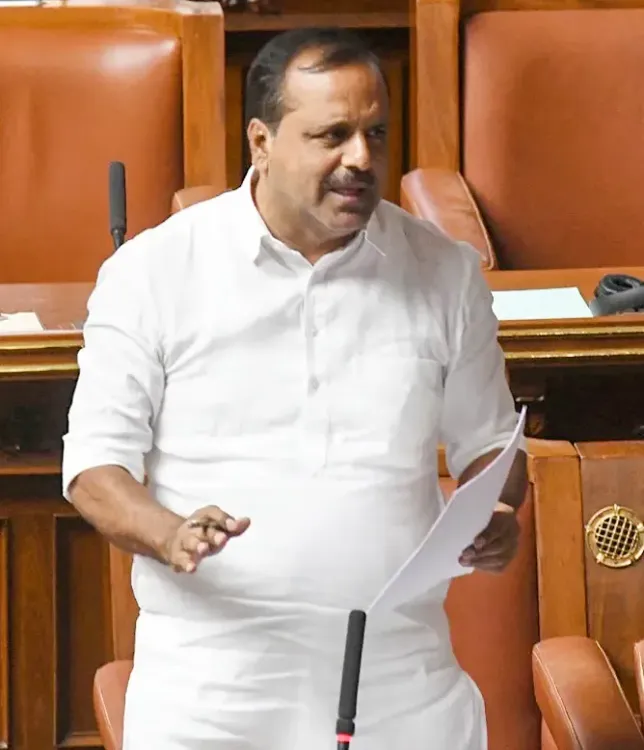
Minister U.T. Khader announced the event as a platform to showcase Urdu language, literature, heritage, books, cuisine, and diverse art forms to people across communities. Vidhana Soudha — Karnataka's imposing legislative building — was chosen as the venue, a selection that has become the focal point of the controversy.
The festival is intended as a first-of-its-kind state-backed celebration of Urdu, which holds official second-language status in several Karnataka districts with significant Urdu-speaking populations.
BJP's objections and key accusations
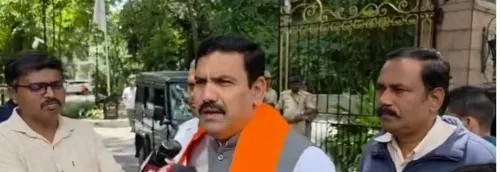
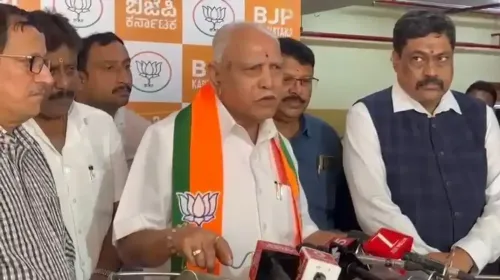
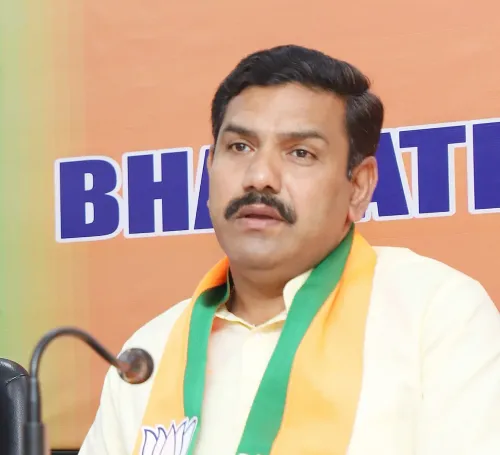
BJP State President B.Y. Vijayendra, speaking in Kolar, accused the state government of pursuing 'divide and rule' politics by holding an Urdu festival at Vidhana Soudha at a time when, he argued, the Kannada language deserved prominence at such a symbolic state venue. He alleged that the government had contradicted its own stance by opposing the Centre's three-language formula on grounds of Hindi imposition, while now organising an Urdu festival at Karnataka's most iconic administrative building.
Vijayendra clarified that the BJP was not opposed to minority welfare, but maintained that development and welfare schemes must reach all sections of society equally. He warned that voters would deliver their verdict at the coming elections if divisive politics took precedence over development.
BJP MLC C.T. Ravi, reacting to the development in New Delhi, questioned the Congress government's consistency on language issues. 'Those who oppose Hindi should explain their stand now. They are citing Tulu's prominence and celebrating Urdu,' he said. Ravi asserted that Kannada was supreme in Karnataka and that a programme celebrating a language 'not connected to the state' should not be held at Vidhana Soudha.
Government response and uncertainty
Responding to the row in Bengaluru on Thursday, Minister Khader appeared to soften the government's earlier position. 'We will discuss whether to hold the programme or not. We will seek opinions, and we are ready to make adjustments,' he said. The statement leaves the event's final format — and indeed, whether it proceeds at Vidhana Soudha at all — uncertain.
Deputy Chief Minister G. Parameshwara distanced himself from the decision, saying he had no information about the matter. 'This matter has not come to my knowledge. I do not have any information,' he said — a remark that critics argue suggests a lack of coordination within the state cabinet.
Broader political backdrop
The controversy comes amid ongoing tensions over language politics in Karnataka, where the ruling Congress has been navigating competing demands from Kannada, Urdu, Tulu, and other linguistic communities. The BJP's framing of the event as minority appeasement reflects a broader opposition strategy ahead of future state elections. Notably, the debate has also reignited discussion over whether non-Kannada cultural events should be staged at Vidhana Soudha, a venue widely regarded as a symbol of Kannada pride and Karnataka's legislative identity.
With the event scheduled for 9 November 2026, the coming weeks will likely see further consultations — and political pressure — before a final decision is made.
Point of View
A venue that carries deep symbolic weight for Kannada identity. The Congress government appears to have underestimated that symbolism, and the Deputy CM's admission that he had no knowledge of the event suggests the decision was not the product of careful political management. The BJP's framing of this as minority appeasement is predictable electoral positioning, but the contradiction Vijayendra highlights — opposing Hindi imposition while organising an Urdu event at a Kannada-pride landmark — is a genuine communications vulnerability for the ruling party. Minister Khader's pivot to 'seeking opinions' signals the government already knows it has a problem.
NationPress
1 Oct 2026
Frequently Asked Questions
What is the Urdu Habba planned at Vidhana Soudha?
The Urdu Habba is a first-of-its-kind state-backed Urdu festival announced by Karnataka's Congress government, scheduled for 9 November 2026 on the steps of Vidhana Soudha in Bengaluru to mark Urdu Day. The event is meant to showcase Urdu language, literature, heritage, books, cuisine, and art forms to audiences across communities.
Why is the BJP objecting to the Urdu festival?
The BJP objects primarily to the choice of Vidhana Soudha as the venue, arguing it is a symbol of Karnataka's Kannada identity and should not host a festival celebrating a language the party says is 'not connected to the state'. BJP State President B.Y. Vijayendra has also accused the government of divisive politics and minority appeasement ahead of elections.
Will the Urdu festival still be held at Vidhana Soudha?
That remains uncertain. Minister U.T. Khader said on Thursday that the government would 'discuss whether to hold the programme or not' and was open to making adjustments following the controversy. No final decision on the venue or format has been announced.
What did Deputy Chief Minister G. Parameshwara say about the event?
Deputy Chief Minister G. Parameshwara said he had no information about the Urdu Habba announcement — a statement that has drawn attention to a possible lack of coordination within the Karnataka cabinet over the decision.
How does this fit into Karnataka's broader language politics?
Karnataka has long been a battleground for competing linguistic identities, with Kannada, Urdu, Tulu, and other communities asserting cultural rights. The controversy reflects the Congress government's challenge in balancing minority outreach with Kannada-pride sentiment — a tension the BJP is actively exploiting ahead of future state elections.