Rahul Gandhi in Balaghat: Demands land rights, Forest Rights Act for MP tribal families
Synopsis
Rahul Gandhi's visit to Balaghat's Jagla village was not a routine opposition tour — it put a disputed tribal child death toll (32 acknowledged by the state, 43 claimed by Congress) at the centre of national politics, with the Leader of Opposition demanding Forest Rights Act land titles, welfare scheme access, and functional healthcare for communities he described as 'abandoned in the heart of India.'
Key Takeaways
Rahul Gandhi visited Jagla village, Balaghat on 1 October 2026 to meet Baiga tribal families affected by child deaths linked to illness and malnutrition.
The MP administration acknowledges 32 deaths ; the Congress claims the figure is 43 .
Gandhi demanded that tribal families receive land titles under the Forest Rights Act and full compensation for deceased children's families.
He alleged that tribal beneficiaries of one scheme were being excluded from Ladli Behna Yojana entitlements.
Gandhi criticised the reported renaming of MGNREGA , calling for the scheme to be made functional instead.
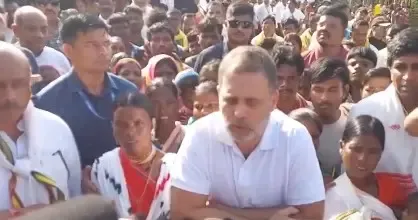
Around 1,500 people gathered at Jagla to meet him, according to Congress leaders.
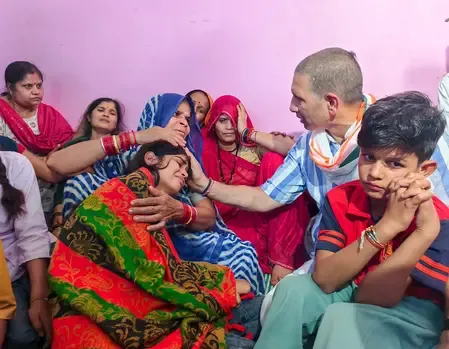
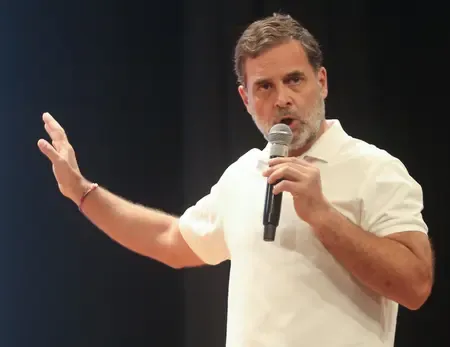
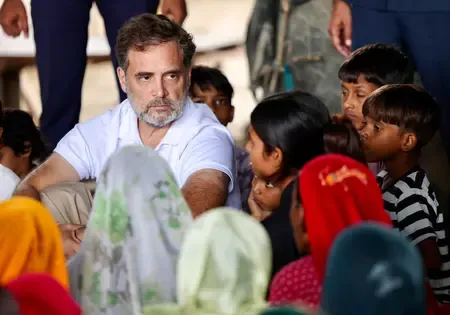
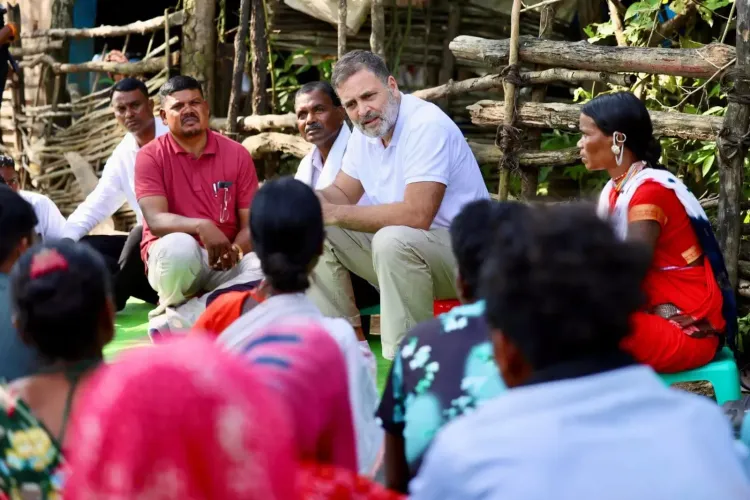
Leader of Opposition Rahul Gandhi on Thursday, 1 October 2026, visited Jagla village in Balaghat district, Madhya Pradesh, to meet Baiga tribal families who have lost children amid reports of illness and malnutrition, demanding that the Mohan Yadav government immediately plug gaps in healthcare, education, land rights, and welfare delivery in the state's tribal belt. Gandhi reached Balaghat by road from Birsi Airport in Maharashtra, stopping at a government primary school en route to enquire about mid-day meals served to students.
Disputed Death Toll at the Centre of the Visit
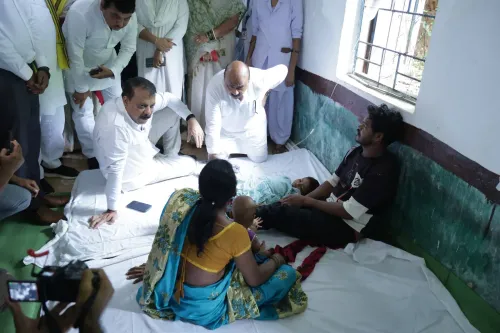
Gandhi's visit to Birsa block came directly against the backdrop of a contested death toll among tribal children. The Madhya Pradesh administration has acknowledged 32 deaths, while the Indian National Congress (Congress) claims the actual figure stands at 43. The discrepancy has sharpened political tensions over welfare delivery in the region. After meeting the bereaved families, Gandhi said the crisis was not limited to child deaths alone but reflected systemic failures in the delivery of basic services and government schemes across the state's tribal communities.
What Gandhi Said: Land, Compensation, and Forest Rights
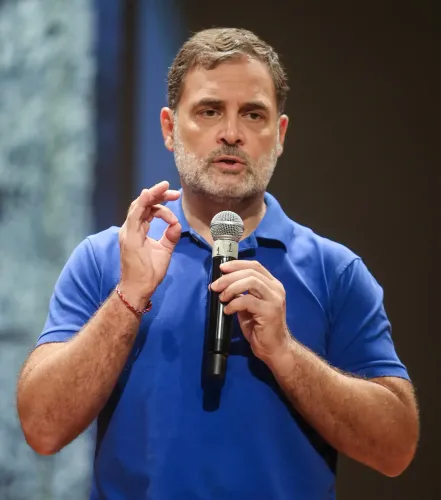
'There are issues regarding land, rural employment scheme and land rights. Many children have died, yet their families have not even received proper compensation. Half of the people have not received compensation,' Gandhi told reporters at the site. He specifically demanded that tribal families be granted their entitlements under the Forest Rights Act, including formal land titles. 'At the very least, they should be granted their rights under the Forest Rights Act and receive their land titles. Provide education and hospitals here,' he said.
Welfare Scheme Exclusions and MGNREGA Criticism
Gandhi also raised concerns about alleged exclusions from welfare schemes, claiming that tribal beneficiaries receiving assistance under one government programme were simultaneously being denied benefits under the Ladli Behna Yojana. He argued that such entitlements could not be withheld from eligible recipients. Separately, he criticised the reported renaming of MGNREGA, contending that the government should focus on making the employment guarantee scheme functional rather than merely rebranding it.
Healthcare, Education, and a Sharp Political Message
Gandhi questioned the state of healthcare and educational infrastructure in remote tribal villages, arguing that official claims of development must be matched by ground-level delivery. 'It appears as though they have been abandoned in the heart of India, with neither the Central government nor the Madhya Pradesh government seemingly present,' he said. He also reiterated the Congress's position on terminology, stating that the party uses the term 'Adivasi' — referring to original inhabitants — while alleging that the Bharatiya Janata Party (BJP) and RSS prefer the term 'Vanvasis'. Approximately 1,500 people from surrounding villages gathered at Jagla to meet him, according to Congress leaders.
Political Context and What Comes Next
This is not the first time tribal welfare in Madhya Pradesh has drawn national political attention. The state's Baiga, Gond, and other scheduled tribe communities have long been flagged by activists and opposition parties for inadequate access to Forest Rights Act entitlements and welfare scheme implementation. Gandhi's visit — coming ahead of the next legislative session — is likely to intensify pressure on the Yadav government to respond with documented figures on deaths, compensation disbursed, and Forest Rights Act titles issued. The Congress is expected to raise the matter in Parliament as well.
Point of View
It points to a data and accountability vacuum in tribal districts. The Forest Rights Act has been on the books since 2006, yet land title implementation in Madhya Pradesh remains deeply uneven — making Gandhi's demand less a new ask than an indictment of two decades of partial delivery. The Ladli Behna exclusion allegation, if substantiated, would compound the picture of a welfare architecture that excludes its most marginalised recipients. The Yadav government's response — with verified figures on compensation paid, titles granted, and deaths recorded — will determine whether this visit becomes a sustained political liability.
NationPress
1 Oct 2026
Frequently Asked Questions
Why did Rahul Gandhi visit Balaghat on 1 October 2026?
Rahul Gandhi visited Jagla village in Balaghat district to meet Baiga tribal families who have lost children amid reports of illness and malnutrition. He sought to highlight gaps in healthcare, education, welfare delivery, and land rights in Madhya Pradesh's tribal belt.
How many tribal children have died in Balaghat, and why is the figure disputed?
The Madhya Pradesh administration has officially acknowledged 32 deaths among tribal children, while the Congress claims the actual number is 43. The discrepancy has become a flashpoint, with opposition leaders demanding an independent count and full transparency from state authorities.
What did Rahul Gandhi demand for tribal communities in Madhya Pradesh?
Gandhi demanded that tribal families receive formal land titles under the Forest Rights Act, full compensation for families of deceased children, access to functional healthcare and education, and uninterrupted welfare benefits — including under the Ladli Behna Yojana.
What is the Forest Rights Act and why is it relevant here?
The Forest Rights Act (2006) guarantees scheduled tribe and forest-dwelling communities formal recognition of their land and resource rights. Gandhi alleged that many Baiga families in Balaghat have yet to receive land titles they are entitled to under the law, nearly two decades after its enactment.
What was Gandhi's criticism of MGNREGA in this context?
Gandhi criticised the reported renaming of MGNREGA, arguing that the government should prioritise making the rural employment guarantee scheme operational for tribal communities rather than changing its name. He said families in the region lacked access to both employment scheme benefits and basic compensation.