Sarnath inscribed on UNESCO World Heritage List, PM Modi hails historic moment
Synopsis
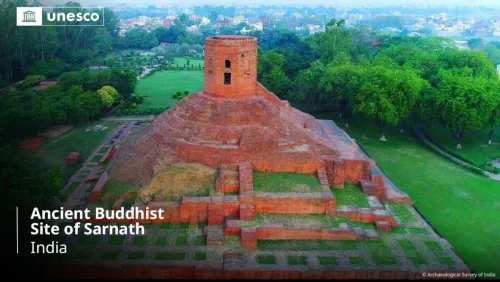
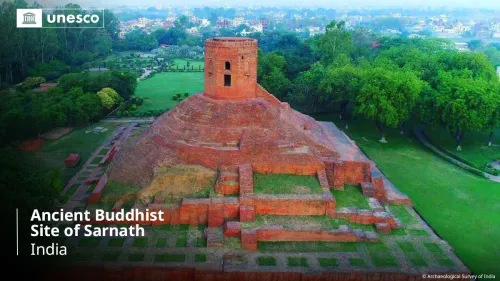
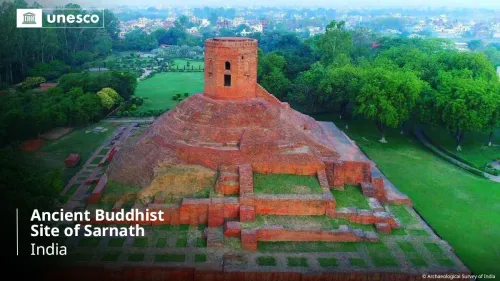
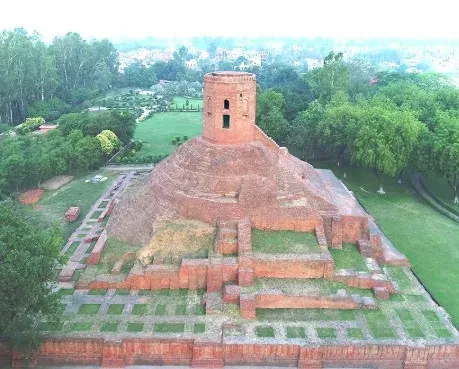
Sarnath — where the Buddha delivered his first sermon and whose Lion Capital became India's national emblem — has joined the UNESCO World Heritage List. The inscription, confirmed at the 48th World Heritage Committee session in Busan, is both a cultural milestone and a strategic win for India's heritage diplomacy and Buddhist circuit tourism.
Key Takeaways
Sarnath in Uttar Pradesh was inscribed on the UNESCO World Heritage List on 25 July 2025 .
The inscription was confirmed during the 48th session of the World Heritage Committee in Busan, South Korea ( 19–29 July ).
PM Narendra Modi hailed the recognition on X , calling it 'a proud moment for every Indian.' Sarnath is revered as the site of Lord Buddha's first sermon and is a pilgrimage destination for over 500 million Buddhists worldwide.
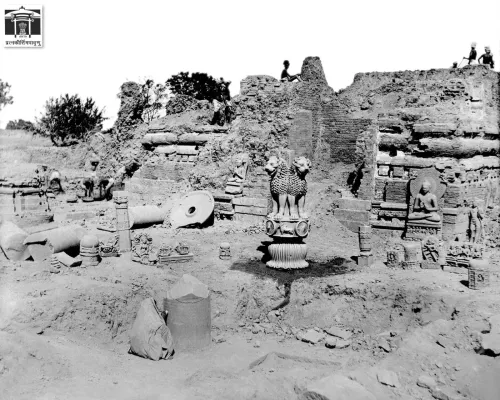
The Lion Capital of Ashoka , discovered at Sarnath, is India's National Emblem , adding historic significance to the inscription.
Ambassador Vishal V Sharma thanked PM Modi, Culture Minister Gajendra Singh Shekawat , and the ASI for their role in securing the recognition.
Sarnath, the sacred Buddhist site in Uttar Pradesh, was officially inscribed on the UNESCO World Heritage List on 25 July 2025, during the 48th session of the World Heritage Committee being held in Busan, South Korea from 19–29 July. Prime Minister Narendra Modi hailed the recognition as a celebration of India's profound civilisational and spiritual heritage.
PM Modi's Reaction
Prime Minister Modi shared his response on X, calling it 'a proud moment for every Indian.' He wrote: 'Delighted that Sarnath in Uttar Pradesh has been inscribed on the UNESCO World Heritage List. Sarnath has a close association with Lord Buddha, whose timeless message of wisdom, compassion and harmony inspires the world.'
Modi added that the recognition 'will also inspire more people across the world to come to Sarnath and connect with the ideals of Lord Buddha.'
Why Sarnath Matters
Sarnath holds a singular place in world history as the site where Lord Buddha delivered his first sermon after attaining Enlightenment — an event that set in motion the Wheel of Dharma and established the Buddhist Sangha. The site is a point of reflection for over 500 million Buddhists worldwide, according to India's permanent delegation to UNESCO.
Notably, the Lion Capital of Ashoka — discovered at Sarnath and adopted as India's National Emblem — further elevates the site's historical and symbolic significance. This dual identity, as both a Buddhist pilgrimage centre and a source of India's state iconography, makes the inscription particularly resonant.
Official Statements
The Ministry of External Affairs (MEA) also posted on X, stating that the inscription 'celebrates India's rich heritage and will inspire people across the world to connect with his timeless message of wisdom, compassion and harmony.'
Ambassador Vishal V Sharma, India's Permanent Representative to UNESCO, thanked Prime Minister Modi, Minister of Culture Gajendra Singh Shekawat, and the Archaeological Survey of India (ASI), alongside the World Heritage Centre. Ambassador Sharma said: 'Sarnath remains a site of reflection for over 500 million Buddhists worldwide and inspires the youth to seek truth, embrace non-violence, pursue mindful living, and become responsible global citizens committed to inclusive social transformation that resonates deeply with India and UNESCO's own mission of building peace.'
Significance for India's Heritage Diplomacy
The inscription is a boost to India's ongoing efforts to project its civilisational legacy on the global stage. Sarnath's addition strengthens India's UNESCO World Heritage portfolio and is expected to drive increased international Buddhist tourism to Uttar Pradesh. This comes amid India's broader push to develop Buddhist circuit tourism, linking sites such as Bodh Gaya, Kushinagar, and Lumbini for pilgrims and cultural travellers worldwide.
With the formal inscription complete, attention will now turn to conservation planning and tourism infrastructure development at the site to handle anticipated growth in visitor numbers.
Frequently Asked Questions
Why has Sarnath been inscribed on the UNESCO World Heritage List?
Sarnath was inscribed for its outstanding universal value as the site where Lord Buddha delivered his first sermon after attaining Enlightenment, establishing the Buddhist Sangha and setting in motion the Wheel of Dharma. The site also houses the Lion Capital of Ashoka, which became India's National Emblem, making it significant both spiritually and historically.
When was Sarnath added to the UNESCO World Heritage List?
Sarnath was officially inscribed on 25 July 2025 during the 48th session of the UNESCO World Heritage Committee, which is being held in Busan, South Korea, from 19 to 29 July 2025.
What did PM Modi say about Sarnath's UNESCO inscription?
Prime Minister Narendra Modi posted on X calling it 'a proud moment for every Indian,' expressing delight at the recognition and noting that Sarnath's association with Lord Buddha and his message of wisdom, compassion, and harmony will inspire more people worldwide to visit the site.
What is the significance of Sarnath for Buddhists?
Sarnath is the sacred site where Lord Buddha delivered his first sermon after attaining Enlightenment, an event considered foundational to Buddhism. It is a site of reflection for over 500 million Buddhists worldwide, according to India's permanent delegation to UNESCO.
How does this inscription benefit India?
The UNESCO recognition is expected to boost international Buddhist tourism to Uttar Pradesh and strengthen India's broader Buddhist circuit linking Bodh Gaya, Kushinagar, and Lumbini. It also reinforces India's position in heritage diplomacy and its effort to project its civilisational legacy on the global stage.