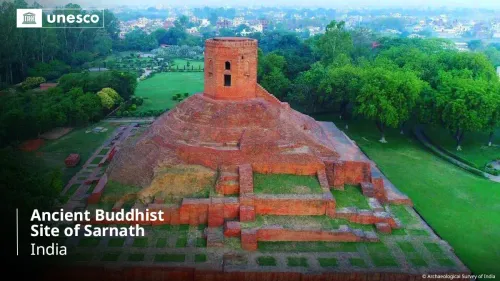
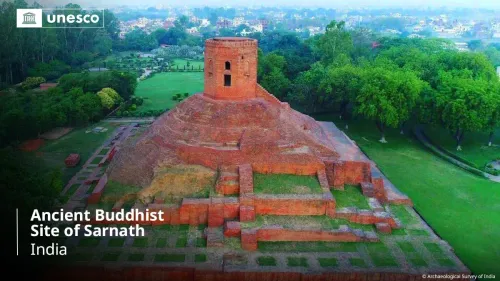
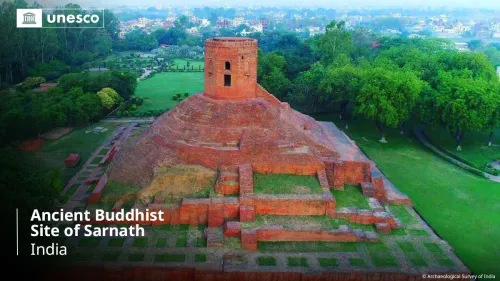
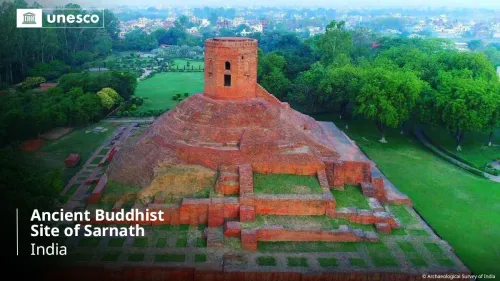
Shekhawat hails Sarnath's UNESCO World Heritage inscription
Synopsis
Union Culture and Tourism Minister Gajendra Singh Shekhawat announced on 25 July 2026 that Sarnath — the ancient Buddhist site near Varanasi where the Buddha delivered his first sermon — has been inscribed on the UNESCO World Heritage List, calling it a defining moment for India's cultural heritage.
Key Takeaways
Sarnath , the ancient Buddhist site near Varanasi, Uttar Pradesh , has been inscribed on the UNESCO World Heritage List .
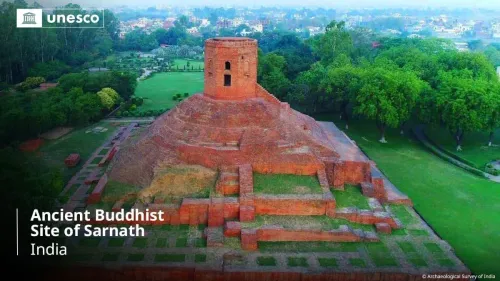
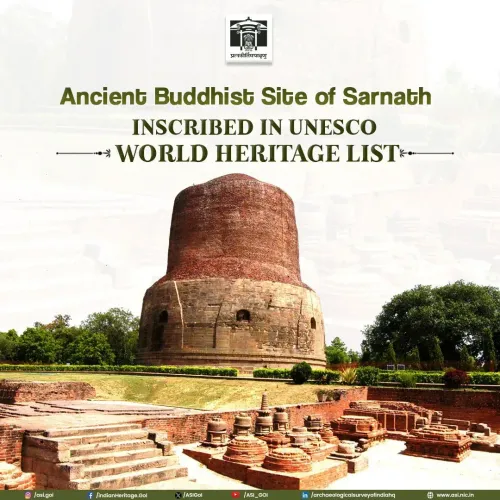
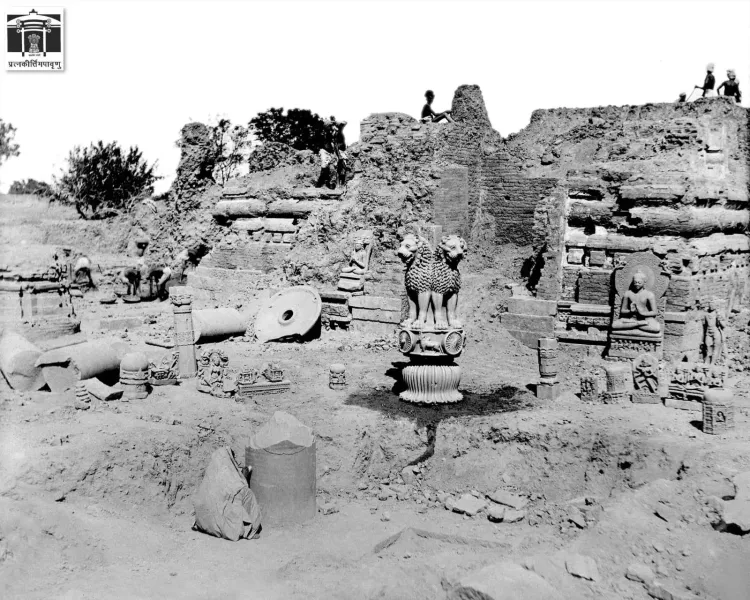
Union Culture and Tourism Minister Gajendra Singh Shekhawat announced the inscription on 25 July 2026 , describing it as 'a defining moment for India's cultural heritage.' Sarnath is where Gautama Buddha delivered his first sermon after enlightenment and houses the Dhamek Stupa and the Ashoka Pillar , whose lion capital is India's national emblem.
The inscription follows earlier precedents including the Mahabodhi Temple, Bodh Gaya listing in 2002 and infrastructure investments under the Swadesh Darshan Buddhist Circuit and PRASHAD schemes.
India now counts more than 40 UNESCO World Heritage Sites , with the listing expected to boost Buddhist pilgrimage tourism and support cultural diplomacy with Asian nations.
Next steps include preparation of a site management plan for UNESCO and potential additional conservation funding ahead of the 2027 World Heritage Committee session .
Union Culture and Tourism Minister Gajendra Singh Shekhawat on Saturday, 25 July 2026, welcomed the inscription of the ancient Buddhist site of Sarnath on the UNESCO World Heritage List, calling it 'a defining moment for India's cultural heritage.' The announcement marks a landmark recognition for one of Buddhism's most sacred sites, located near Varanasi in Uttar Pradesh.
Context
Sarnath is the site where Gautama Buddha delivered his first sermon after attaining enlightenment, an event known in Buddhist tradition as the 'Dhammacakkappavattana Sutta' or the turning of the wheel of Dharma. The site houses the Dhamek Stupa, the Ashoka Pillar — whose lion capital serves as India's national emblem — and the ruins of ancient monasteries that once drew scholars and pilgrims from across Asia. Minister Shekhawat described the site as 'a timeless beacon of peace, wisdom and compassion' that 'reflects the profound spiritual and philosophical contributions of Indian civilisation to humanity.'
Policy Backdrop
The inscription follows a sustained diplomatic and cultural push by successive Indian governments to secure UNESCO recognition for Buddhist heritage properties. India's Mahabodhi Temple at Bodh Gaya was inscribed on the World Heritage List in 2002, establishing a precedent for Buddhist sites in the country. Sarnath had long featured on India's tentative list submitted to UNESCO, and the site received infrastructure investment under the Swadesh Darshan scheme's Buddhist Circuit project launched in 2016. The PRASHAD scheme — Pilgrimage Rejuvenation and Spiritual Heritage Augmentation Drive — has also channelled funds toward pilgrimage infrastructure at sites linked to the Buddha's life.
India currently counts more than 40 UNESCO World Heritage Sites, spanning natural and cultural categories. Each new inscription strengthens the country's position in multilateral cultural diplomacy, particularly with Buddhist-majority nations across South and Southeast Asia.
Stakeholders and Impact
The UNESCO listing is expected to significantly boost heritage tourism to Sarnath, which already draws hundreds of thousands of Buddhist pilgrims and tourists annually from countries including Sri Lanka, Japan, Thailand, South Korea, and Myanmar. A World Heritage designation typically triggers enhanced conservation protocols, international funding eligibility, and greater global visibility — all of which benefit local economies and the broader Varanasi tourism corridor. Archaeologists and conservation professionals managing the site under the Archaeological Survey of India are also likely to gain access to UNESCO's technical assistance frameworks.
For the BJP-led government, the inscription carries soft-power significance, reinforcing India's narrative as the birthplace of Buddhism and a civilisational bridge to the Buddhist world — a theme that has featured prominently in recent foreign policy outreach.
What's Next
Following a World Heritage inscription, the next steps typically involve the preparation and submission of a site management plan to UNESCO, outlining conservation benchmarks and visitor management strategies. Attention will also turn to whether additional funding flows to Sarnath under the PRASHAD scheme and whether the Ministry of Culture fast-tracks similar nominations ahead of the 2027 World Heritage Committee session. Minister Shekhawat's post — framed around India's 'enduring role as a cradle of ideas' — signals that the government intends to leverage the inscription as both a cultural and diplomatic asset in the months ahead.
Point of View
Which seeks to anchor contemporary foreign policy in ancient heritage. The listing also reinforces the Ministry of Culture's strategy of converting UNESCO recognitions into tangible tourism and economic dividends through schemes like PRASHAD and Swadesh Darshan. Expect the inscription to feature prominently in upcoming diplomatic engagements and state visits involving Buddhist-heritage nations.
NationPress
24 Oct 2026
Frequently Asked Questions
Has Sarnath been inscribed as a UNESCO World Heritage Site?
Yes. According to Union Culture and Tourism Minister Gajendra Singh Shekhawat's announcement on 25 July 2026, Sarnath has been inscribed on the UNESCO World Heritage List.
Why is Sarnath important for Buddhism?
Sarnath, near Varanasi in Uttar Pradesh, is the site where Gautama Buddha delivered his first sermon after attaining enlightenment. It houses the Dhamek Stupa and the Ashoka Pillar, whose lion capital is India's national emblem.
How many UNESCO World Heritage Sites does India have?
India has more than 40 UNESCO World Heritage Sites spanning cultural and natural categories, with Sarnath being among the most recent additions.
What schemes has India used to develop Sarnath?
The Indian government has invested in Sarnath through the Swadesh Darshan scheme's Buddhist Circuit project launched in 2016 and the PRASHAD scheme, which funds pilgrimage and spiritual heritage infrastructure.
Which other Indian Buddhist site is a UNESCO World Heritage Site?
The Mahabodhi Temple at Bodh Gaya in Bihar was inscribed on the UNESCO World Heritage List in 2002, establishing the precedent for Indian Buddhist site nominations.