Jaishankar Hails Sarnath's UNESCO World Heritage Inscription
Synopsis
Union External Affairs Minister Dr. S. Jaishankar hailed the inscription of Sarnath — where Buddha delivered his first sermon — on UNESCO's World Heritage List, framing it as a recognition of India's civilisational legacy and a milestone in its cultural soft-power diplomacy.
Key Takeaways
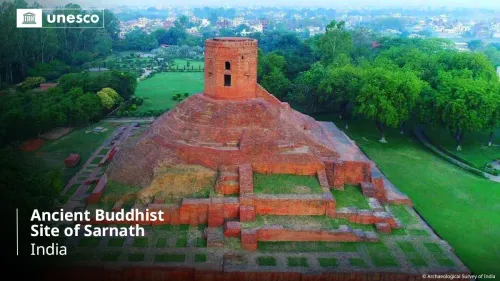
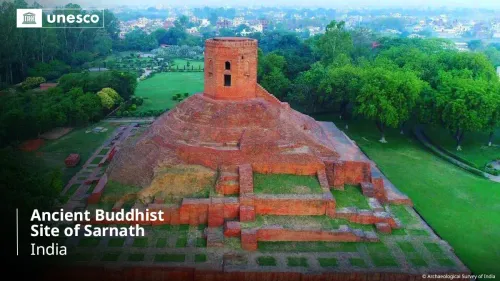
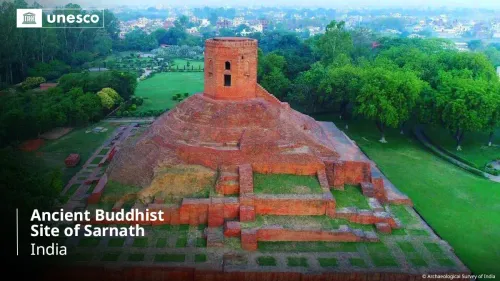
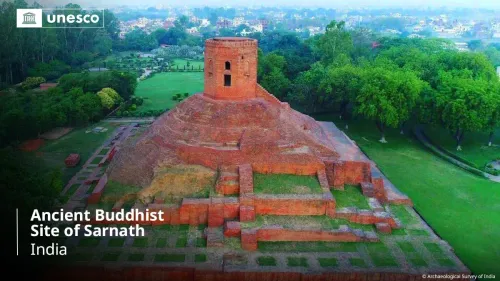
Sarnath , the ancient Buddhist site near Varanasi, Uttar Pradesh , has been inscribed on UNESCO's World Heritage List .
Union External Affairs Minister Dr.
Jaishankar welcomed the inscription on 26 July 2026 , calling it a matter of national pride.
Sarnath is the site where Gautama Buddha delivered his first sermon after enlightenment, making it one of Buddhism's holiest places.
The inscription advances India's strategy of leveraging cultural heritage for soft-power diplomacy , especially with Buddhist-majority nations in Asia.
India's earlier Buddhist heritage inscriptions include the Mahabodhi Temple Complex at Bodh Gaya , recognised by UNESCO in 2002 .
The recognition is expected to boost heritage tourism in the Varanasi region and bind authorities to UNESCO conservation standards.
Union External Affairs Minister Dr. S. Jaishankar on Sunday, 26 July 2026 welcomed the inscription of the ancient Buddhist site of Sarnath on UNESCO's World Heritage List, calling it a matter of national pride and a recognition of India's civilisational and spiritual legacy.
Context
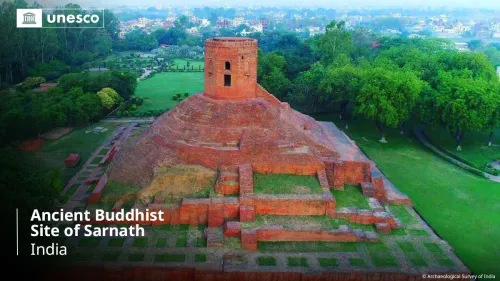
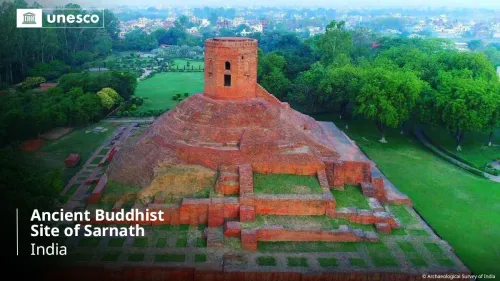
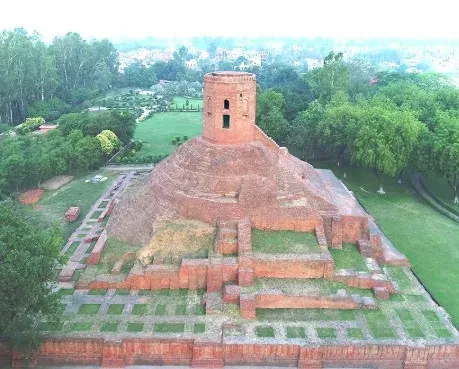
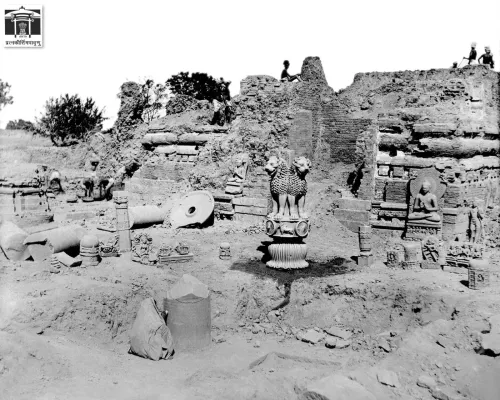
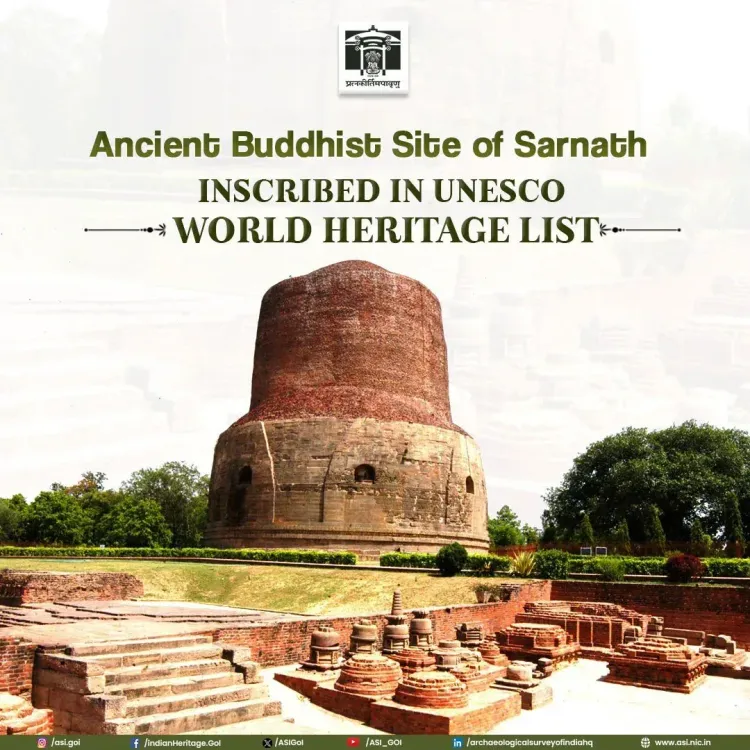
Sarnath, located near Varanasi in Uttar Pradesh, is one of the most sacred sites in Buddhism. It is the place where Gautama Buddha delivered his first sermon — known as the Dhammacakkappavattana Sutta, or the 'turning of the wheel of Dharma' — following his enlightenment at Bodh Gaya. The site holds the Dhamek Stupa, the ruins of ancient monasteries, and the Ashoka Pillar whose lion capital serves as India's national emblem.
Dr. Jaishankar described the inscription as 'a recognition of India's rich civilisation and spiritual legacy, inspiring humanity with the timeless message of wisdom, compassion and harmony.' The post was accompanied by an image marking the occasion.
Policy Backdrop
India has pursued UNESCO World Heritage inscriptions as a deliberate instrument of cultural diplomacy, building a portfolio that spans Buddhist, Hindu, and prehistoric sites. Earlier milestones include the inscription of the Mahabodhi Temple Complex at Bodh Gaya in 2002 and sites such as Sanchi and the Rock Shelters of Bhimbetka. Sarnath had long featured on India's tentative list submitted to UNESCO before achieving full inscription status.
The External Affairs Ministry has consistently framed such recognitions within India's broader soft-power outreach, particularly toward Buddhist-majority nations in South and Southeast Asia. Dr. Jaishankar, as the country's top diplomat, has personally championed the narrative of India as the fountainhead of Buddhist civilisation in multilateral and bilateral engagements.
Stakeholders and Impact
Buddhist communities across India and the world — including those in Sri Lanka, Thailand, Japan, Myanmar, Cambodia, and Vietnam — regard Sarnath as a site of profound spiritual significance, and the UNESCO status is expected to deepen those cultural ties. The inscription also carries immediate practical implications for heritage tourism in the Varanasi region, which already draws hundreds of thousands of pilgrims and tourists annually.
State authorities in Uttar Pradesh and the Archaeological Survey of India will now be bound by UNESCO's conservation and management obligations, which typically involve site-management plans, buffer zones, and periodic reporting to the World Heritage Committee.
What's Next
India maintains an active tentative list of additional cultural and natural sites awaiting nomination to the World Heritage List. Future UNESCO World Heritage Committee sessions are expected to take up several of these nominations, and the successful inscription of Sarnath is likely to strengthen India's case for further recognitions. Diplomatically, the development provides New Delhi with fresh momentum to deepen engagement with Buddhist-majority countries through cultural and people-to-people channels.
Point of View
Not just cultural administration. Coming at a time when India is deepening bilateral ties with Buddhist-majority nations across South and Southeast Asia, the Sarnath listing gives Indian diplomacy a fresh cultural anchor. The move fits a well-established pattern of deploying heritage narratives to reinforce India's identity as a source-civilisation with global spiritual resonance.
NationPress
24 Oct 2026
Frequently Asked Questions
Why is Sarnath important for Buddhism?
Sarnath is the site near Varanasi, Uttar Pradesh, where Gautama Buddha delivered his very first sermon after attaining enlightenment, making it one of the four holiest pilgrimage sites in Buddhism alongside Bodh Gaya, Kushinagar, and Lumbini.
What does UNESCO World Heritage status mean for Sarnath?
UNESCO World Heritage status means Sarnath is recognised as a site of 'outstanding universal value,' bringing international conservation obligations, enhanced global visibility, and typically a significant boost to heritage tourism and research funding.
What did Jaishankar say about Sarnath's UNESCO inscription?
Dr. S. Jaishankar called the inscription 'a matter of pride' and described it as 'a recognition of India's rich civilisation and spiritual legacy, inspiring humanity with the timeless message of wisdom, compassion and harmony.'
How many UNESCO World Heritage Sites does India have?
With the addition of Sarnath, India's count of UNESCO World Heritage Sites has grown further, building on a list that already included iconic sites such as the Taj Mahal, Mahabodhi Temple Complex, Sanchi, and the Rock Shelters of Bhimbetka, among others.
How does India use Buddhist heritage sites in its foreign policy?
India actively promotes its Buddhist heritage in diplomatic engagement with Buddhist-majority countries in South and Southeast Asia, using cultural ties, pilgrimage connectivity, and UNESCO recognitions to strengthen people-to-people links and soft-power influence.