PM Modi hails Sarnath's UNESCO World Heritage inscription
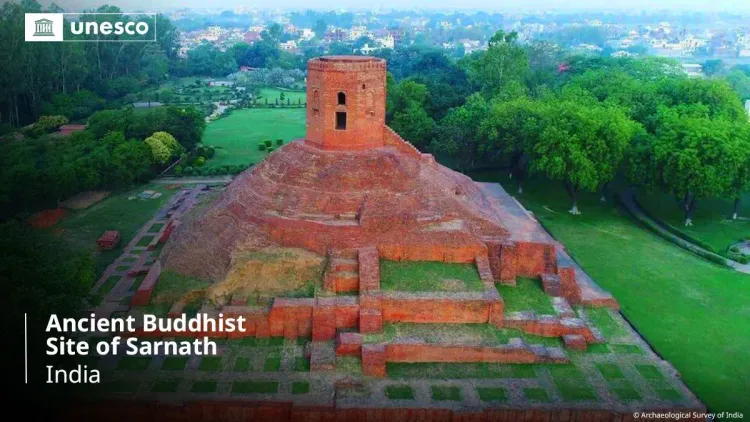
Synopsis
Prime Minister Narendra Modi on 25 July 2026 hailed the inscription of Sarnath — the site of Lord Buddha's first sermon — on the UNESCO World Heritage List, describing it as a proud moment for India and a boost to the country's civilisational and spiritual heritage on the global stage.
Key Takeaways
Sarnath in Uttar Pradesh has been inscribed on the UNESCO World Heritage List , confirmed on 25 July 2026 .
Prime Minister Narendra Modi called it 'a proud moment for every Indian' and highlighted Lord Buddha 's message of wisdom, compassion, and harmony.
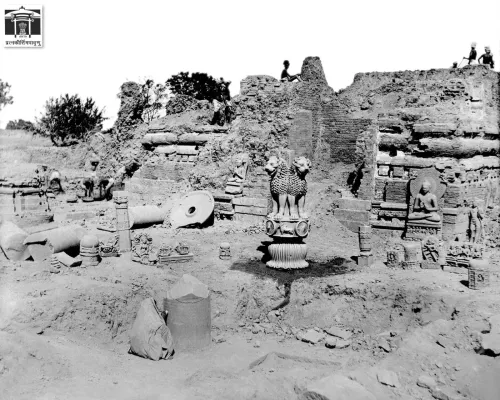
Sarnath is the site of Gautama Buddha's first sermon and houses the Ashokan pillar whose lion-capital is India's national emblem.
India now has more than 40 UNESCO World Heritage properties; Nalanda Mahavihara was the previous major Buddhist site inscribed in 2016 .
The Buddhist Circuit under the Swadesh Darshan scheme (launched 2014-15 ) positions Sarnath as a key node for integrated heritage tourism.
The inscription is expected to deepen India's cultural diplomacy with Buddhist-majority nations including Japan , Thailand , Sri Lanka , and Myanmar .
Prime Minister Narendra Modi on Saturday, 25 July 2026, celebrated the inscription of Sarnath in Uttar Pradesh on the UNESCO World Heritage List, calling it 'a proud moment for every Indian' and noting the site's enduring association with Lord Buddha.
Context
Sarnath, located on the outskirts of Varanasi in Uttar Pradesh, is among the most sacred sites in Buddhism. It is here that Gautama Buddha delivered his first sermon — known as the Dhammacakkappavattana Sutta (Setting the Wheel of Dhamma in Motion) — after attaining enlightenment at Bodh Gaya, marking the founding moment of the Buddhist tradition.
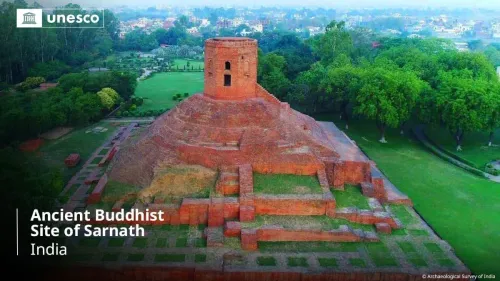
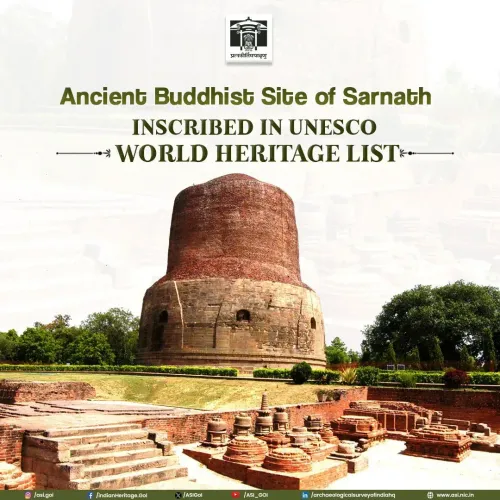
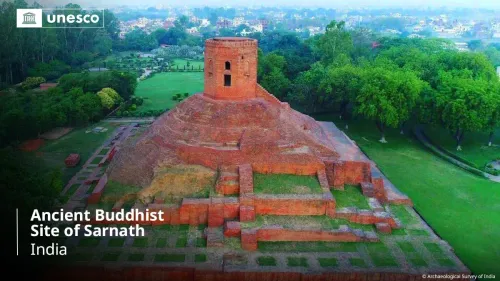
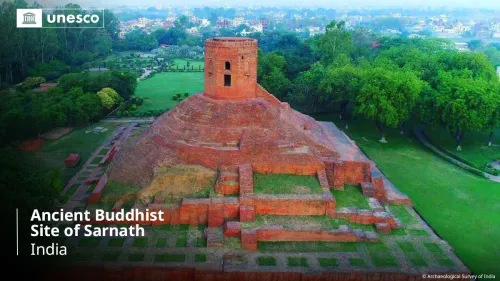
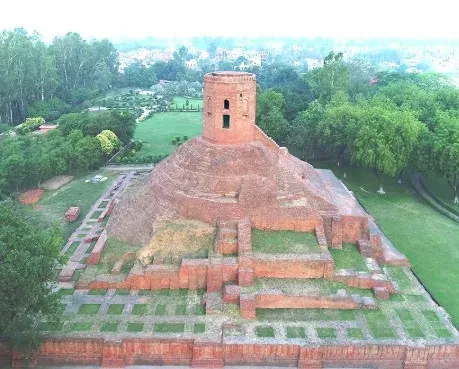
The site contains significant archaeological remains including ancient stupas, monastic ruins, and the celebrated Ashokan pillar, whose lion-capital serves as the national emblem of India. The inscription elevates Sarnath to the highest tier of internationally recognised cultural landmarks.
Policy Backdrop
India has pursued a sustained strategy of nominating Buddhist and ancient heritage sites for UNESCO recognition. The Nalanda Mahavihara in Bihar was inscribed on the World Heritage List in 2016, and Sarnath's nomination dossier was submitted by the Ministry of Tourism and the Archaeological Survey of India (ASI) as part of efforts to expand India's cultural properties on the list.
The Swadesh Darshan scheme, launched in 2014-15, identified the Buddhist Circuit as one of fifteen thematic tourism corridors for integrated infrastructure development, with Sarnath forming a key node alongside Bodh Gaya and Kushinagar. This inscription is expected to give fresh impetus to tourism investment along that circuit.
India currently holds more than 40 UNESCO World Heritage properties spanning both cultural and natural categories, placing it among the top nations on the list.
Stakeholders and Impact
Buddhist pilgrims from countries such as Japan, Thailand, Sri Lanka, and Myanmar already visit Sarnath in significant numbers each year. The UNESCO inscription is widely expected to accelerate international footfall and strengthen India's soft-power ties with Buddhist-majority nations across Asia.
The Uttar Pradesh government and state tourism department stand to benefit from heightened global visibility, which could attract conservation funding, hospitality investment, and joint cultural promotion events with partner countries. Local communities dependent on pilgrimage tourism, artisans, and heritage guides are among the direct beneficiaries.
What's Next
Attention will now turn to whether the central government and the Uttar Pradesh administration announce a dedicated conservation master plan or enhanced funding for Sarnath's archaeological precincts in the wake of the inscription. Diplomatic follow-through — including possible joint tourism promotion initiatives with Buddhist-majority nations — is also anticipated.
The recognition reinforces India's broader positioning as the custodian of shared Buddhist civilisational heritage, a narrative that carries strategic weight in its engagements across Southeast Asia and East Asia.
Point of View
And this inscription extends that playbook. For the Modi government, it also reinforces a domestic narrative linking contemporary governance to ancient civilisational pride. The real test will be whether the inscription is followed by substantive conservation investment and infrastructure upgrades, or remains primarily a communications win.
NationPress
24 Oct 2026
Frequently Asked Questions
Why is Sarnath important for Buddhism?
Sarnath is the site where Gautama Buddha delivered his first sermon after attaining enlightenment, making it one of the four most sacred places in Buddhism. The site contains ancient stupas, monastery ruins, and the Ashokan pillar erected by Emperor Ashoka in the third century BCE.
When was Sarnath inscribed on the UNESCO World Heritage List?
The inscription was announced on 25 July 2026 , as confirmed by Prime Minister Narendra Modi in a post on X addressed to UNESCO .
How many UNESCO World Heritage Sites does India have?
India has more than 40 UNESCO World Heritage properties across cultural and natural categories, placing it among the top nations globally on the list.
What is the Swadesh Darshan scheme and how does it relate to Sarnath?
The Swadesh Darshan scheme , launched in 2014-15 , identified fifteen thematic tourism circuits for integrated development. Sarnath is a key node on the Buddhist Circuit , which also includes Bodh Gaya and Kushinagar.
Which other Buddhist site in India has UNESCO World Heritage status?
Nalanda Mahavihara in Bihar was inscribed on the UNESCO World Heritage List in 2016 . Several other sites with Buddhist significance, such as Sanchi, also hold World Heritage status.