Amit Shah hails Sarnath's UNESCO World Heritage listing
Synopsis
Union Home Minister Amit Shah on 25 July 2026 hailed the UNESCO World Heritage listing of Sarnath in Uttar Pradesh, the site of Lord Buddha's first sermon, saying the recognition would carry Buddhist ideals of peace and enlightenment to a wider global audience.
Key Takeaways
Sarnath in Uttar Pradesh has been included in the UNESCO World Heritage List , as announced on 25 July 2026 .
Union Home Minister Amit Shah welcomed the listing, calling it an endorsement of India's ancient heritage linked to Lord Buddha .
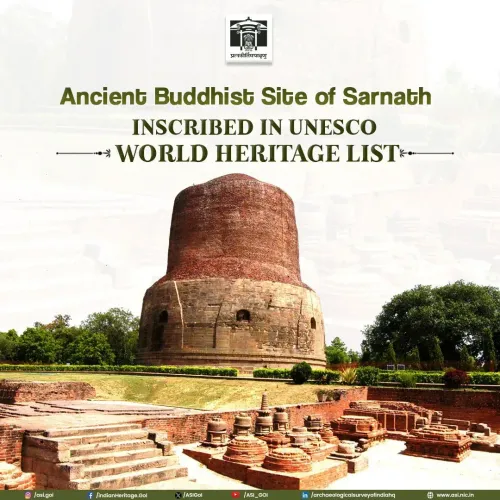
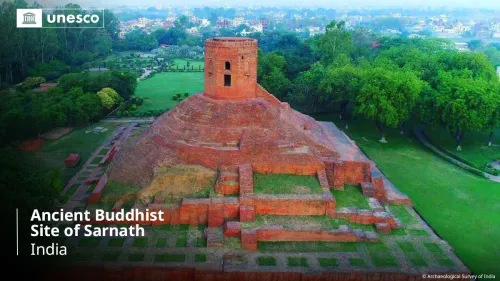
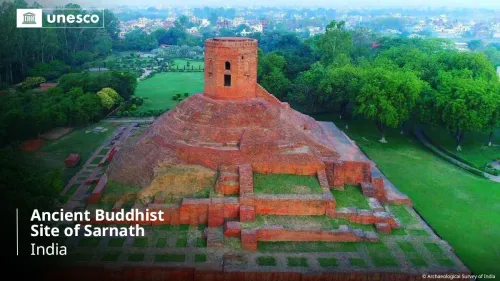
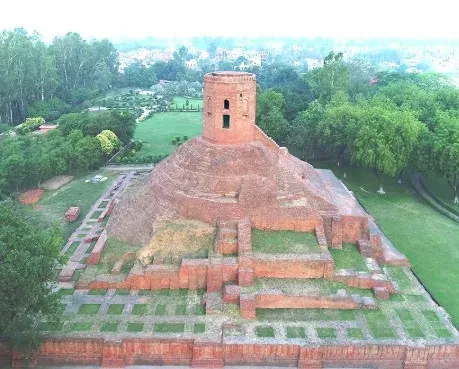
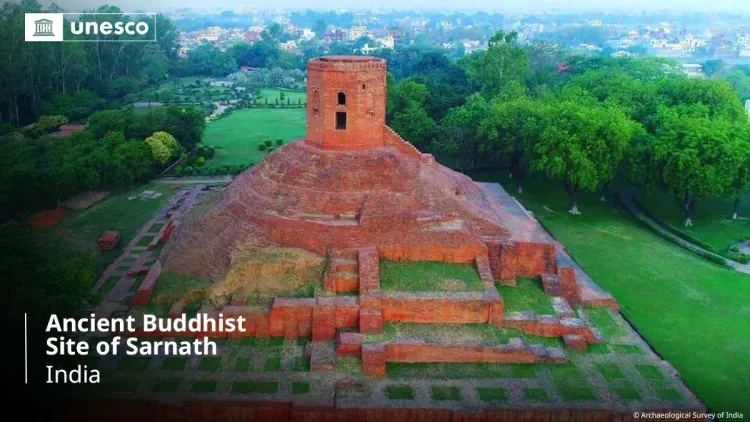
Sarnath is the site where Gautama Buddha delivered his first sermon after enlightenment, and is home to the Dhamek Stupa .
The Mahabodhi Temple Complex at Bodh Gaya was India's first major Buddhist UNESCO inscription, in 2002 .
The Buddhist Circuit under the Swadesh Darshan scheme, launched in 2016 , had already earmarked infrastructure development for Sarnath.
The listing is expected to boost inbound pilgrimage tourism and strengthen India's cultural diplomacy with Southeast and East Asian nations.
Union Home Minister Amit Shah on Saturday, 25 July 2026, welcomed the inclusion of Sarnath in Uttar Pradesh on the UNESCO World Heritage List, calling it an endorsement of India's ancient heritage associated with Lord Buddha and expressing hope that the recognition would carry his 'luminous wisdom to more people.'
Context
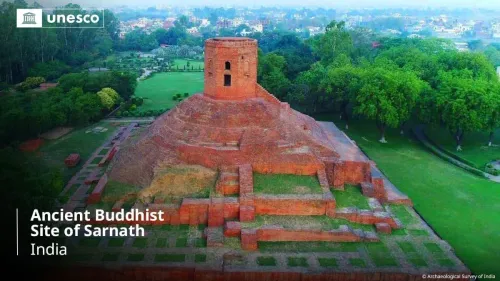
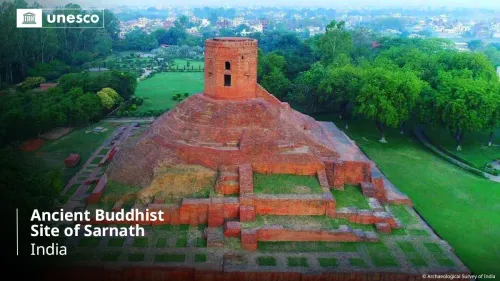
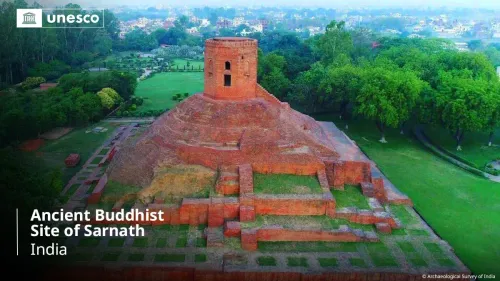
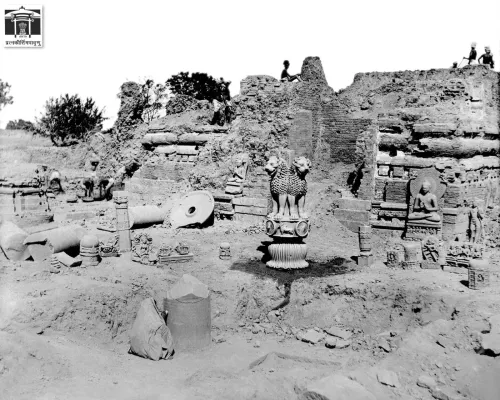
Sarnath, located on the outskirts of Varanasi in Uttar Pradesh, is the site where Gautama Buddha delivered his first sermon after attaining enlightenment — an event known in Buddhist tradition as the 'Dhammacakkappavattana Sutta,' or the turning of the wheel of the Dharma. The site is home to the iconic Dhamek Stupa and a rich complex of archaeological remains that draw pilgrims and scholars from across the world. Its inscription on the UNESCO World Heritage List places it among sites recognised for 'outstanding universal value.'
Shah stated that the recognition 'will take his luminous wisdom to more people and inspire them to imbibe the ideals of peace and enlightenment for a better world,' framing the listing as both a cultural milestone and a moral one.
Policy Backdrop
India's pursuit of UNESCO recognition for Buddhist heritage sites has a defined lineage. The Mahabodhi Temple Complex at Bodh Gaya — the site of Buddha's enlightenment — was inscribed on the World Heritage List in 2002, becoming India's first major Buddhist site to receive the distinction. India has since pursued a broader strategy of nominating properties tied to shared religious heritage as an instrument of cultural diplomacy, particularly toward Southeast and East Asian nations where Buddhism holds deep roots.
In 2016, the central government launched the Buddhist Circuit under the Swadesh Darshan scheme, earmarking funds to develop infrastructure at key Buddhist pilgrimage sites including Sarnath, Bodh Gaya, Kushinagar, and Lumbini corridor linkages. The UNESCO inscription is expected to give fresh impetus to those development efforts and attract higher volumes of international pilgrims and tourists.
Stakeholders and Impact
The listing is significant for multiple constituencies. Buddhist pilgrims from countries such as Sri Lanka, Thailand, Japan, South Korea, and Myanmar already visit Sarnath in large numbers; the UNESCO tag is likely to accelerate that inflow and strengthen India's soft-power outreach to Buddhist-majority nations. The Uttar Pradesh government and the Archaeological Survey of India will now be bound by UNESCO's management and conservation protocols, raising the bar for site stewardship.
The heritage tourism sector — hotels, guides, transport operators — in and around Varanasi stands to benefit directly. The listing also reinforces Uttar Pradesh's positioning as a premier heritage and spiritual tourism destination, building on the state's investments in sites such as Ayodhya and the Kashi Vishwanath Corridor.
What's Next
Attention will now turn to the central and state governments' follow-up announcements on site management, visitor infrastructure, and conservation funding at Sarnath. UNESCO inscription typically triggers obligations around a management plan and periodic state-of-conservation reports, which will require coordinated action between the Archaeological Survey of India and the Uttar Pradesh archaeology department. India's pipeline of pending UNESCO nominations for other ancient and cultural sites may also receive a boost in diplomatic momentum from this recognition.
Point of View
Deepening ties with pilgrimage-source nations across Southeast and East Asia. Shah's response — framed in terms of universal peace and enlightenment rather than narrow national pride — reflects a deliberate diplomatic register that goes beyond domestic cultural politics. The listing also strengthens Uttar Pradesh's identity as a multi-faith heritage corridor, complementing recent high-profile investments in Hindu pilgrimage infrastructure. How the central and state governments translate this symbolic moment into concrete conservation and tourism outcomes will determine whether the inscription yields lasting strategic dividends.
NationPress
24 Oct 2026
Frequently Asked Questions
Why is Sarnath important for Buddhism?
Sarnath is the site in Uttar Pradesh where Gautama Buddha delivered his first sermon after attaining enlightenment, making it one of the four most sacred places in Buddhism alongside Bodh Gaya, Kushinagar, and Lumbini.
When was Sarnath added to the UNESCO World Heritage List?
Sarnath was included in the UNESCO World Heritage List as announced on 25 July 2026, according to Union Home Minister Amit Shah's post on X.
How many UNESCO World Heritage Sites does India have?
India held over 40 UNESCO World Heritage Sites before the Sarnath inscription; the addition of Sarnath increases that count further, reinforcing India's position as one of the most heritage-rich nations on the list.
What is the Buddhist Circuit under Swadesh Darshan?
The Buddhist Circuit is a tourism development project launched in 2016 under the central government's Swadesh Darshan scheme, aimed at building pilgrim infrastructure at key Buddhist sites including Sarnath, Bodh Gaya, and Kushinagar.
What is the Dhamek Stupa at Sarnath?
The Dhamek Stupa is a massive cylindrical stone structure at Sarnath, traditionally believed to mark the exact spot where Buddha gave his first sermon; it is one of the most iconic Buddhist monuments in India.