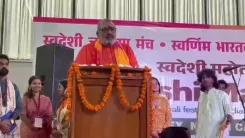
Nadda Hails Sarnath's UNESCO World Heritage Inscription
Synopsis
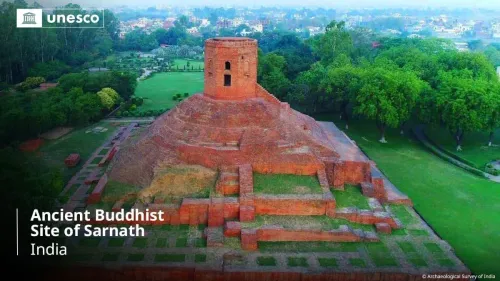
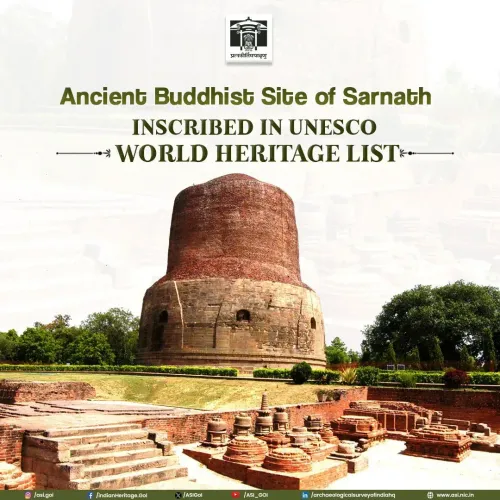
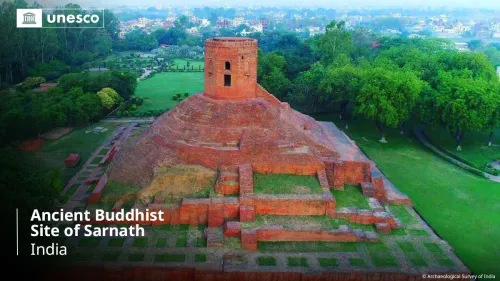
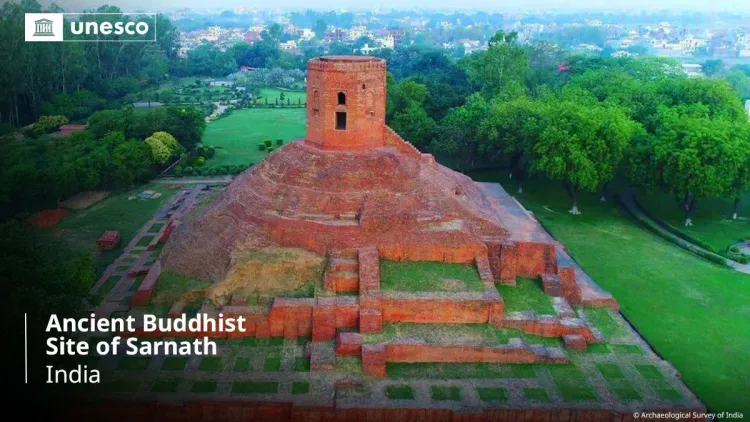
Union Health Minister J. P. Nadda on 25 July 2026 celebrated Sarnath's inscription on the UNESCO World Heritage List. The Uttar Pradesh site, where Lord Buddha delivered his first sermon, joins Sanchi and Bodh Gaya as India's recognised Buddhist heritage landmarks.
Key Takeaways
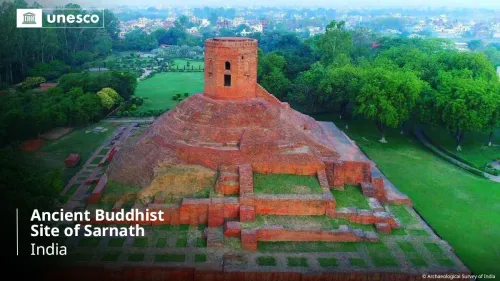
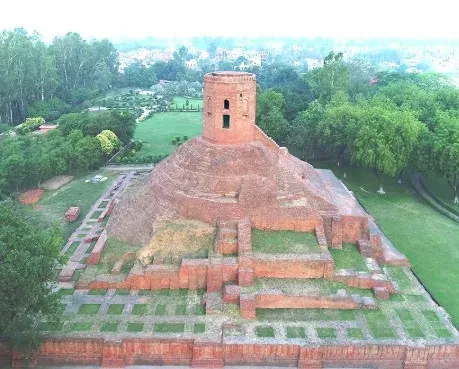
Sarnath in Uttar Pradesh has been inscribed on the UNESCO World Heritage List , as announced on 25 July 2026 .
Union Health Minister J.
Nadda called the inscription 'a moment of pride for every Indian.' Sarnath is the site where Lord Buddha delivered his first sermon after attaining enlightenment.
India's earlier Buddhist UNESCO inscriptions include Sanchi (1989) and the Mahabodhi Temple Complex, Bodh Gaya (2002) .
The inscription is expected to boost heritage tourism and strengthen conservation frameworks at the site.
A formal UNESCO Management Plan and potential government conservation funding announcements are anticipated next.
Union Health Minister J. P. Nadda on Saturday, 25 July 2026, celebrated the inscription of Sarnath, located in Uttar Pradesh, on the UNESCO World Heritage List, calling it 'a moment of pride for every Indian' and a recognition of India's rich cultural and civilisational heritage.
Context
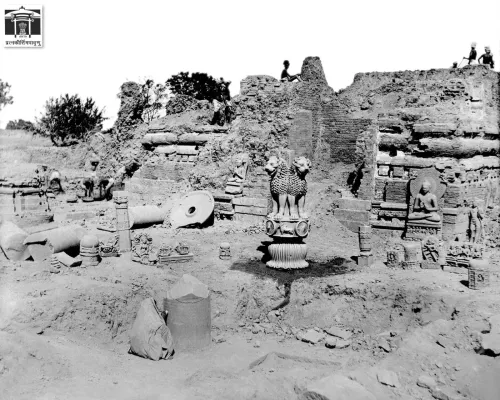
Sarnath, situated near Varanasi in Uttar Pradesh, is one of the most sacred sites in Buddhism. It is the place where Lord Buddha delivered his first sermon — known as the Dhammacakkappavattana Sutta (Setting the Wheel of Dhamma in Motion) — after attaining enlightenment, making it a foundational site for Buddhist civilisation worldwide. Nadda described the site's association with Buddha's 'timeless message of peace, compassion, wisdom, and harmony' as continuing to 'inspire humanity across the world.'
The UNESCO World Heritage Committee grants inscriptions to sites of 'outstanding universal value,' placing them under an internationally recognised framework of conservation and cultural protection. Sarnath's inscription adds to India's growing portfolio of recognised heritage sites.
Policy Backdrop
India has a sustained record of nominating ancient religious and archaeological sites to the UNESCO list as part of its cultural diplomacy and domestic heritage conservation strategy. The Buddhist Monuments at Sanchi were inscribed in 1989, and the Mahabodhi Temple Complex at Bodh Gaya — India's other primary Buddhist site — received recognition in 2002. Sarnath's inscription follows this established lineage of protecting India's Buddhist heritage through multilateral recognition.
Successive governments have treated UNESCO inscriptions as instruments of both cultural diplomacy and domestic policy, reinforcing narratives of civilisational continuity. Buddhist sites, alongside Hindu, Islamic, and colonial-era monuments, have featured repeatedly in India's nomination pipeline.
Stakeholders and Impact
Buddhist communities across India and globally, including pilgrims from Sri Lanka, Japan, Thailand, Myanmar, and other Buddhist-majority nations, regard Sarnath as a site of deep religious significance. The inscription is expected to boost heritage tourism to the region, benefiting the local economy around Varanasi and providing a stronger institutional framework for site conservation.
Heritage conservationists and the Archaeological Survey of India (ASI) are key stakeholders in the ongoing management and preservation of the site. UNESCO inscription brings with it international scrutiny and support for conservation standards, which can unlock additional funding and technical cooperation for site maintenance.
What's Next
Following formal inscription, the focus shifts to the preparation and implementation of a Management Plan as required by the UNESCO World Heritage Convention, ensuring the site's outstanding universal value is preserved for future generations. Linked conservation funding announcements from the central government or the Uttar Pradesh state government are expected to follow.
Sarnath's new status is also likely to feature prominently in India's cultural diplomacy engagements, particularly with Buddhist-majority nations, reinforcing the country's positioning as the cradle of one of the world's great spiritual traditions.
Point of View
A project that spans governments and carries both cultural and diplomatic weight. For the ruling establishment, such inscriptions serve a dual purpose: reinforcing a narrative of India as the custodian of timeless universal values, and strengthening ties with Buddhist-majority nations in Asia. Nadda's response, framing the event in the language of civilisational pride rather than administrative achievement, reflects how cultural heritage has become an increasingly prominent pillar of Indian political communication. The inscription also puts renewed pressure on state and central agencies to match international recognition with commensurate conservation investment.
NationPress
25 Oct 2026
Frequently Asked Questions
Why is Sarnath important for Buddhism?
Sarnath is the site in Uttar Pradesh where Lord Buddha delivered his first sermon after attaining enlightenment, making it one of the four holiest sites in Buddhism and a major pilgrimage destination for Buddhists worldwide.
When was Sarnath inscribed as a UNESCO World Heritage Site?
Sarnath was inscribed on the UNESCO World Heritage List in 2026, as celebrated by Union Health Minister J. P. Nadda on 25 July 2026.
Which other Indian Buddhist sites are on the UNESCO World Heritage List?
The Buddhist Monuments at Sanchi were inscribed in 1989, and the Mahabodhi Temple Complex at Bodh Gaya was inscribed in 2002, making Sarnath the latest Indian Buddhist site to receive this recognition.
What does UNESCO World Heritage status mean for Sarnath?
UNESCO World Heritage status places Sarnath under an internationally recognised conservation framework, is expected to boost heritage tourism to the Varanasi region, and may unlock additional conservation funding and technical support from national and international bodies.
What did JP Nadda say about Sarnath's UNESCO inscription?
J. P. Nadda called it 'a moment of pride for every Indian' and described the inscription as a proud recognition of India's rich cultural and civilisational heritage, highlighting Buddha's message of peace, compassion, wisdom, and harmony.