Punjab BJP calls Assembly's E20 ethanol resolution politically motivated
Synopsis
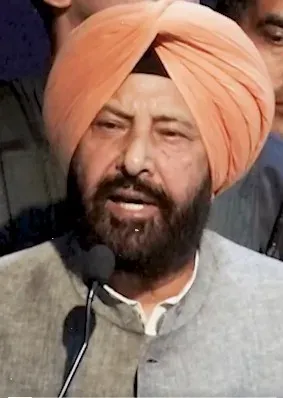
Punjab BJP president Kewal Singh Dhillon has hit back at the state assembly's resolution urging suspension of India's E20 ethanol blending programme, calling it politically motivated and factually wrong. His key technical point: farm machinery runs on diesel, not petrol — making the AAP's farmer-harm argument, he says, a deliberate distortion.
Key Takeaways
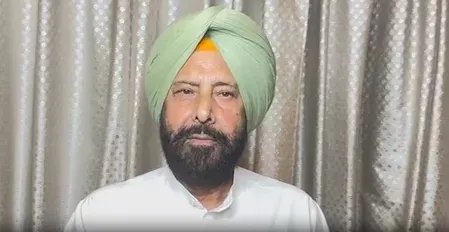
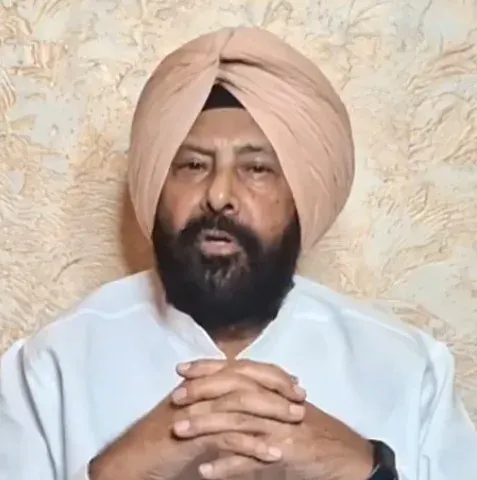
Punjab BJP President Kewal Singh Dhillon on 4 August condemned the Punjab Legislative Assembly's resolution against the mandatory E20 ethanol blending programme .
Dhillon called the resolution 'politically motivated', 'factually misleading', and 'against farmers' interests.' He argued that ethanol blending applies to petrol , while Punjab farm equipment runs on diesel , meaning the policy has no direct adverse impact on farmers.
The BJP chief cited Brazil and the United States as long-standing examples of successful ethanol blending adoption.
Dhillon positioned ethanol feedstock demand — particularly for maize and sugarcane — as a crop diversification opportunity for Punjab's agrarian economy.
Punjab Bharatiya Janata Party (BJP) President Kewal Singh Dhillon on Tuesday, 4 August sharply condemned a resolution passed by the Punjab Legislative Assembly urging the Centre to suspend the mandatory E20 ethanol blending programme. Dhillon labelled the resolution 'politically motivated', 'factually misleading', and 'against the interests of the state's farmers.'
BJP's Core Objection
Dhillon argued that the Aam Aadmi Party (AAP) government, instead of backing a forward-looking national policy designed to strengthen India's energy security and raise farmers' incomes, had chosen to play politics at the expense of Punjab's agricultural future. 'Ethanol blending is not merely an energy policy; it is a transformational initiative that benefits farmers, consumers, the environment and the nation's economy,' he said. 'The AAP government's attempt to portray it negatively reflects either a lack of understanding or a deliberate effort to mislead the people of Punjab.'
Global Precedents Cited
The BJP state chief pointed to international examples to bolster his case, noting that countries such as Brazil and the United States have relied on ethanol blending for decades. He said many other nations are steadily expanding ethanol use to cut dependence on imported fossil fuels, reduce emissions, and promote renewable energy — framing India's E20 push as consistent with a well-established global trend rather than an outlier policy.
Farmer Income and Crop Diversification
Dhillon contended that the ethanol blending programme opens a stable additional market for agricultural produce such as maize and sugarcane, giving farmers new income streams beyond traditional procurement channels. 'As demand for ethanol feedstock grows, farmers benefit from better price realisation, crop diversification and reduced dependence on a limited number of crops,' he said. He specifically argued that for Punjab — where crop diversification has become urgent — ethanol represents 'a significant opportunity, not a threat,' and called on the state government to encourage farmers to capitalise on emerging market prospects and attract investment in ethanol production.
Diesel vs Petrol: The Technical Argument
Addressing what he described as a factual distortion by the AAP government, Dhillon underlined that most agricultural machinery in Punjab — including tractors, harvesters, and generators — runs on diesel, while ethanol blending applies to petrol. 'Therefore, this policy has no adverse impact on Punjab's farmers,' he stated, adding that the AAP administration is misleading cultivators by conflating the two fuel streams.
Political Context
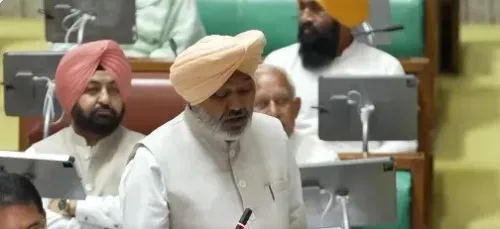
The Punjab Assembly's resolution, passed earlier, had called on the Centre to halt mandatory E20 implementation, citing concerns about its impact on the agrarian state. The BJP's pushback signals a deepening political fault line between the AAP-led state government and the BJP-led Centre over a programme that is central to the Union government's energy and agriculture roadmap. With Punjab's farm economy already under stress from paddy-wheat monoculture, the ethanol debate is set to intensify ahead of future legislative sessions.
Point of View
And whether that shift benefits or burdens smallholders depends on procurement price guarantees that neither side has fully addressed. The AAP-BJP standoff over E20 also obscures a harder question — Punjab's paddy-wheat trap predates both parties, and ethanol alone cannot resolve a structural agricultural crisis that requires water table management, MSP reform, and market access in equal measure.
NationPress
4 Aug 2026
Frequently Asked Questions
What is the E20 ethanol blending programme?
The E20 programme is the Indian government's mandate to blend 20% ethanol with petrol, aimed at reducing fossil fuel imports, cutting emissions, and creating additional demand for agricultural produce such as maize and sugarcane. It is part of India's broader energy security and renewable fuel strategy.
Why did the Punjab Assembly pass a resolution against E20?
The Punjab Legislative Assembly passed a resolution urging the Centre to suspend mandatory E20 implementation, citing concerns about its potential impact on the state's farming community. The BJP has disputed these concerns as factually inaccurate.
What is the BJP's main argument against the Assembly's resolution?
Punjab BJP president Kewal Singh Dhillon argues that agricultural machinery — tractors, harvesters, generators — runs on diesel, not petrol, so ethanol blending in petrol does not adversely affect Punjab's farmers. He says the AAP government is distorting facts to score political points.
How could ethanol blending benefit Punjab farmers?
According to Dhillon, growing demand for ethanol feedstock crops such as maize and sugarcane can give Punjab farmers new income streams, better price realisation, and an incentive to diversify beyond the paddy-wheat cycle — which the state urgently needs.
Which countries have successfully adopted ethanol blending?
Dhillon cited Brazil and the United States as countries that have relied on ethanol blending for decades. He argued that India's E20 push aligns with a well-established global trend toward reducing fossil fuel dependence through renewable fuel mandates.