Kejriwal calls National Townhall Against E20 on August 1
Synopsis
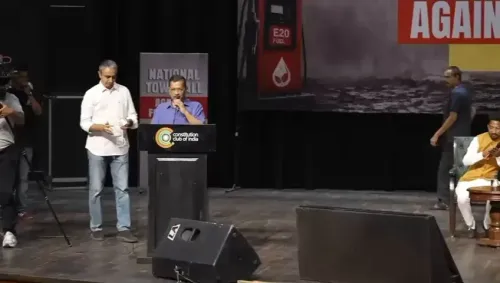
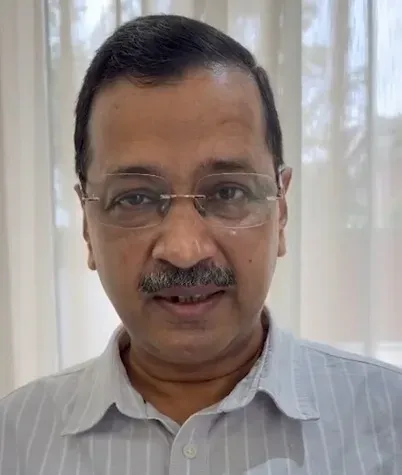
Arvind Kejriwal has called a National Townhall Against E20 for August 1, 2026, at Constitution Club, New Delhi, urging citizens to collectively challenge India's 20% ethanol blending mandate in petrol, drawing a parallel to public pressure that he says forced Dharmendra Pradhan's resignation.
Key Takeaways
AAP convenor Arvind Kejriwal announced a 'National Townhall Against E20' on July 27, 2026 .
The event is scheduled for August 1, 2026, at 11:30 a.m. at Constitution Club, New Delhi .
Participation is open both in person and online , making it accessible nationwide.
Kejriwal linked the initiative to recent public pressure that he claims led to Dharmendra Pradhan's resignation .
The E20 policy mandates 20% ethanol blending in petrol under India's National Biofuel Policy roadmap set in 2021 .
Key concerns around E20 include engine compatibility, fuel efficiency, and food-versus-fuel crop trade-offs .
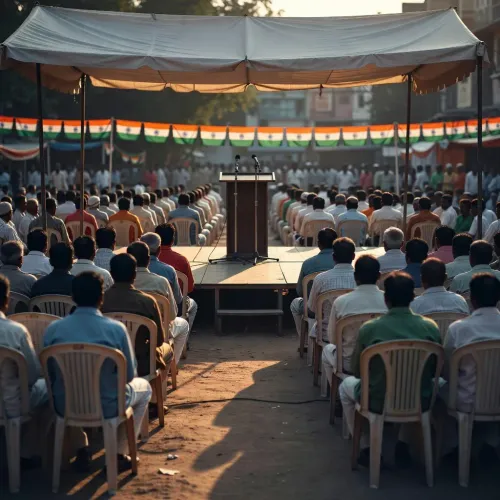
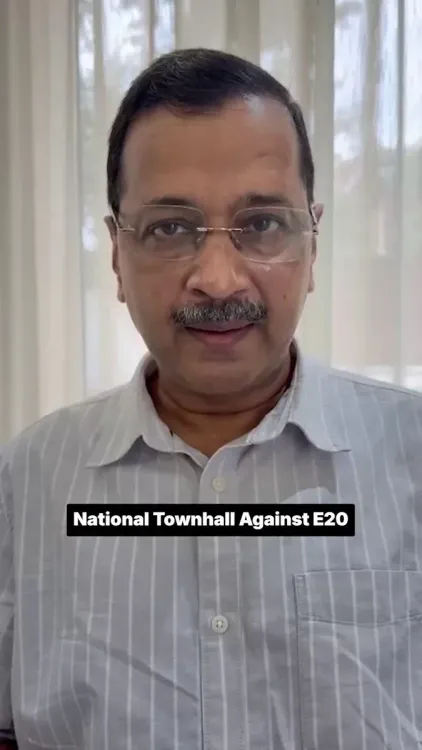
AAP convenor Arvind Kejriwal on Monday, July 27, 2026, announced a 'National Townhall Against E20' to be held at Constitution Club, New Delhi, on August 1, 2026, at 11:30 a.m., inviting citizens online and in person to voice their concerns about the government's 20% ethanol blending mandate in petrol.
Context
In his post, Kejriwal drew a direct parallel to the recent pressure campaign that, he claimed, forced Dharmendra Pradhan to resign — arguing that collective public action had once again proven effective. 'देश के युवाओं ने एक होकर आवाज़ उठाई तो धर्मेंद्र प्रधान को इस्तीफ़ा देना पड़ा' ('When the youth of the country raised their voice together, Dharmendra Pradhan had to resign'), he wrote, before urging the same united front against the E20 policy.
Kejriwal extended an open invitation to all citizens, noting that participation would be available both physically and through an online link, broadening the reach of the event beyond Delhi.
Policy Backdrop
The Ethanol Blended Petrol (EBP) Programme has been a central plank of India's energy strategy for over a decade. In 2021, the central government released a roadmap targeting 20% ethanol blending in petrol by 2025 under the National Biofuel Policy, aiming to reduce the country's crude oil import bill, support domestic sugar mills, and cut vehicular emissions.
E20 — the shorthand for this 20% ethanol blend — has drawn scrutiny from vehicle owners and consumer groups who raise concerns about compatibility with older engines, potential dips in fuel efficiency, and the long-term impact on food crop availability if sugarcane acreage is redirected toward ethanol production. These practical questions have periodically surfaced in parliamentary debates and regulatory discussions.
Dharmendra Pradhan, a former Union Minister of Petroleum and Natural Gas, was closely associated with the early push for ethanol blending initiatives during his tenure in that portfolio.
Stakeholders and Impact
The E20 debate touches a wide cross-section of Indians. Vehicle owners — particularly those with older two-wheelers and four-wheelers — worry about engine wear and warranty voidance under higher ethanol blends. Petrol consumers are concerned about mileage, since ethanol carries lower energy density than pure petrol. Sugarcane farmers, on the other hand, have largely benefited from the guaranteed offtake that the blending programme provides to sugar mills.
By framing the townhall as a national platform, Kejriwal is seeking to aggregate these dispersed grievances into a single political moment, positioning AAP as the organising force behind citizen pushback on the fuel policy.
What's Next
The August 1 townhall at Constitution Club, New Delhi will be a key indicator of how much traction the anti-E20 campaign can generate beyond AAP's core base. Should the event draw significant participation — especially online — it could intensify pressure on the central government to revisit the blending timeline or address engine-compatibility standards. Regulatory reviews of fuel quality norms and engine warranty frameworks remain the most concrete policy levers to watch in the weeks ahead.
Point of View
AAP projects a civic, non-partisan image while retaining full organisational control of the narrative. The online participation option is a deliberate scaling strategy, allowing the party to claim national reach without the logistical burden of multi-city events. Whether this translates into durable pressure on the government depends on whether the campaign can unite vehicle owners, consumer groups, and farmers — constituencies whose interests on E20 do not always align.
NationPress
26 Oct 2026
Frequently Asked Questions
What is the National Townhall Against E20 announced by Kejriwal?
It is a public event called by AAP convenor Arvind Kejriwal on August 1, 2026, at Constitution Club, New Delhi, where citizens can voice concerns about India's E20 ethanol blending policy. The event is also accessible online.
What is E20 fuel and why is it controversial?
E20 refers to petrol blended with 20% ethanol under India's National Biofuel Policy. Critics raise concerns about compatibility with older vehicle engines, reduced fuel efficiency due to ethanol's lower energy density, and the diversion of food crops like sugarcane toward fuel production.
Why did Kejriwal mention Dharmendra Pradhan in his post?
Kejriwal cited Pradhan's resignation as evidence that collective public pressure can force policy change, using it as motivation for citizens to similarly unite against the E20 mandate. Pradhan was previously associated with ethanol blending initiatives as a former Petroleum Minister.
How can I attend the National Townhall Against E20?
According to Kejriwal's post, the event is open to all and can be attended either in person at Constitution Club, Delhi, on August 1, 2026, at 11:30 a.m., or through an online link.
What is India's ethanol blending target under the National Biofuel Policy?
The central government set a roadmap in 2021 targeting 20% ethanol blending in petrol — known as E20 — as part of the National Biofuel Policy, aimed at cutting crude oil imports and supporting domestic sugar mills.