What Did the Punjab Cabinet Approve for Sugarcane Growers?
Synopsis
The Punjab Cabinet has taken a landmark decision to support sugarcane farmers by approving a direct subsidy of Rs 68.50 per quintal. This move reinforces Punjab's commitment to farmer welfare, ensuring they receive the highest state agreed price in India, while also promoting health initiatives and improving urban governance.
Key Takeaways
Direct subsidy of Rs 68.50 per quintal for sugarcane.
Punjab offers the highest state agreed price in India.
Creation of 1,000 yoga trainer positions .
Transfer of hospitals to Baba Farid University for better healthcare.
New policy for efficient land use and development.
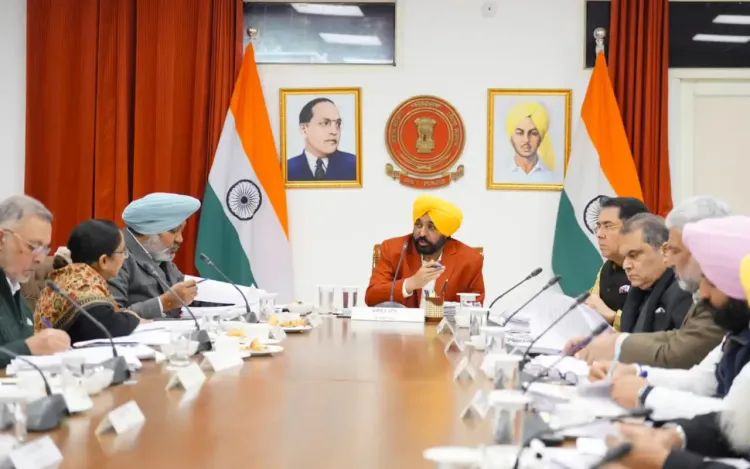
Chandigarh, January 20 (NationPress) The Punjab Cabinet, under the leadership of Chief Minister Bhagwant Mann, has approved a direct subsidy of Rs 68.50 per quintal from the fixed state agreed price (SAP) for sugarcane farmers.
This decision was made during a meeting of the Council of Ministers, which also granted approvals on various matters including healthcare reform, public fitness initiatives, and urban governance.
A spokesperson from the Chief Minister's Office mentioned that the subsidy of Rs 68.50 per quintal will be provided directly to sugarcane producers on behalf of private sugar mills for the fiscal year 2025–26.
Punjab offers the highest SAP for sugarcane in India at Rs 416 per quintal, an increase of Rs 15 from the previous year, ensuring that sugarcane farmers in Punjab are the best compensated nationally. This new subsidy will further enhance farmers' income security.
Additionally, the Cabinet sanctioned the creation of 1,000 new yoga trainer positions under the 'CM di Yogshala' initiative.
A budget allocation of Rs 35 crore is planned for this program in 2026-27, aimed at fostering a healthier Punjab.
In a significant move to boost healthcare services, the Cabinet approved the full transfer of civil hospitals located in Badal village (Muktsar district), Khadur Sahib (Tarn Taran district), Community Health Centre Jalalabad, and the Tertiary Care Centre in Fazilka district to Baba Farid University of Health Sciences in Faridkot.
This transfer will enhance treatment and diagnostic services for local residents, utilizing the university's advanced medical facilities and expertise.
The Cabinet also authorized the formulation and notification of guidelines under Section 4 of the Punjab Management and Transfer Municipal Act, 2020, to streamline the transfer of municipal properties owned by government departments for public purposes.
This initiative is set to rejuvenate development projects statewide, promote equitable land allocation, and prevent the misuse of public land.
A committee led by the Deputy Commissioner will oversee the allotment process, subject to state government approval.
To further stimulate development through efficient land use, the Cabinet endorsed a policy for the transfer via sale or exchange of abandoned and active pathways (rastas) or water courses (khals) within government-licensed projects in municipal limits.
This policy aims to unlock stalled development prospects and enhance urban planning effectiveness.
Point of View
The Punjab Cabinet's decision to provide direct subsidies to sugarcane growers is a commendable step that prioritizes farmer welfare and economic stability in the region. It reflects a proactive approach toward enhancing agricultural productivity and ensuring that farmers are adequately compensated, which is crucial for national food security.
NationPress
23 Sept 2026
Frequently Asked Questions
What is the approved subsidy amount for sugarcane growers in Punjab?
The Punjab Cabinet has approved a direct subsidy of Rs 68.50 per quintal for sugarcane growers.
Who will benefit from the subsidy?
The subsidy will benefit sugarcane farmers in Punjab, enhancing their income security.
What other initiatives were approved by the Punjab Cabinet?
The Cabinet also approved the creation of additional posts for yoga trainers and the transfer of several hospitals to Baba Farid University of Health Sciences.
How does Punjab's SAP for sugarcane compare nationally?
Punjab offers the highest state agreed price for sugarcane in India at Rs 416 per quintal.
What is the impact of transferring hospitals to the university?
The transfer will improve healthcare access and services for residents in those areas.