Punjab CMO: 'Mawan Dhiyan Satkar Yojana' Goes Viral on Reels
Synopsis
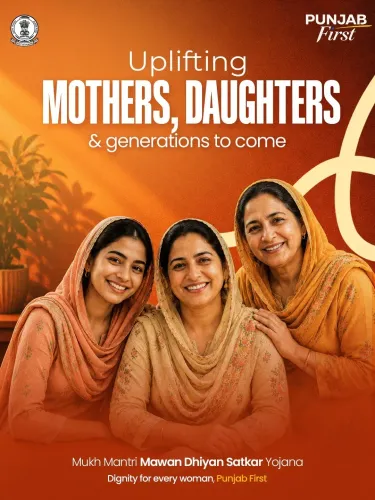
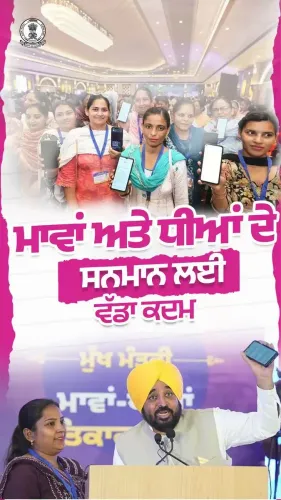
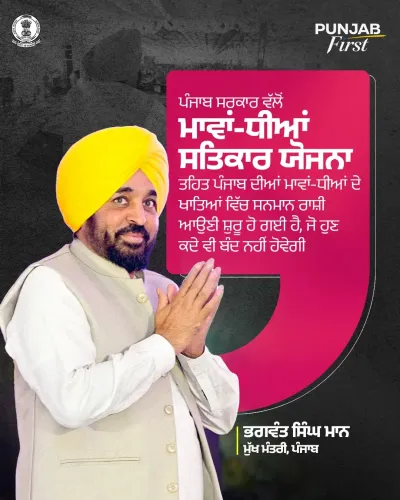
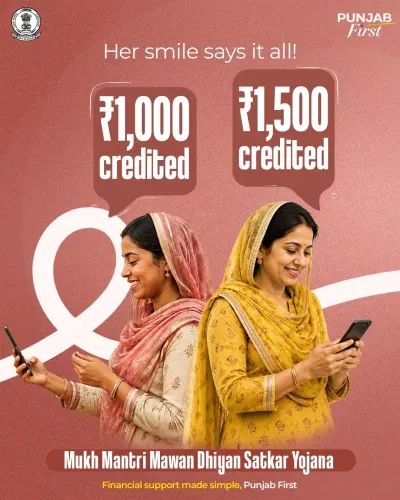
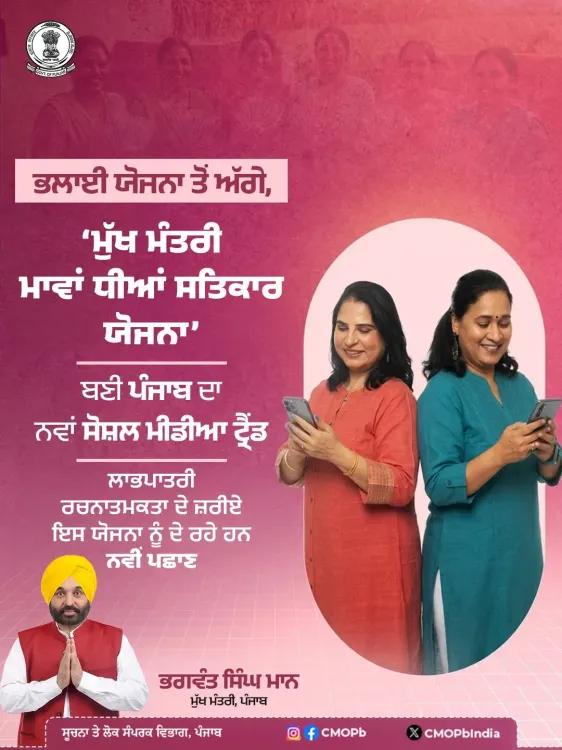
The Chief Minister's Office of Punjab says the 'Mukh Mantri Mawan Dhiyan Satkar Yojana' has gone viral on social media, with the scheme's 'Tun Tun' mobile notification sound becoming the soundtrack of thousands of reels shared by women from villages to cities across the state.
Key Takeaways
The Chief Minister's Office of Punjab announced on 13 July 2026 that the Mukh Mantri Mawan Dhiyan Satkar Yojana has become a viral social-media trend.
The scheme's distinctive 'Tun Tun' mobile notification sound has become the anchor for thousands of reels shared by women beneficiaries.
Women from village courtyards to urban towns are lip-syncing, dancing, and sharing personal testimonials about the scheme.
The scheme is part of a broader set of women-centric welfare programmes launched by the Bhagwant Mann -led AAP government after the 2022 Punjab elections .
Scheme utilisation data and potential integration with digital payment portals are expected to be disclosed in the next Punjab budget session .
The Chief Minister's Office of Punjab announced on Monday, 13 July 2026 that the state government's women-welfare scheme, Mukh Mantri Mawan Dhiyan Satkar Yojana, has become a social-media phenomenon, with thousands of reels built around its distinctive notification sound spreading across platforms from village courtyards to urban centres.
The CMO's post, shared in both Punjabi and English, noted that the familiar 'Tun Tun' (the scheme's mobile notification chime) 'is no longer just another mobile alert in Punjab' but has become 'the soundtrack of thousands of social media reels' celebrating the scheme. Women across the state are described as lip-syncing, dancing, joking, and sharing personal testimonials tied to the programme.
Context
The Mukh Mantri Mawan Dhiyan Satkar Yojana — translating broadly as the 'Chief Minister's Scheme for Honouring Mothers and Daughters' — is one of several women-centric direct-benefit initiatives rolled out by the Punjab government following the Aam Aadmi Party's landslide victory in the March 2022 state elections. Chief Minister Bhagwant Mann has positioned such schemes as flagship commitments to women's welfare and dignity in the state.
The viral moment reflects a broader shift in how Indian state governments communicate welfare delivery: rather than institutional press releases, beneficiary-generated short videos in local languages are now the primary signal of scheme reach and public acceptance.
Policy Backdrop
Across India, state administrations have increasingly leveraged short-video platforms to publicise cash-transfer and welfare programmes, a pattern visible in states such as Madhya Pradesh and Odisha. The organic spread of the 'Tun Tun' notification sound mirrors strategies where an auditory or visual cue becomes inseparable from a scheme's identity in public memory.
The emphasis on personal testimonials and vernacular storytelling — from pind de vihde (village courtyards) to busy towns — signals that the Punjab government is deliberately encouraging bottom-up, beneficiary-driven communication rather than top-down advertising.
Stakeholders and Impact
The primary beneficiaries are women in Punjab, spanning both rural households and urban areas. The viral reels suggest the scheme has generated tangible, shareable experiences among recipients — a metric that state governments increasingly treat as evidence of ground-level penetration.
Rural women, who have historically been harder to reach through conventional digital outreach, appear prominently in the CMO's characterisation of the trend, pointing to meaningful rural uptake of both the scheme and the social-media culture surrounding it.
What's Next
Analysts and policymakers will watch for concrete utilisation data — including beneficiary numbers and disbursement figures — expected to surface in the next Punjab budget session. Any integration of the scheme with existing digital payment infrastructure or grievance-redressal portals would be a significant next step in formalising its delivery architecture.
If the viral momentum continues, it could set a template for how other AAP-governed or opposition-governed states design the communication layer of welfare programmes ahead of future election cycles.
Point of View
The AAP government is effectively crowdsourcing its own scheme promotion at zero marginal cost. This beneficiary-as-influencer model is becoming a defining feature of Indian state-level welfare communication, and Punjab's embrace of it signals confidence in the scheme's ground-level acceptance. However, viral reels are not a substitute for audited disbursement data, and the government will face pressure to publish concrete beneficiary figures. The trend also underscores how vernacular audio cues — not just visuals — are emerging as powerful identity markers for public programmes in India's short-video era.
NationPress
13 Jul 2026
Frequently Asked Questions
What is the Mukh Mantri Mawan Dhiyan Satkar Yojana in Punjab?
The Mukh Mantri Mawan Dhiyan Satkar Yojana is a Punjab state government welfare scheme focused on providing recognition and support to mothers and daughters, launched as part of the Bhagwant Mann-led AAP government's women-centric policy agenda after the 2022 state elections.
Why is the 'Tun Tun' sound trending in Punjab?
The 'Tun Tun' sound is the mobile notification chime associated with the Mukh Mantri Mawan Dhiyan Satkar Yojana. Women beneficiaries have used it as the audio backdrop for thousands of social media reels sharing their experiences with the scheme, making it a viral cultural marker.
Who launched the Mukh Mantri Mawan Dhiyan Satkar Yojana?
The scheme was launched by the Punjab government under Chief Minister Bhagwant Mann of the Aam Aadmi Party, which came to power in Punjab in March 2022.
How is the Punjab government using social media for welfare schemes?
The Punjab government has been encouraging beneficiary-driven communication, where women share personal testimonials, dances, and stories on short-video platforms, creating organic viral content that publicises the scheme far beyond formal government advertising.
What are the benefits of the Mukh Mantri Mawan Dhiyan Satkar Yojana?
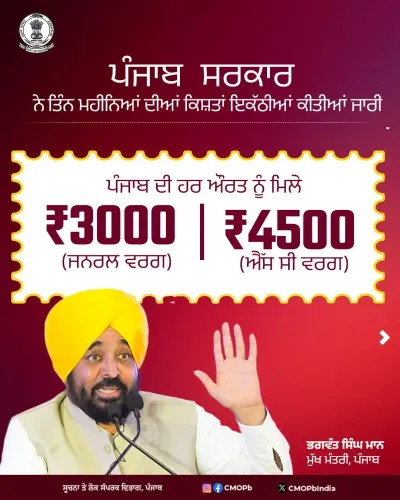
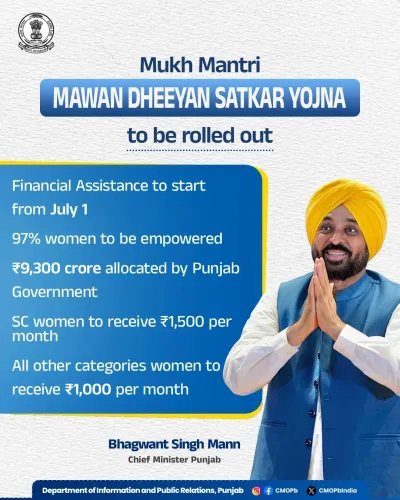
Exact benefit amounts and eligibility details have not been officially confirmed in the available public record. The scheme is broadly described as a women-welfare programme aimed at honouring and supporting mothers and daughters in Punjab.