Shekhawat Meets NITI Aayog Member Dr. Joram Aniya in Delhi
Synopsis
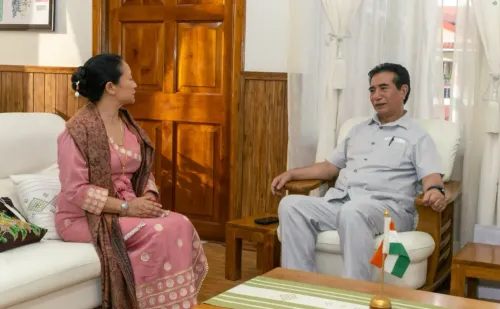
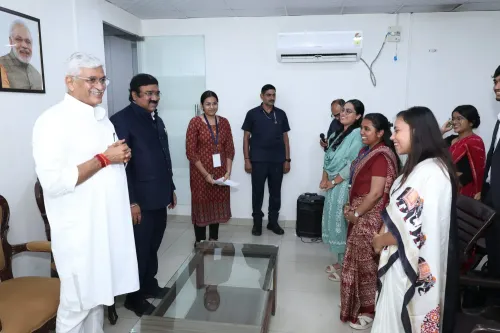
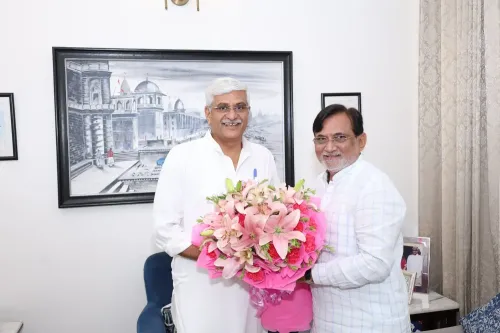
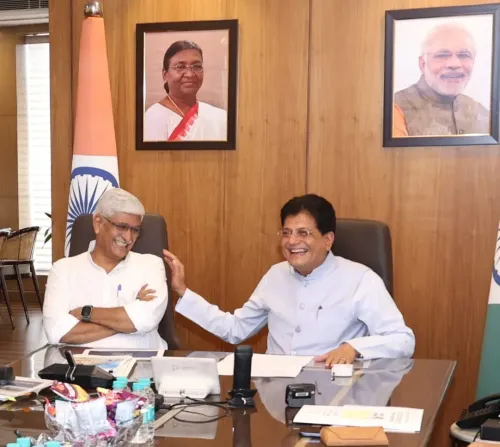
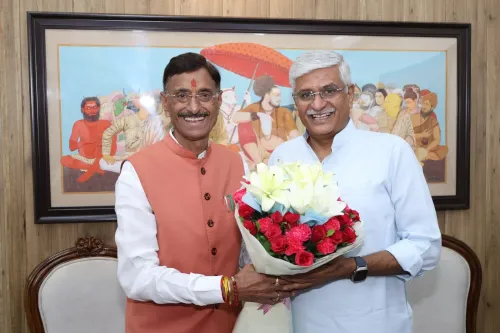
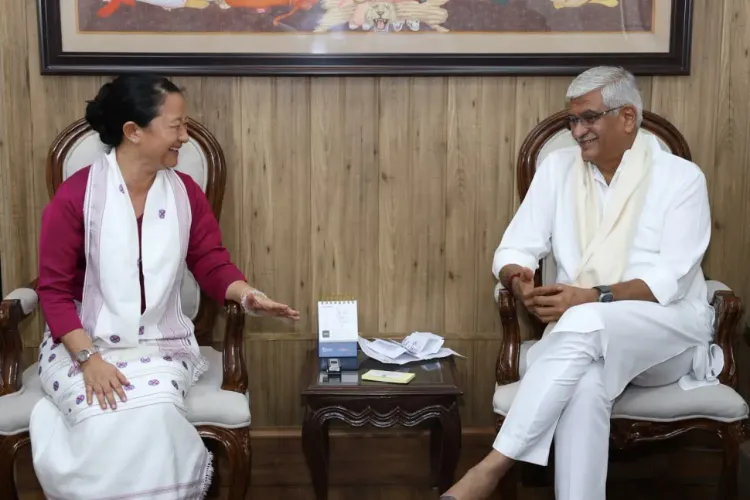
Union Culture and Tourism Minister Gajendra Singh Shekhawat hosted NITI Aayog member Dr. Joram Aniya at his New Delhi residence on 13 July 2026 for a courtesy call. The minister described the exchange as a 'meaningful discussion,' signalling potential policy coordination between the ministry and India's apex think tank.
Key Takeaways
Union Culture and Tourism Minister Gajendra Singh Shekhawat met NITI Aayog member Dr.
Joram Aniya at his New Delhi residence on 13 July 2026 .
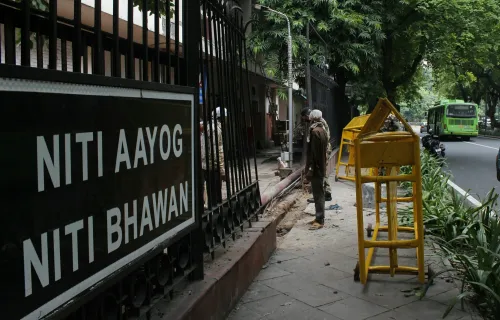
The meeting was a courtesy call ( shishṭāchār bheṇṭ ), described by the minister as a 'meaningful discussion.' NITI Aayog was established in January 2015 to replace the Planning Commission and drive cooperative federalism.
No specific agenda or outcome document from the meeting has been made public.
Such consultations between Union ministers and NITI Aayog members are a standard mechanism for aligning sectoral priorities with national policy frameworks.
Any follow-up joint statements or working groups on culture and tourism scheme design will be closely watched.
Union Culture and Tourism Minister Gajendra Singh Shekhawat received Dr. Joram Aniya, Member of NITI Aayog, at his New Delhi residence on Monday, 13 July 2026 for a courtesy call, with the minister describing the exchange as a 'meaningful discussion.'
Shekhawat shared the development on X, writing in Hindi: 'आज नई दिल्ली आवास पर नीति आयोग की सदस्य डॉ. जोराम अनिया का शिष्टाचार भेंट के लिए आगमन हुआ। उनसे सार्थक चर्चा हुई।' ('Today, NITI Aayog member Dr. Joram Aniya visited my New Delhi residence for a courtesy call. We had a meaningful discussion.')
Context
Union ministers routinely engage with NITI Aayog members to align their ministry's priorities with the national policy framework. Such courtesy meetings serve as an early channel for consultative dialogue between the apex think tank and sectoral ministries before formal working groups or joint statements are constituted.
The Ministry of Culture and Tourism oversees a wide portfolio — from heritage conservation and archaeological sites to inbound and domestic tourism promotion — all of which intersect with NITI Aayog's mandate of evidence-based policy design and cooperative federalism.
Policy Backdrop
NITI Aayog was established in January 2015, replacing the erstwhile Planning Commission, with a remit to provide strategic and technical advice to the Union Cabinet and individual ministries. It functions as a bridge between central policy intent and state-level implementation, making its members key interlocutors for any minister seeking to design or refine a scheme with sub-national reach.
The culture and tourism sector has been a focus area in recent years, with the government investing in infrastructure at heritage sites, promoting spiritual tourism circuits, and positioning India as a global cultural destination. Engagement with NITI Aayog can feed into scheme design, budget rationalisation, and state-coordination mechanisms for such initiatives.
Stakeholders and Impact
The immediate stakeholders in any culture-tourism and NITI Aayog convergence are central ministries, state governments, and the policy experts who advise both. For state governments, NITI Aayog-backed frameworks often unlock better access to centrally sponsored scheme funds and technical assistance.
Tourism-dependent communities, heritage site administrators, and the hospitality sector stand to benefit indirectly if such consultations translate into refined policy frameworks or new implementation guidelines.
What's Next
No specific agenda or outcome document from the meeting has been made public. Observers will watch for any follow-up announcements — such as joint working groups, revised scheme guidelines, or NITI Aayog inputs to the Ministry of Culture and Tourism — that might signal the direction of the discussion held on 13 July 2026.
Given the government's emphasis on positioning tourism as an economic driver, any structured collaboration between the ministry and NITI Aayog could carry implications for how states design and fund their cultural tourism ecosystems in the coming fiscal cycle.
Point of View
The interaction is notable given the government's stated ambition to scale tourism as a major economic contributor and the role NITI Aayog plays in shaping implementation frameworks for centrally sponsored schemes. For a minister overseeing both culture and tourism — two sectors with significant state-level execution dependencies — building rapport with NITI Aayog members is a strategically sensible step. The broader arc here is one of policy convergence: aligning heritage conservation and tourism promotion with the cooperative federalism model that has defined Centre-state relations since 2015.
NationPress
12 Oct 2026
Frequently Asked Questions
Who is Dr. Joram Aniya of NITI Aayog?
Dr. Joram Aniya is a member of NITI Aayog, India's apex public policy think tank. No further publicly verified details about her specific portfolio within NITI Aayog are available at this time.
Why did NITI Aayog member meet Culture Minister Shekhawat?
The meeting was described as a courtesy call, with Minister Shekhawat noting a 'meaningful discussion' took place. The specific agenda has not been made public.
What is NITI Aayog and what does it do?
NITI Aayog is India's apex public policy think tank, established in January 2015 to replace the Planning Commission. It provides strategic and technical advice to the Union Cabinet and individual ministries, and promotes cooperative federalism between the Centre and states.
What does the Ministry of Culture and Tourism do?
The Ministry of Culture and Tourism oversees heritage conservation, archaeological sites, cultural promotion, and tourism development across India. It manages centrally sponsored schemes and coordinates with state governments on implementation.
What could come out of a NITI Aayog and Culture Ministry meeting?
Such meetings can lead to refined scheme guidelines, joint working groups, or NITI Aayog inputs into ministry policy design — particularly for tourism infrastructure and cultural heritage initiatives with state-level implementation components.