CM Manik Saha Pitches Tripura's Growth Plan at NITI Aayog
Synopsis
Tripura Chief Minister Dr. Manik Saha attended a NITI Aayog interactive session in New Delhi on June 12, 2026, presenting state proposals on connectivity, investment, skilling, healthcare, and tourism as part of the Viksit Bharat and North East development agenda.
Key Takeaways
Manik Saha attended a NITI Aayog interactive session in New Delhi on June 12, 2026 with Chief Ministers and Chief Secretaries of all North Eastern states.
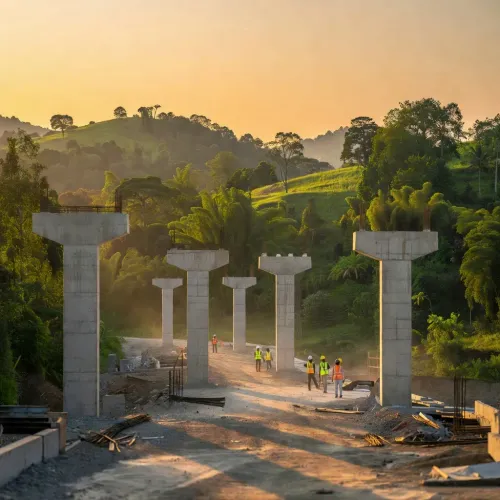
He presented Tripura's proposals across eight sectors : connectivity, investment promotion, industrial growth, innovation, skilling, healthcare, tourism, and sports infrastructure.
The session was chaired by NITI Aayog Vice Chairman Shri Ashok Lahiri and other members of the body.
The proposals align with the Act East Policy (2014) , PM-DevINE scheme (2022) , and the Viksit Bharat @2047 national vision.
Tripura , which borders Bangladesh , holds strategic importance for regional connectivity and trade under the Act East framework.
Follow-up action hinges on NITI Aayog recommendations and future Union Budget allocations for the North Eastern Region.
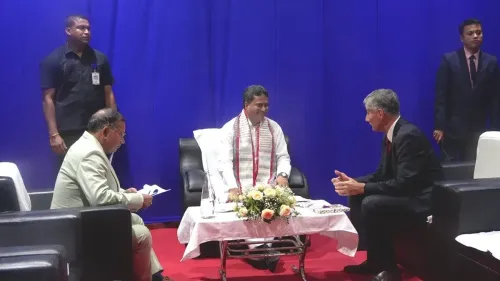
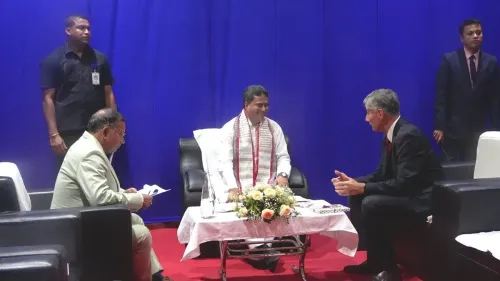
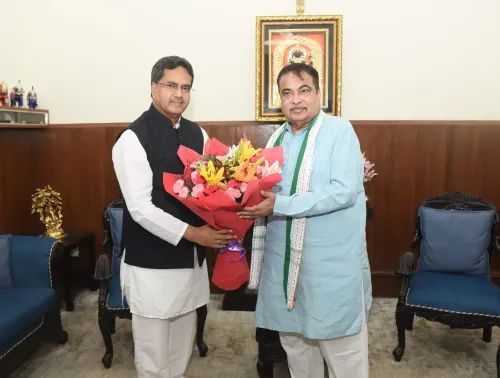
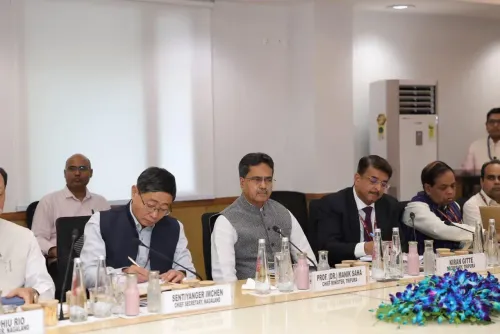
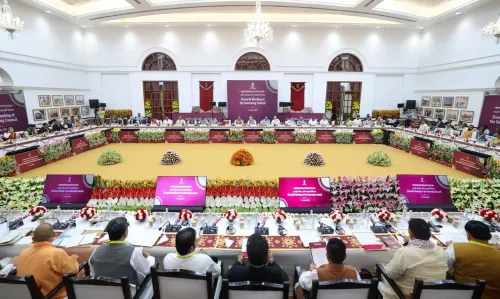
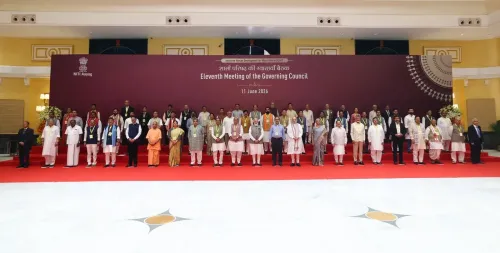
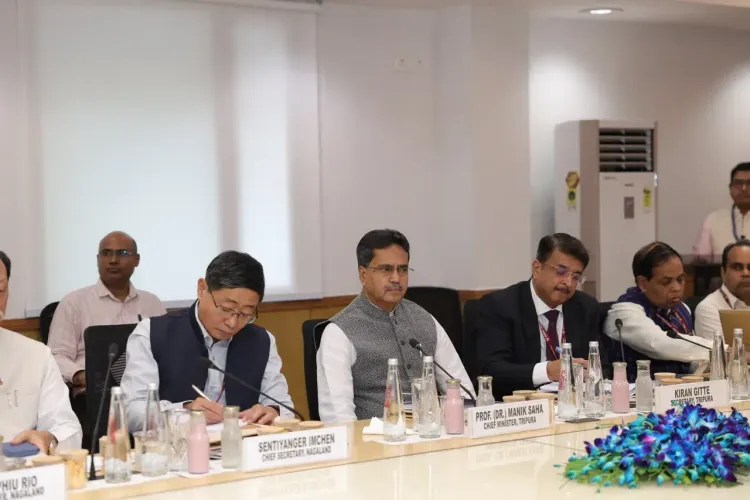
Tripura Chief Minister Dr. Manik Saha attended an Interactive Session of NITI Aayog in New Delhi on Friday, June 12, 2026, alongside the Vice Chairman Shri Ashok Lahiri, other members, and Chief Ministers and Chief Secretaries of the North Eastern States. He presented a set of development proposals covering connectivity, investment, industry, skilling, healthcare, tourism, sports infrastructure, and regional cooperation.
Context
Dr. Saha shared Tripura's development priorities directly with NITI Aayog leadership, positioning the state's proposals within the broader framework of North East regional progress. The session brought together the political and administrative heads of all eight North Eastern states under one roof, underscoring the Centre's focus on coordinated planning for the region. In his post, Dr. Saha stated that the meeting was held 'in presence of Vice Chairman Shri Ashok Lahiriji and other respected members along with the Chief Ministers and Chief Secretaries of the North Eastern States.'
Policy Backdrop
NITI Aayog was constituted in 2015 to replace the Planning Commission and deepen state-centre policy coordination through a cooperative federalism model. The body regularly convenes Chief Ministers of the North Eastern states to align state-level proposals with national priorities such as multimodal infrastructure, investment facilitation, and human-capital development. Tripura's proposals align with multiple standing central frameworks, including the Act East Policy launched in 2014 to improve connectivity and economic ties between the North East and Southeast Asia, the PM-DevINE scheme announced in 2022 for infrastructure and social development in the region, and the Viksit Bharat @2047 vision articulated to achieve developed-nation status by 2047 with regional balance.
Central policy has consistently prioritised accelerated development of the North Eastern Region through improved physical connectivity and investment facilitation as part of this framework. NITI Aayog's interactive sessions serve as a formal channel for states to table proposals that can feed into Union Budget allocations and scheme designs.
Stakeholders and Impact
The proposals tabled by Dr. Saha span sectors that directly affect Tripura's residents: skilling and healthcare touch household welfare, while connectivity and industrial growth proposals target the state's long-standing economic integration challenge. Tripura, which borders Bangladesh, has particular strategic relevance for the Act East framework, and improved connectivity could unlock trade and tourism corridors with Southeast Asia. Potential investors in the North East are also stakeholders, as investment promotion was explicitly listed among the priorities presented.
Regional cooperation proposals signal that Tripura is seeking to position itself not merely as a recipient of central funds but as an active participant in the collective economic architecture of the North East. Dr. Saha framed the effort as contributing to 'an Unnato and Shreshtho Tripura' — meaning an advanced and excellent Tripura — and to 'a developed North East.'
What's Next
Follow-up action will depend on how NITI Aayog incorporates state proposals into its recommendations to the Union government and subsequent Governing Council deliberations. Union Budget allocations for North East connectivity and industrial corridors will be a key indicator of how much traction Tripura's proposals gain at the central level. State-level rollout of any approved schemes on tourism infrastructure, skilling, and healthcare will be the on-ground test of whether the session translates into tangible outcomes for Tripura's citizens.
As the North East continues to receive focused central attention under the Viksit Bharat framework, the degree to which smaller states like Tripura can convert policy dialogue into funded projects will shape the region's development trajectory through the rest of the decade.
Point of View
The Tripura government is signalling ambition beyond incremental asks — seeking structural integration into the Viksit Bharat framework rather than ad hoc grants. The explicit invocation of 'Unnato and Shreshtho Tripura' alongside the national vision is a deliberate alignment of state branding with central political messaging, which can strengthen a state's case during Budget negotiations. How much of this translates into funded mandates will be the real measure of the session's value.
NationPress
19 Sept 2026
Frequently Asked Questions
What did Tripura CM Manik Saha present at NITI Aayog?
Dr. Manik Saha presented Tripura's development proposals covering connectivity, investment promotion, industrial growth, innovation, skilling, healthcare, tourism, sports infrastructure, and regional cooperation at a NITI Aayog interactive session on June 12, 2026.
What is the NITI Aayog interactive session for North East states?
NITI Aayog periodically convenes interactive sessions with Chief Ministers and Chief Secretaries of the North Eastern states to align state-level development proposals with national priorities such as infrastructure, skilling, and investment facilitation.
What is Viksit Bharat and how does it relate to the North East?
Viksit Bharat @2047 is India's national vision to achieve developed-nation status by 2047 with regional balance. The North East is a key focus area, and states like Tripura are presenting sectoral proposals to contribute to and benefit from this framework.
What is the PM-DevINE scheme for the North East?
PM-DevINE, announced in 2022, is a central scheme to fund infrastructure and social development projects specifically in the North Eastern Region, complementing the Act East Policy's connectivity and economic integration goals.
Why is Tripura important for the Act East Policy?
Tripura borders Bangladesh and is geographically positioned as a gateway to Southeast Asia, making it strategically significant for the Act East Policy's goals of improving trade routes, connectivity corridors, and economic ties between India's North East and the broader region.