CM Manik Saha at NITI Aayog Meet Pitches Tripura's Human Capital Gains
Synopsis
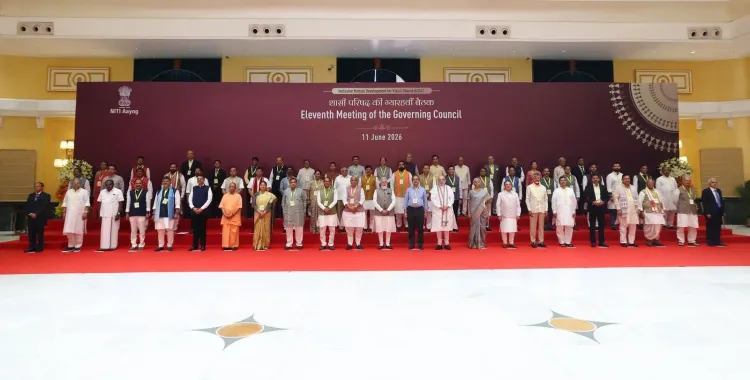
Tripura Chief Minister Dr. Manik Saha presented the state's gains in deregulation, higher education, health, sports, skill development, and startups at the 11th NITI Aayog Governing Council meeting themed 'Human Capital for Vikasit Bharat', chaired by PM Modi at Rashtrapati Bhawan on 11 June 2026.
Key Takeaways
Manik Saha attended the 11th NITI Aayog Governing Council meeting at Rashtrapati Bhawan, New Delhi on 11 June 2026 .
The meeting was themed 'Human Capital for Vikasit Bharat' and was chaired by Prime Minister Narendra Modi .
Tripura highlighted progress in deregulation, compliance reduction, investment attraction, higher education, health services, sports, skill development, and startups .
CM Saha linked these state-level reforms to the national goal of Viksit Bharat @2047 .
NITI Aayog , constituted in January 2015 , uses Governing Council meetings to align state priorities with central development frameworks including the National Education Policy 2020 and Skill India Mission .
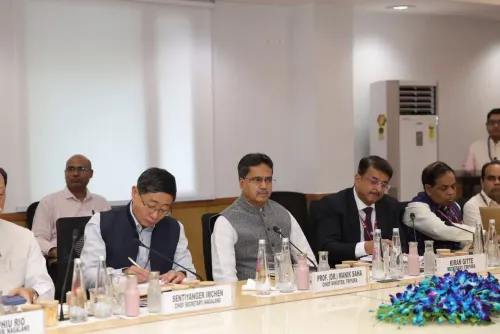
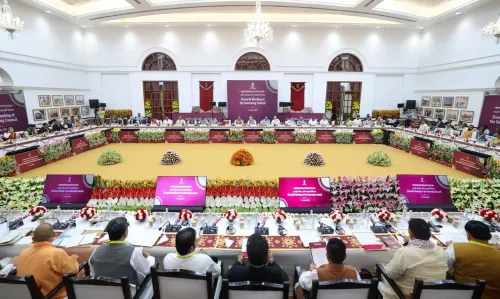
Tripura Chief Minister Dr. Manik Saha attended the 11th Meeting of the Governing Council of NITI Aayog, chaired by Prime Minister Narendra Modi at Rashtrapati Bhawan, New Delhi, on 11 June 2026. The meeting was themed 'Human Capital for Vikasit Bharat', bringing together chief ministers and senior policymakers to deliberate on India's path to becoming a developed economy by 2047.
Context
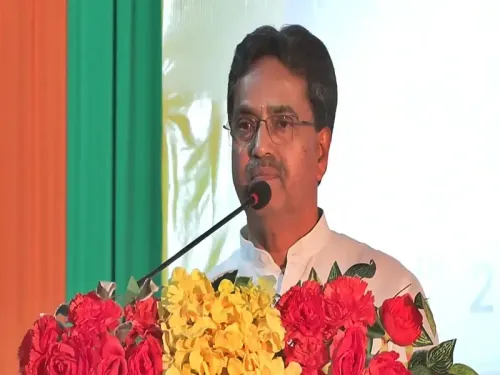
Dr. Saha used the platform to highlight Tripura's progress across multiple human-capital domains, stating that the state had achieved 'exemplary success' in deregulation and compliance reduction, investment attraction, establishment of higher educational institutions, health services, sports, skill development, and startups. In his address, he framed these achievements as direct contributions to human resource development under the broader vision of Vikasit Tripura.
The Chief Minister also underscored the national ambition, noting that under Prime Minister Modi's leadership, 'India today is not merely competing with the world's major economies but is steadily outpacing them in several sectors.' He affirmed the country's commitment to building 'a prosperous, self-reliant, and globally respected India.'
Policy Backdrop
NITI Aayog was constituted in January 2015 to replace the Planning Commission and institutionalise cooperative federalism between the Centre and states. Its Governing Council, chaired by the Prime Minister, includes all chief ministers and serves as the apex body for aligning state-level priorities with national development goals.
The Viksit Bharat @2047 vision — targeting developed-economy status by the centenary of Indian independence — has been the central organising framework for successive Governing Council meetings. Supporting pillars include the National Education Policy 2020, the Skill India Mission launched in July 2015, and the Atmanirbhar Bharat package of 2020, all of which emphasise deregulation, skilling, and investment facilitation.
Tripura's reported focus on compliance reduction and startup ecosystems aligns with the central government's push on ease of doing business, a metric that has driven state-level reforms across India's northeastern region and beyond.
Stakeholders and Impact
The reforms cited by Dr. Saha — spanning higher education, health services, and skill development — directly affect Tripura's youth, students, entrepreneurs, and health workers. A strengthened startup ecosystem and expanded higher-education infrastructure, if sustained, could reduce outmigration from the state, a persistent challenge for northeastern economies.
For the broader national framework, state-level presentations at Governing Council meetings serve as benchmarks. Tripura's deregulation narrative may influence how other states in the Northeast approach compliance reform and investment facilitation under centrally sponsored schemes.
What's Next
Attention will now turn to Tripura's state budget allocations and the on-ground rollout of new higher-education and skill development centres, which will be the measurable test of the progress outlined at the Governing Council. Subsequent NITI Aayog meetings are expected to track human-capital indicators across states, making today's commitments part of an accountability framework.
As India advances its Viksit Bharat @2047 roadmap, the ability of smaller states like Tripura to demonstrate scalable models in deregulation and human capital development will be closely watched as a template for inclusive national growth.
Point of View
Using human-capital metrics as proof of developmental credibility. By foregrounding deregulation and startup growth alongside traditional welfare indicators, Tripura is positioning itself within the Centre's preferred reform vocabulary — ease of doing business and self-reliance — rather than the older language of grants and special-category status. The 'Vikasit Bharat @2047' framing also gives state governments a politically neutral scaffolding to present achievements without appearing to compete with the Centre's narrative. Whether Tripura's claims translate into measurable outcomes will depend on verifiable data on employment, investment inflows, and educational enrolment that future Governing Council reviews are expected to track.
NationPress
25 Sept 2026
Frequently Asked Questions
What is the NITI Aayog Governing Council meeting?
The NITI Aayog Governing Council is India's apex body for cooperative federalism, chaired by the Prime Minister and comprising all chief ministers. It meets periodically to align state-level priorities with national development goals such as Viksit Bharat @2047.
What did Tripura CM Manik Saha say at the NITI Aayog meeting?
Dr. Manik Saha highlighted Tripura's progress in deregulation, compliance reduction, investment attraction, higher education, health services, sports, skill development, and startups, framing these as contributions to human resource development for Vikasit Tripura.
What is the theme of the 11th NITI Aayog Governing Council meeting?
The theme of the 11th Governing Council meeting held on 11 June 2026 was 'Human Capital for Vikasit Bharat', focusing on education, skills, and human resource development as drivers of India's developed-economy goal by 2047.
What is Viksit Bharat @2047?
Viksit Bharat @2047 is India's national goal to achieve developed-economy status by the centenary of independence in 2047, emphasising human capital, deregulation, bold reforms, and self-reliance across all states.
Where was the 11th NITI Aayog Governing Council meeting held?
The 11th Governing Council meeting was held at Rashtrapati Bhawan in New Delhi on 11 June 2026, chaired by Prime Minister Narendra Modi.