Dr. Jitendra Singh Meets Meghalaya CM Conrad Sangma in Delhi
Synopsis
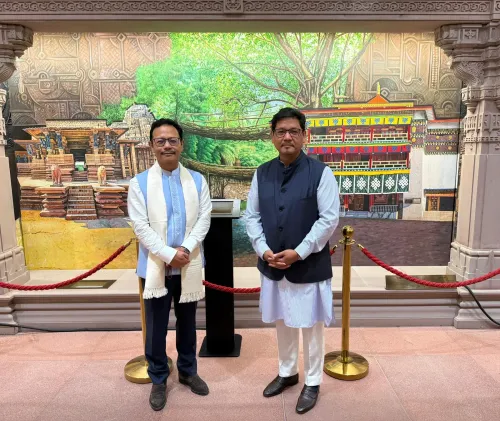
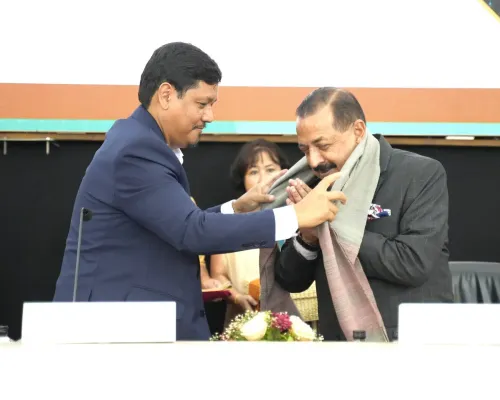
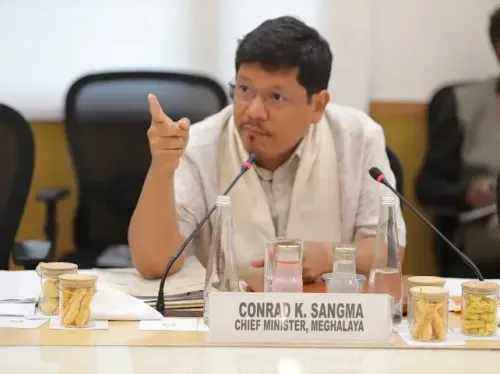
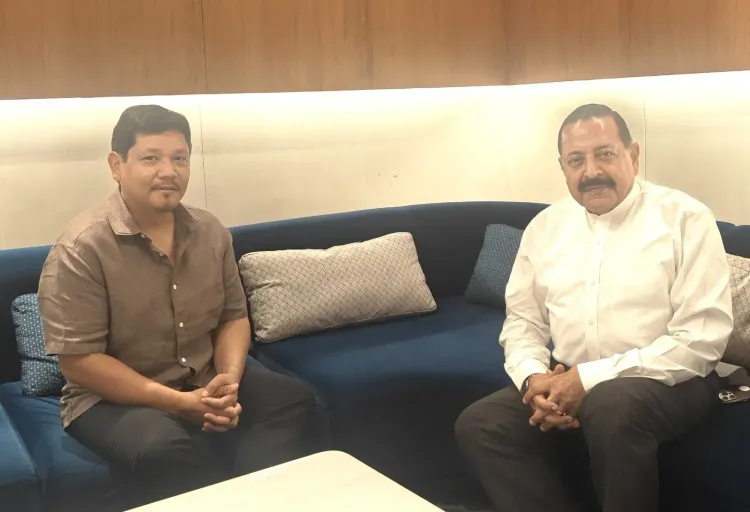
Union Science and Technology Minister Dr. Jitendra Singh met Meghalaya Chief Minister Conrad K. Sangma in New Delhi on 13 June 2026, on the sidelines of a NITI Aayog event. Dr. Singh highlighted both professional ties and a personal association with the Sangma family dating back to the late P. A. Sangma, former Lok Sabha Speaker.
Key Takeaways
Jitendra Singh met Meghalaya CM Conrad K.
Sangma in New Delhi on 13 June 2026 .
Conrad Sangma was in Delhi to attend a NITI Aayog event.
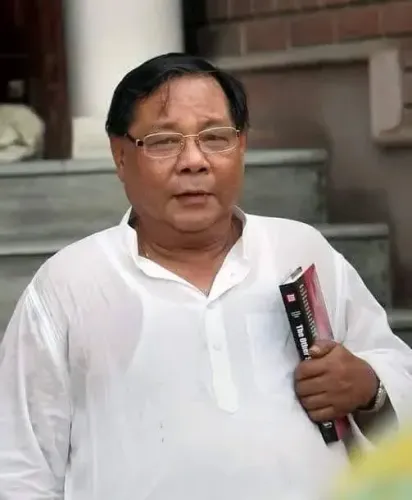
Singh described a long-standing personal association with the Sangma family , rooted in ties with the late P.
Sangma , former Lok Sabha Speaker (1996-1998) .
Sangma was the founder of the National People's Party and a towering figure in northeastern Indian politics.
The meeting illustrates the role of NITI Aayog forums in facilitating informal centre-state dialogue beyond formal agendas.
Singh holds charge of Science and Technology , Earth Sciences , and roles in the Prime Minister's Office , making him a key interlocutor for state governments.
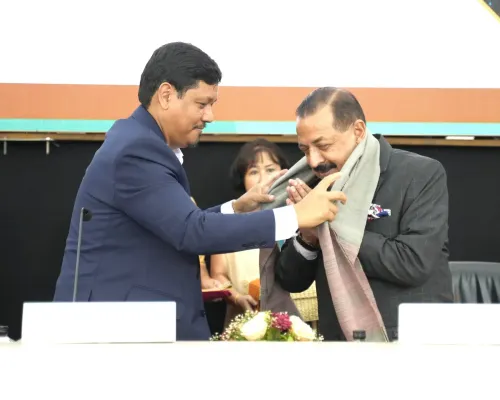
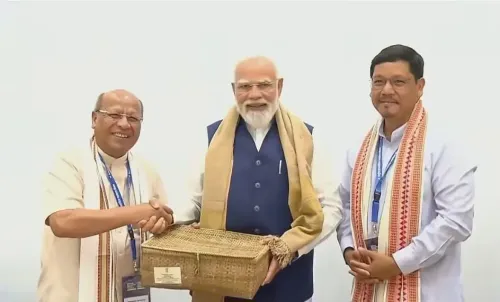
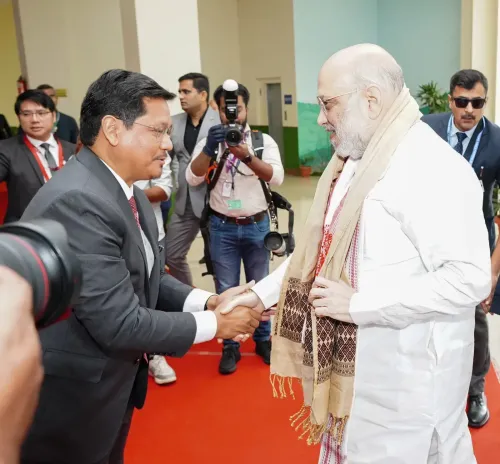
Union Science and Technology Minister Dr. Jitendra Singh met Meghalaya Chief Minister Conrad K. Sangma in New Delhi on Saturday, 13 June 2026, on the sidelines of a NITI Aayog event that brought the northeastern Chief Minister to the capital. Dr. Singh described the meeting as both professionally meaningful and personally significant, citing a long-standing bond with the Sangma family.
Context
Conrad K. Sangma was in Delhi to attend a NITI Aayog event, one of the regular forums through which state governments engage with central policy bodies. On the margins of that engagement, the two leaders met for what Dr. Singh characterised as a 'pleasant meeting.' The Union Minister noted that the association extends well beyond official duties, rooted in ties that go back to Conrad's father, the late P. A. Sangma.
P. A. Sangma served as Speaker of the Lok Sabha from 1996 to 1998 and was the founder of the National People's Party, establishing the Sangma family as one of the most prominent political dynasties in northeastern India. Dr. Jitendra Singh's acknowledgement of that lineage underscores how personal relationships forged across political generations continue to shape centre-state interactions.
Policy Backdrop
NITI Aayog was constituted in January 2015 to replace the Planning Commission and institutionalise cooperative federalism through its Governing Council and thematic meetings. Chief Ministers of northeastern states have been regular participants in these forums since the body's inception, using them to align state development priorities with centrally sponsored schemes.
Meghalaya, a hill state in the northeast known for its biodiversity and unique governance challenges, has been an active participant in NITI Aayog-led dialogues. Conrad K. Sangma heads an NPP-led government in the state and has frequently engaged with central institutions on issues ranging from sustainable development to infrastructure.
Stakeholders and Impact
The meeting reflects a broader pattern of centre-state engagement that characterises the post-2014 cooperative federalism approach. Informal meetings between Union ministers and state Chief Ministers on the sidelines of NITI Aayog events often provide space for candid conversations that formal agendas do not accommodate. For Meghalaya, such access to senior Union ministers can translate into faster resolution of state-specific concerns.
Dr. Singh's dual role — holding independent charge of Science and Technology and Earth Sciences, alongside responsibilities in the Prime Minister's Office — makes him a significant interlocutor for state governments seeking alignment with national science and governance priorities. The personal dimension he highlighted adds a layer of continuity that purely transactional political relationships often lack.
What's Next
Observers will watch for any follow-up on science and technology collaboration between the Union Ministry and Meghalaya, particularly given Dr. Singh's portfolio. Future NITI Aayog Governing Council meetings and sectoral consultations involving northeastern Chief Ministers will be the natural next forums for any outcomes from such bilateral conversations to surface.
The broader significance lies in the continuity of institutional memory: as India's northeastern states push for greater developmental attention, personal and professional networks between Delhi and state capitals remain a quiet but consequential channel of governance.
Point of View
While outwardly routine, is a small but telling illustration of how personal networks built across political generations continue to oil the machinery of centre-state relations in India. Dr. Jitendra Singh's decision to publicly acknowledge his ties to the late P. A. Sangma — a Congress-era Lok Sabha Speaker — signals a deliberate projection of political continuity and cross-party goodwill, useful currency for a Union minister managing relationships with coalition-aligned state governments. NITI Aayog events have evolved into informal diplomatic corridors where such bilateral conversations happen away from formal minutes and press conferences. For Meghalaya, whose NPP government maintains a working alliance with the BJP-led NDA at the Centre, cultivating such ministerial relationships is both a political and developmental imperative.
NationPress
29 Jul 2026
Frequently Asked Questions
Why did Conrad Sangma visit Delhi in June 2026?
Conrad K. Sangma visited Delhi to attend a NITI Aayog event, one of the regular forums for centre-state policy dialogue.
What is the relationship between Dr. Jitendra Singh and the Sangma family?
Dr. Jitendra Singh described a long-standing personal association with the Sangma family dating back to his ties with the late P. A. Sangma , former Speaker of the Lok Sabha (1996-1998) and founder of the National People's Party.
Who was P. A. Sangma?
P. A. Sangma was a prominent Indian politician from Meghalaya who served as Speaker of the Lok Sabha from 1996 to 1998 and founded the National People's Party . He was the father of current Meghalaya Chief Minister Conrad K. Sangma.
What does NITI Aayog do and why do Chief Ministers attend its events?
NITI Aayog , constituted in January 2015 , is the Government of India's policy think tank that replaced the Planning Commission. Chief Ministers attend its events to align state development priorities with central schemes and to engage in cooperative federalism dialogues.
What portfolio does Dr. Jitendra Singh hold?
Dr. Jitendra Singh is the Union Minister of State (Independent Charge) for Science and Technology and Earth Sciences , and also holds Minister of State roles in the Prime Minister's Office and the Ministry of Personnel.