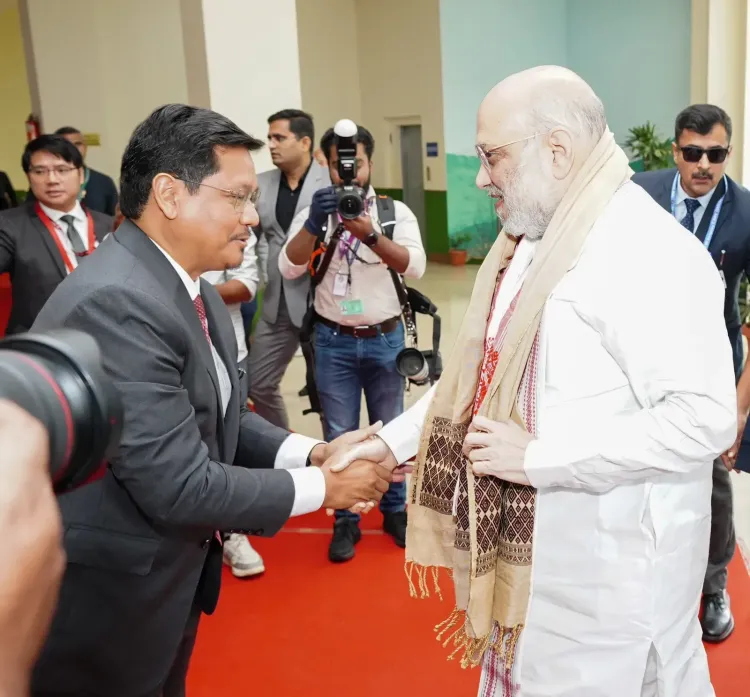
CM Conrad Sangma welcomes Amit Shah to Shillong for 73rd NEC plenary
Synopsis
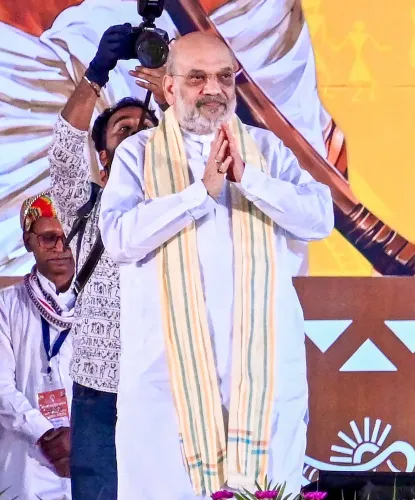
Meghalaya Chief Minister Conrad Sangma welcomed Union Home Minister Amit Shah to Shillong for the 73rd Plenary Session of the North Eastern Council. Shah, who chairs the NEC, will preside over deliberations covering project reviews, fund allocations and inter-state coordination across the eight northeastern states at the regional planning body's headquarters.
Key Takeaways
Meghalaya CM Conrad Sangma welcomed Union Home Minister Amit Shah to Shillong on 4 June 2026.
The visit is for the 73rd Plenary Session of the North Eastern Council (NEC).
Amit Shah attends in his capacity as Chairman of the NEC.
The NEC, constituted in 1971, is the apex regional planning body for the eight northeastern states.
Shillong hosts the NEC secretariat and serves as the administrative hub for regional deliberations.
Plenary outcomes typically include project approvals, fund releases and follow-up actions for the Northeast.
Meghalaya Chief Minister Conrad Sangma on 4 June 2026 welcomed Union Home Minister Amit Shah to Shillong for the 73rd Plenary Session of the North Eastern Council (NEC). Sangma, who also serves as national president of the National People's Party, made the announcement on X, framing the visit as a marquee moment for the region's apex planning body. Shah arrives in his capacity as Chairman of the NEC, the statutory forum that coordinates development across the eight northeastern states.
'Glad to welcome Hon'ble Union Home Minister and Chairman of the North Eastern Council, Shri Amit Shah ji to Shillong for the 73rd NEC Plenary Session,' the Chief Minister wrote, accompanying the post with an image from the welcome.
Context
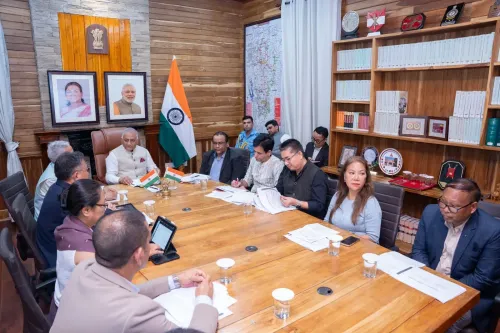
The plenary brings together chief ministers, governors and senior officials of the northeastern states under the chairmanship of the Union Home Minister. Hosted at Shillong, the seat of the NEC secretariat, the session is expected to review ongoing regional projects, fund utilisation and inter-state coordination priorities.
For Meghalaya, the hosting carries symbolic weight: the state capital has long functioned as the administrative anchor for regional deliberations, and Sangma's government has used recent plenaries to push connectivity, tourism and border-area development on the central agenda.
Policy backdrop
The North Eastern Council was constituted in 1971 under the NEC Act to serve as a regional planning body for the Northeast. Its remit covers economic and social planning across Arunachal Pradesh, Assam, Manipur, Meghalaya, Mizoram, Nagaland, Sikkim and Tripura.
Since the Union Home Minister was designated Chairman, plenary sessions have increasingly aligned regional priorities with central flagship programmes — particularly in roads, power, digital infrastructure and border-area development. The chairmanship structure underscores the Centre's direct stewardship of Northeast development planning, with the Ministry of Development of the North Eastern Region (DoNER) acting as the line ministry.
Successive plenaries have served as venues for project approvals, fund releases and the airing of state-specific demands ranging from highway upgrades to skill-development outlays.
Stakeholders and impact
The session's outcomes are closely watched by the chief ministers of the eight northeastern states, regional planners, and central ministries handling infrastructure, power and connectivity. State governments typically use the plenary to seek faster clearances and larger allocations under NEC-funded schemes.
For local stakeholders in Shillong — including business associations, tribal councils and civil society groups — the plenary is also a moment of visibility, drawing senior central leadership and bureaucratic attention to Meghalaya's development requirements.
Sangma, whose party is a constituent of the ruling coalition at the state level, has consistently positioned the NEC platform as a vehicle to fast-track Meghalaya's infrastructure pipeline, including road corridors linking the state to Assam and Bangladesh trade points.
What's next
Attention will now turn to the formal agenda of the 73rd NEC Plenary, expected to cover project reviews, scheme approvals and the rollout of central-sector initiatives tailored for the Northeast. Announcements on fund releases and new project sanctions typically follow the plenary's conclusion.
The Shillong session is also likely to set the timeline for the next plenary and clarify follow-up actions on commitments made at earlier meetings. For Sangma's administration, the visit offers a high-profile platform to surface Meghalaya's priorities directly before the Union Home Minister — an opportunity that could shape the state's development trajectory in the months ahead.
Frequently Asked Questions
What is the 73rd NEC Plenary Session?
It is the 73rd plenary meeting of the North Eastern Council, the statutory regional planning body for the eight northeastern states, being held in Shillong under the chairmanship of Union Home Minister Amit Shah.
Why is Amit Shah in Shillong?
Union Home Minister Amit Shah is in Shillong to chair the 73rd Plenary Session of the North Eastern Council, of which he is the Chairman.
Who chairs the North Eastern Council?
The Union Home Minister of India chairs the North Eastern Council. Amit Shah currently serves as its Chairman.
When was the North Eastern Council formed?
The North Eastern Council was constituted in 1971 under the NEC Act to coordinate development planning across the northeastern states of India.
Which states are covered by the NEC?
The NEC covers eight states: Arunachal Pradesh, Assam, Manipur, Meghalaya, Mizoram, Nagaland, Sikkim and Tripura.