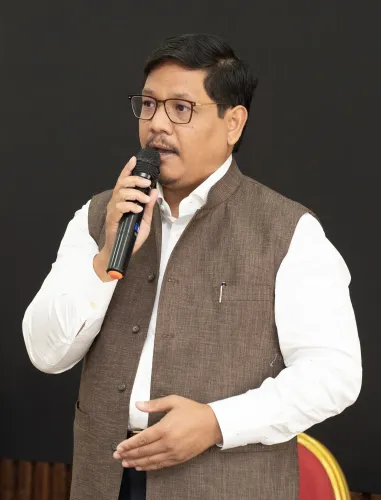
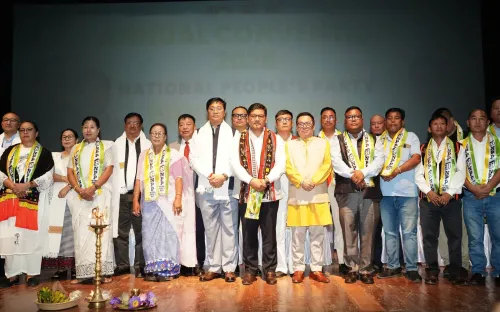
CM Conrad Sangma chairs NPP National Committee meet in Shillong
Synopsis
Meghalaya CM and NPP president Conrad Sangma chaired the party's National Committee Meeting at New Shillong on June 9, 2026, with leaders from over 14 states. Talks covered youth and women leadership, indigenous rights, electoral preparedness, and the 'Northeast 2047: Gateway to Prosperity' vision.
Key Takeaways
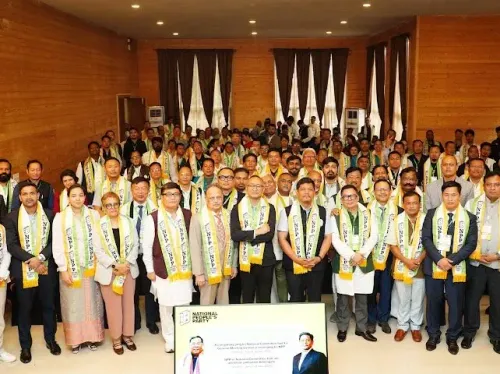
NPP National Committee Meeting was held at New Shillong on June 9, 2026 , chaired by party president and Meghalaya CM Conrad Sangma .
Representatives from the Northeast and more than 14 states attended, reflecting the party's multi-state ambitions.
Key agenda items included promoting youth and women leadership , safeguarding indigenous rights , and reviewing electoral preparedness .
The meeting reaffirmed the party's long-term framework, 'Northeast 2047: Gateway to Prosperity' , aligning with the central government's Viksit Bharat 2047 roadmap.
The NPP reiterated its guiding motto, 'One Voice, One Northeast' , signalling continued focus on regional consolidation.
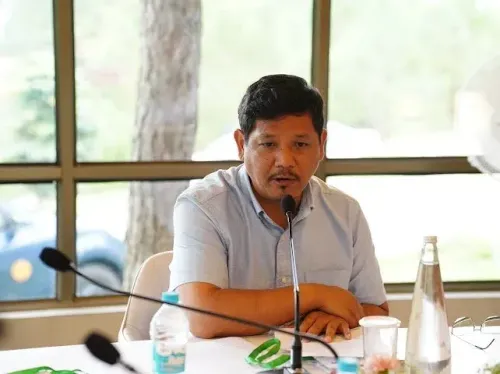
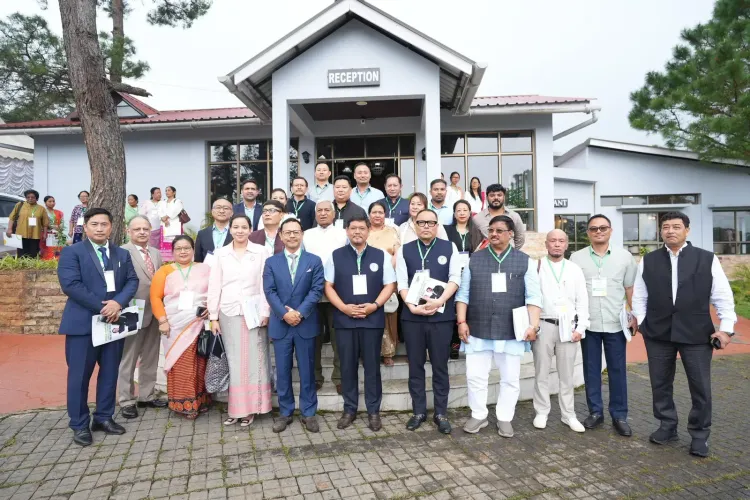
Meghalaya Chief Minister and National People's Party president Conrad Sangma on Tuesday, June 9, 2026, chaired the NPP National Committee Meeting at New Shillong, bringing together party leaders, office bearers, and representatives from the Northeast and more than 14 states to deliberate on organisational strategy and regional development.
Context
The meeting convened under the banner of NPP's 'One Voice, One Northeast' motto, with delegates from across the country converging at New Shillong — the planned administrative township near the state capital developed to host large-scale government and party events. Sangma described the gathering as one driven by 'a shared vision for our people and nation.'
Discussions covered four broad pillars: strengthening the party organisation, promoting youth and women leadership, safeguarding indigenous rights, and advancing inclusive, sustainable development under the party's long-term framework, 'Northeast 2047: Gateway to Prosperity.'
Policy Backdrop
The National People's Party was founded in 2013 by the late P.A. Sangma — former Lok Sabha Speaker and Conrad Sangma's father — after a split from the NCP, with an explicit mandate to consolidate Northeastern political voice. The party formed the Meghalaya government for the first time in 2018, ending years of Congress rule, and retained power in the 2023 assembly elections.
The Northeast 2047 vision document frames the region as India's economic gateway by the centenary of independence, directly echoing the central government's Viksit Bharat 2047 roadmap. This alignment has helped the NPP secure greater central attention for connectivity and infrastructure projects under the Act East Policy, even as the party maintains its regional identity within the NDA coalition.
The committee also reviewed electoral preparedness and organisational growth, reflecting the party's ambition to expand its footprint beyond Meghalaya into other Northeastern states where it has been contesting assembly polls.
Stakeholders and Impact
The emphasis on indigenous rights carries particular weight across Meghalaya, Arunachal Pradesh, and Assam, where long-standing legal frameworks and community movements protect tribal land and demographic character. By foregrounding this issue at a national committee meeting, the NPP signals that indigenous protection remains a non-negotiable plank even as it broadens its electoral base.
The push for youth and women leadership within the party structure reflects a wider trend among regional parties seeking to refresh their cadre base ahead of election cycles. Delegates from more than 14 states attending the meeting underlines that the NPP is positioning itself as a genuinely pan-Northeast, multi-state force rather than a single-state outfit.
What's Next
The party's stated commitment to 'expanding the party's footprint' points toward active contest strategies in upcoming state assembly elections across the Northeast. A formal public launch of the Northeast 2047 vision document at a regional summit would be a significant next step in translating the framework from internal party language into a concrete governance agenda. Stronger inter-state collaboration, as Sangma stressed, will be the metric by which the NPP's regional ambitions are ultimately judged.
Point of View
Using the 2047 framing as both an aspirational brand and a resource-mobilisation argument with New Delhi. Foregrounding indigenous rights alongside electoral preparedness is a calculated balance — it reassures the party's tribal base while projecting governance credibility to a wider audience. Conrad Sangma's dual role as state chief minister and national party president gives him unusual leverage to convert regional sentiment into federal bargaining power. The meeting's multi-state attendance is the clearest indicator yet that the NPP intends to contest the next Northeast election cycle as a coordinated bloc rather than a collection of state units.
NationPress
26 Oct 2026
Frequently Asked Questions
What was discussed at the NPP National Committee Meeting in Shillong?
The meeting covered strengthening party organisation, promoting youth and women leadership, safeguarding indigenous rights, reviewing electoral preparedness, and advancing the 'Northeast 2047: Gateway to Prosperity' vision.
Who is Conrad Sangma and what party does he lead?
Conrad Sangma is the Chief Minister of Meghalaya and national president of the National People's Party, a regional party founded in 2013 to represent Northeastern interests within the NDA coalition.
What is Northeast 2047?
Northeast 2047 is the NPP's long-term vision framework that positions the Northeast as India's economic gateway by the centenary of independence, broadly aligned with the central government's Viksit Bharat 2047 roadmap.
Where is New Shillong and why was the meeting held there?
New Shillong is a planned administrative township near Shillong, developed to decongest the state capital and host large government and party events, making it a natural venue for the NPP's national committee gathering.
What does 'One Voice, One Northeast' mean for the NPP?
It is the NPP's guiding motto expressing the party's goal of unifying Northeastern political interests under a single platform, enabling stronger inter-state collaboration and a consolidated regional voice in national politics.