Punjab drug crisis: BJP cites assembly report, 65% youth affected
Synopsis
A Punjab Vidhan Sabha committee report has handed the BJP a potent political weapon: data showing over 65% of youth caught in drug abuse and Buprenorphine consumption up 57% in four years — directly contradicting the AAP government's 'Drug-Free Punjab' narrative, three years after Kejriwal's three-month eradication promise.
Key Takeaways
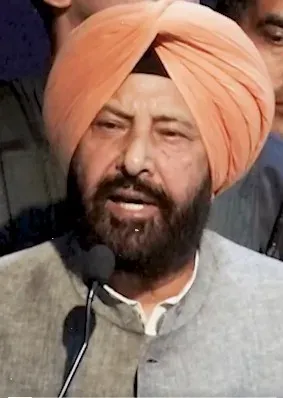
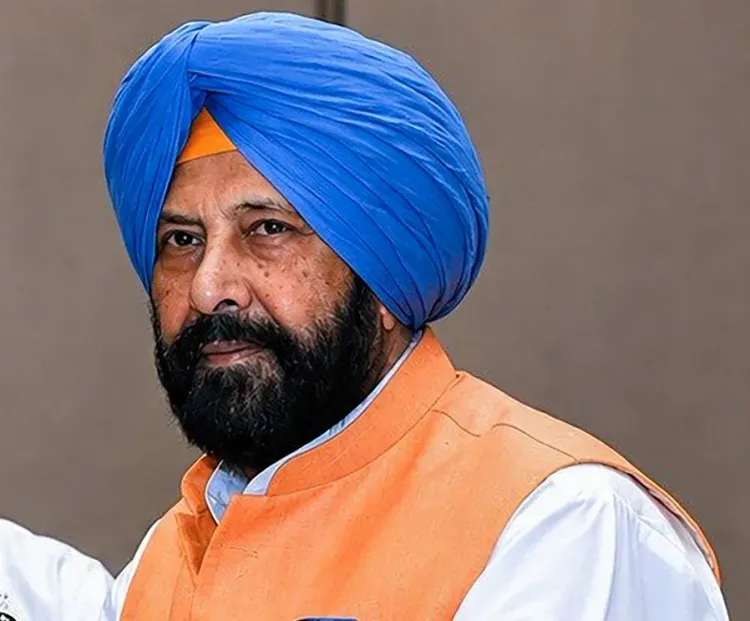
BJP Punjab President Kewal Singh Dhillon cited the Punjab Vidhan Sabha Committee report on 7 August to attack the AAP government's drug policy.
The report indicates more than 65 per cent of Punjab's youth are affected by drug abuse, with the 18–35 age group worst hit.
Consumption of de-addiction medicine Buprenorphine has risen by 57 per cent over the past four years.
Overall demand for de-addiction tablets has grown from approximately 700 million to nearly 1.1 billion .
Civil hospitals face a severe shortage of treatment beds, according to Dhillon.
AAP convener Arvind Kejriwal had pledged to eradicate drugs within three months of forming the government; the party has now been in power for over four and a half years .
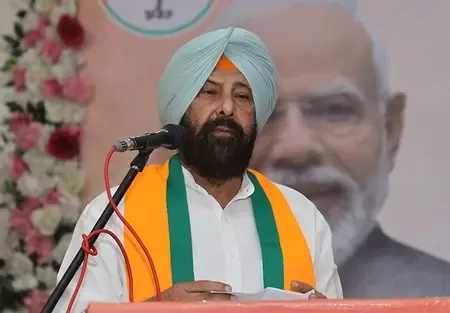
Bharatiya Janata Party (BJP) Punjab President Kewal Singh Dhillon on Friday, 7 August called the Punjab Vidhan Sabha Committee's report on drug abuse a document of the Aam Aadmi Party (AAP) government's 'biggest failure', pointing to data showing more than 65 per cent of the state's youth are in the grip of drugs. The committee's findings, he argued, have stripped away the credibility of the government's much-publicised 'Drug-Free Punjab' campaign.
What the Assembly Report Reveals
According to Dhillon, the Vidhan Sabha committee's report identifies young people in the 18–35 age group as the worst affected by drug abuse in Punjab. The data, he said, exposes the gulf between official claims and ground reality.
Notably, the report highlights that consumption of de-addiction medicines such as Buprenorphine has surged by 57 per cent over the past four years. Dhillon pointed out that the overall demand for de-addiction tablets has climbed from approximately 700 million to nearly 1.1 billion — a figure he described as contradicting any government claim of progress.
He also flagged a severe shortage of treatment beds in civil hospitals, arguing that the state has failed to build adequate rehabilitation infrastructure even as addiction rates have risen.
BJP's Case Against the AAP Government
Dhillon recalled that AAP convener Arvind Kejriwal had promised to eradicate drugs within three months of his party forming the government in Punjab. More than four and a half years later, critics argue the situation has deteriorated rather than improved.
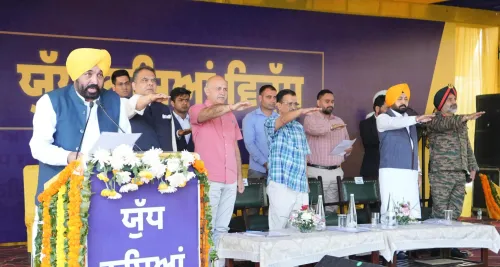
'The government's War Against Drugs campaign has completely failed at the grassroots and has remained confined to advertisements, publicity and hollow claims,' Dhillon said.
He questioned why, if drug abuse was genuinely declining, the demand for de-addiction medicines had registered such a record increase — framing the statistics as self-incriminating for the ruling party.
What the BJP Is Demanding
Dhillon outlined a three-point demand: dismantling the drug supply chain, taking stringent action against major traffickers without political interference, and implementing a time-bound policy for the treatment, counselling, and rehabilitation of drug-affected youth.
He stressed that the battle against drugs cannot be won through speeches and publicity campaigns alone, and that the government's priority should shift from optics to structural intervention.
Broader Context
Punjab's drug crisis has been a persistent political flashpoint for successive state governments. The AAP came to power in 2022 on a platform that prominently featured anti-drug pledges. This comes amid growing scrutiny of the state's public health infrastructure, with civil society groups and opposition parties alike calling for independent audits of de-addiction programmes. The assembly committee report, presented by a legislative body rather than the executive, lends the critique an institutional weight that the BJP has been quick to leverage ahead of future electoral cycles.
Whether the government responds with a revised policy roadmap or contests the report's framing will be closely watched in the weeks ahead.
Point of View
Making it harder for the AAP government to dismiss as partisan attack. The Buprenorphine consumption spike is a particularly damaging data point: rising demand for de-addiction medicine is a direct proxy for worsening addiction, not improving outcomes. The AAP's 'Drug-Free Punjab' brand was central to its 2022 electoral identity in the state; that same brand now risks becoming a liability. The deeper question mainstream coverage is missing is whether any government — AAP, Congress, or Akali — has ever had a structurally funded, independently monitored de-addiction programme, or whether the drug crisis has always been managed as an electoral talking point rather than a public health emergency.
NationPress
22 Sept 2026
Frequently Asked Questions
What does the Punjab Vidhan Sabha Committee report say about drug abuse?
The report indicates that more than 65 per cent of Punjab's youth are affected by drug abuse, with the 18–35 age group identified as the worst hit. It also highlights a 57 per cent rise in consumption of de-addiction medicine Buprenorphine over four years and a severe shortage of treatment beds in civil hospitals.
Why is the BJP attacking the AAP government over this report?
The BJP argues the report exposes the failure of the AAP government's 'Drug-Free Punjab' campaign and its 'War Against Drugs' initiative. BJP Punjab President Kewal Singh Dhillon pointed out that AAP convener Arvind Kejriwal had promised to eradicate drugs within three months of taking power, a pledge the party has now been in office for over four and a half years without fulfilling.
How much has de-addiction medicine consumption increased in Punjab?
According to figures cited by BJP's Kewal Singh Dhillon from the assembly committee report, overall consumption of de-addiction tablets has risen from approximately 700 million to nearly 1.1 billion, while Buprenorphine consumption specifically has increased by 57 per cent over the past four years.
What solutions has the BJP demanded for Punjab's drug crisis?
BJP Punjab President Dhillon has called for dismantling the drug supply chain, stringent action against major traffickers without political interference, and a time-bound policy for treatment, counselling, and rehabilitation of drug-affected youth. He emphasised that publicity campaigns alone cannot address the crisis.
When did AAP form the government in Punjab and what was its drug pledge?
The Aam Aadmi Party came to power in Punjab in 2022. AAP convener Arvind Kejriwal had promised to eradicate drugs within three months of the party forming the government, a commitment that critics now say remains unfulfilled more than four and a half years later.