Punjab Police logs 574 days of Yudh Nashian Virudh, arrests 80,244
Synopsis
Punjab Police completed 574 consecutive days of the Yudh Nashian Virudh anti-drug campaign on 27 September 2026, arresting more smugglers and seizing 2.3 kg heroin and 120 kg ganja in a single day. Total arrests since the drive began now stand at 80,244, with 16 persons referred to de-addiction treatment.
Key Takeaways
Punjab Police marked day 574 of the Yudh Nashian Virudh campaign on 27 September 2026 .
Single-day seizures included 2.3 kg heroin , 120 kg ganja , 632 intoxicant pills , and ₹1,100 in drug money .
The cumulative number of drug smugglers arrested since the drive launched has reached 80,244 .
16 persons were counselled into voluntary de-addiction and rehabilitation treatment on the same day.
The campaign was launched in 2022 by Chief Minister Bhagwant Mann 's government as a sustained, daily enforcement and rehabilitation initiative.
Punjab's cross-border smuggling routes remain a structural driver of the state's opioid and synthetic drug problem.
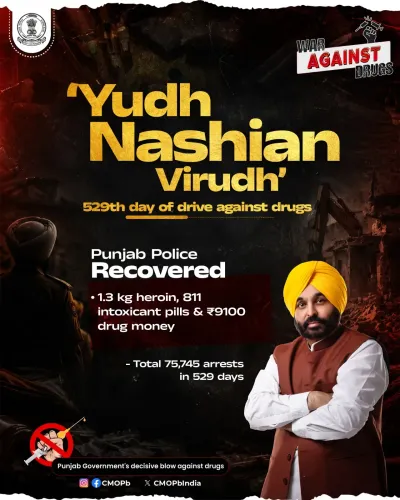
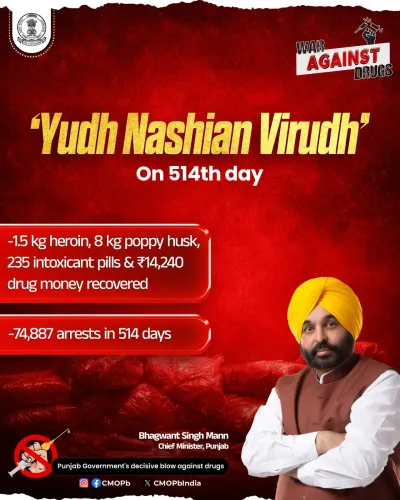
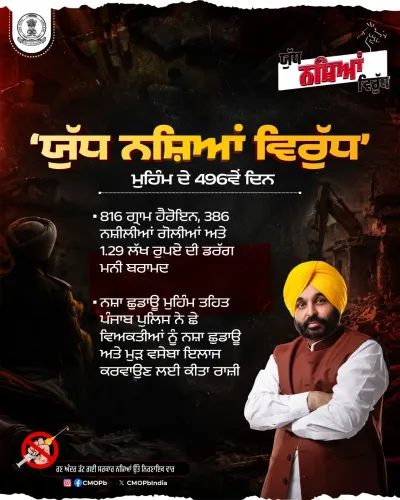
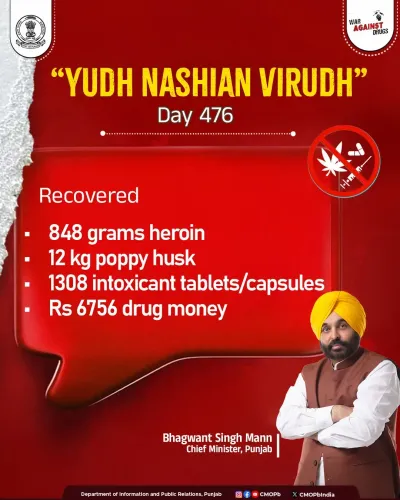
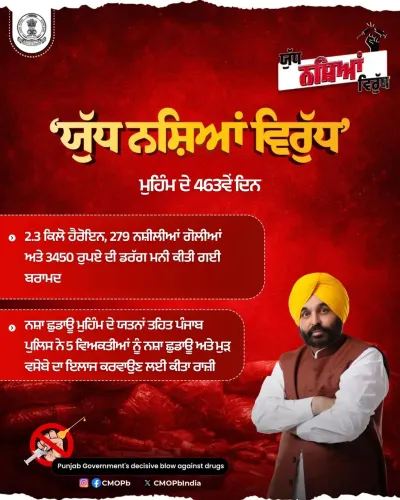
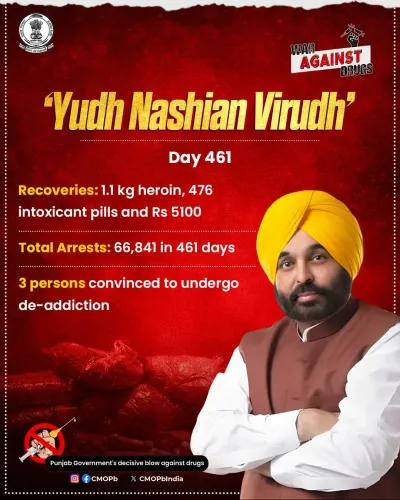
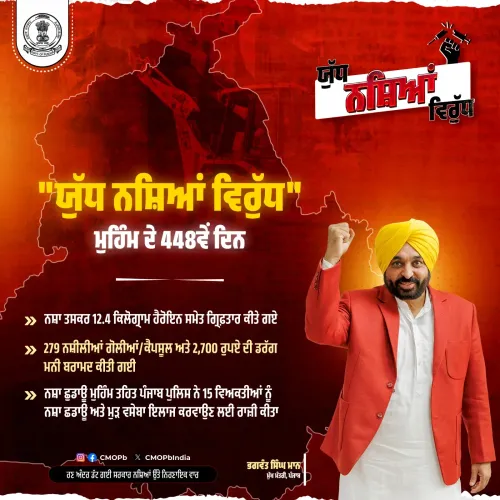
On its 574th consecutive day, Punjab's relentless anti-drug campaign Yudh Nashian Virudh — 'War Against Drugs' — showed no sign of losing pace, with fresh seizures and another batch of smugglers behind bars reported by the Chief Minister's Office of Punjab on Sunday, 27 September 2026.
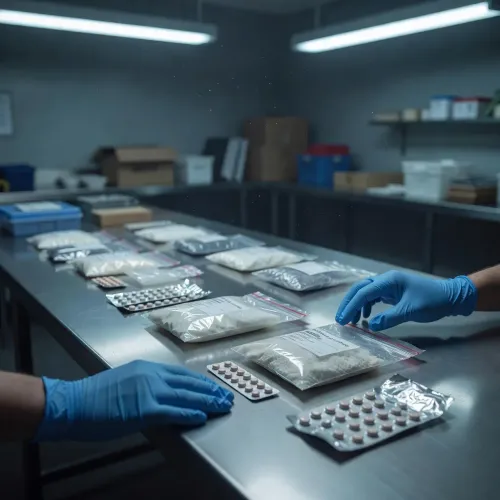
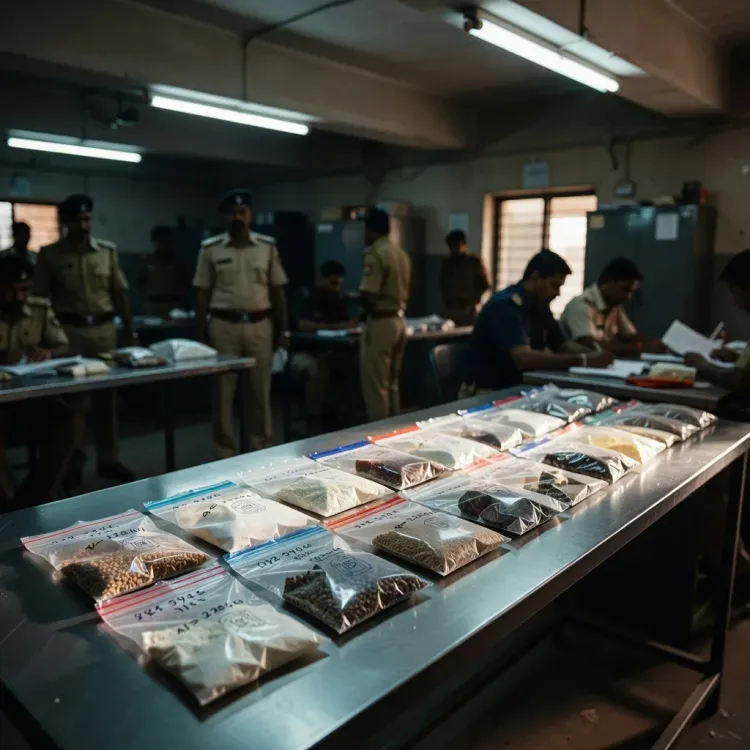
Police teams operating across the state arrested multiple drug smugglers and recovered 2.3 kg heroin, 120 kg ganja, 632 intoxicant pills, and ₹1,100 in drug money in a single day's operations. The cumulative count of drug smugglers arrested since the drive began has now crossed 80,244 — a figure the CMO described as evidence of a sustained, system-wide enforcement push. Separately, 16 persons were counselled and convinced to voluntarily enter de-addiction and rehabilitation treatment as part of the campaign's outreach arm.
What 574 days of daily enforcement looks like on the ground
The scale of Yudh Nashian Virudh is deliberate by design. Launched formally in 2022 by Chief Minister Bhagwant Mann's Aam Aadmi Party government, the campaign was conceived not as a periodic crackdown but as a permanent operational posture — daily arrest data published through official channels, daily seizure numbers placed in the public record. The intent was to make enforcement visible and continuous, disrupting the supply chains that feed Punjab's well-documented drug dependency crisis. Punjab sits on cross-border smuggling corridors that have, over decades, made opioids and synthetic drugs disproportionately available to the state's youth. Successive governments have wrestled with the problem; the current administration's response has leaned heavily on volume — high-frequency arrests paired with incremental rehabilitation outreach. The 120 kg ganja figure from a single day underscores that bulk seizures remain a regular feature, not an anomaly.Rehabilitation: the quieter front of the campaign
Beyond the seizure tallies, Punjab Police's daily de-addiction counselling work is the less-reported dimension of the drive. Convincing 16 individuals in a single day to enter treatment may appear modest against the backdrop of thousands of arrests, but the cumulative effect of sustained daily outreach — conducted alongside enforcement — reflects a dual-track model that the government has consistently highlighted. Expanding government-run de-addiction centres and securing adequate budget allocations in the next state cycle remain the structural tests of whether this counselling work translates into durable recovery outcomes. At 574 days without a break, the campaign has already outlasted most state-level enforcement initiatives in Indian political memory. Whether its momentum holds — and whether the rehabilitation infrastructure scales to match the enforcement numbers — is the question Punjab's youth will ultimately answer.Point of View
Countable progress central to its political identity in a state where drug abuse has historically been a charged electoral issue. Crossing 80,000 total arrests gives the government a striking headline number, but critics and public-health experts will note that arrest volume alone does not measure demand reduction. The rehabilitation figures — 16 persons counselled in a day — remain the harder-to-scale front of the campaign, and the AAP government's ability to fund and expand de-addiction infrastructure will increasingly define whether the drive is remembered as genuine reform or high-frequency policing theatre.
NationPress
27 Sept 2026
Frequently Asked Questions
What is Yudh Nashian Virudh in Punjab?
Yudh Nashian Virudh ('War Against Drugs') is a sustained anti-drug enforcement and rehabilitation campaign launched by the Punjab government in 2022 under Chief Minister Bhagwant Mann, involving daily arrests of drug smugglers, narcotic seizures, and de-addiction outreach across the state.
How many drug smugglers has Punjab Police arrested in the Yudh Nashian Virudh campaign?
As of day 574 of the campaign on 27 September 2026 , the total number of drug smugglers arrested under Yudh Nashian Virudh has reached 80,244 .
What drugs were seized by Punjab Police on 27 September 2026?
Punjab Police recovered 2.3 kg heroin , 120 kg ganja , 632 intoxicant pills , and ₹1,100 in drug money in a single day's operations on 27 September 2026 .
Who launched the Yudh Nashian Virudh campaign?
The campaign was launched by Chief Minister Bhagwant Mann 's Aam Aadmi Party government in 2022 as a daily enforcement and rehabilitation drive targeting drug supply chains in Punjab.
Does the Punjab anti-drug campaign include de-addiction support?
Yes. Alongside enforcement, Punjab Police actively counsels drug users to voluntarily enter de-addiction and rehabilitation treatment. On 27 September 2026 alone, 16 persons were convinced to undergo such treatment.