NCB secures 10-year jail for Himachal driver in Ludhiana drug bust
Synopsis
A Himachal Pradesh truck driver intercepted with over 16 kg of charas at a Ludhiana toll plaza has been handed 10 years' rigorous imprisonment — a maximum-category sentence under the NDPS Act. The NCB's Chandigarh unit's successful prosecution highlights the agency's focus on dismantling interstate narcotics supply chains, not just street seizures.
Key Takeaways
Special NDPS Court judge Ranjeev Kumar Vishisht sentenced Kayum Khan of Chamba district, Himachal Pradesh , on 12 November 2026 .
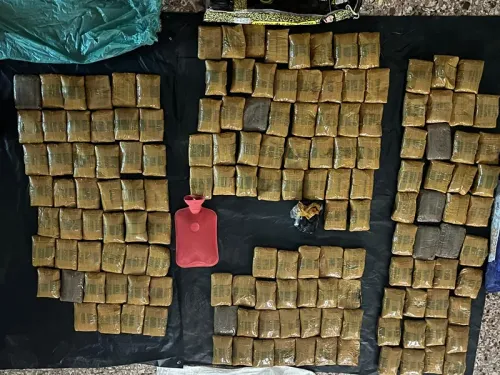
16.470 kg of charas was recovered from a Tata 407 Tempo intercepted at Ladowal Toll Plaza, Ludhiana .
Conviction under Section 20(b)(ii)(C) of the NDPS Act, 1985 carries 10 years' rigorous imprisonment and a ₹1 lakh fine .
The intercepted vehicle was confiscated under Section 60 of the NDPS Act, 1985 .
The CRCL, New Delhi confirmed the seized substance as charas through forensic analysis.
In October 2026, the NCB also busted labs in Greater Noida and seized 380 kg of contraband from the North-East under Operation Trident .
A Special NDPS Court in Ludhiana, Punjab, sentenced a truck driver from Himachal Pradesh to 10 years' rigorous imprisonment after the Narcotics Control Bureau (NCB) successfully prosecuted an interstate drug trafficking case involving the seizure of 16.470 kg of charas from his vehicle. The verdict, delivered on 12 November 2026, marks a significant conviction for the NCB's Chandigarh Zonal Unit.
How the Seizure Unfolded
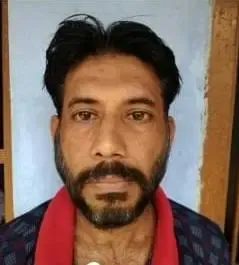
Acting on specific intelligence, an NCB team intercepted a Tata 407 Tempo at Ladowal Toll Plaza in Ludhiana. Officers recovered 16.470 kg of charas concealed in the rear portion of the vehicle. The accused, Kayum Khan alias Quem Khan, a resident of Chamba district in Himachal Pradesh, was arrested on the spot at the time of the seizure.
The seized substance was subsequently sent for forensic analysis. The Central Revenues Control Laboratory (CRCL) in New Delhi confirmed the material to be charas, lending further weight to the prosecution's case.
Court's Verdict and Penalty
Special Judge Ranjeev Kumar Vishisht convicted Khan under Section 20(b)(ii)(C) of the NDPS Act, 1985, awarding 10 years' rigorous imprisonment and a fine of ₹1 lakh. In the event of default on the fine payment, Khan will undergo an additional one year of rigorous imprisonment. The Special Court further ordered the confiscation of the intercepted vehicle under Section 60 of the NDPS Act, 1985.
NCB's Broader Anti-Narcotics Push
The conviction comes on the heels of a productive October for the NCB. According to the agency, the month's operations included busting clandestine drug-manufacturing laboratories in Greater Noida and seizing 380 kg of amphetamine-containing material from the North-East. Under Operation Trident, 38 teams struck 38 locations across the North-East, targeting drug trafficking networks simultaneously.
In a post on social media platform X, the NCB stated, 'October 2026 reflected NCB's continued commitment to effective implementation of Vision Document on Narcotics Control (2026–29), taking forward the national resolve to achieve a Drug-Free India.' The agency also cited large-scale destruction of illicit cannabis cultivation, Joint Coordination Committee meetings, and capacity-building initiatives as part of its month-end report card.
Why This Conviction Matters
Punjab has long been identified as a key transit corridor for narcotics moving from Himachal Pradesh — particularly charas originating from high-altitude cannabis-growing regions — into major urban centres. Courts awarding the maximum statutory sentence under Section 20(b)(ii)(C), which covers commercial quantities, signals judicial resolve to match enforcement with deterrence. This case reinforces the NCB's focus on interstate supply chains rather than street-level seizures alone.
With the NCB's Vision Document on Narcotics Control running through 2029, further coordinated operations and convictions across interstate drug corridors are expected in the months ahead.
Point of View
But its deterrence value depends on consistent follow-through across the Punjab-Himachal corridor — a route that remains persistently active despite periodic crackdowns. The maximum-category NDPS sentence is significant, yet individual truck-driver prosecutions tend to target the visible end of supply chains while kingpins and financiers often evade scrutiny. The NCB's October report card, impressive in headline numbers, warrants closer examination of conviction rates relative to total seizures — a metric the agency rarely publicises. Real disruption requires dismantling networks, not just carriers.
NationPress
15 Nov 2026
Frequently Asked Questions
Who is Kayum Khan and why was he arrested?
Kayum Khan, also known as Quem Khan, is a truck driver from Chamba district in Himachal Pradesh. He was arrested by the NCB at Ladowal Toll Plaza in Ludhiana after officers recovered 16.470 kg of charas concealed in the rear of his Tata 407 Tempo vehicle.
What sentence did the court hand down in the Ludhiana NCB drug case?
Special Judge Ranjeev Kumar Vishisht sentenced Kayum Khan to 10 years' rigorous imprisonment and a fine of ₹1 lakh under Section 20(b)(ii)(C) of the NDPS Act, 1985. If the fine is not paid, Khan must serve an additional one year in prison.
What is Section 20(b)(ii)(C) of the NDPS Act?
Section 20(b)(ii)(C) of the Narcotic Drugs and Psychotropic Substances Act, 1985 applies to the production, manufacture, possession, sale, or transport of cannabis in commercial quantities. It carries a minimum sentence of 10 years and a maximum of 20 years, along with a substantial fine.
How was the charas seizure confirmed as genuine?
The seized material was sent to the Central Revenues Control Laboratory (CRCL) in New Delhi for forensic analysis, which confirmed the substance to be charas. This laboratory confirmation formed a key part of the prosecution's evidence.
What else has the NCB been doing to combat drug trafficking?
In October 2026, the NCB busted clandestine drug-manufacturing laboratories in Greater Noida and seized 380 kg of amphetamine-containing material from the North-East under Operation Trident, involving 38 teams across 38 locations. The agency is operating under its Vision Document on Narcotics Control (2026–29), which targets a Drug-Free India.