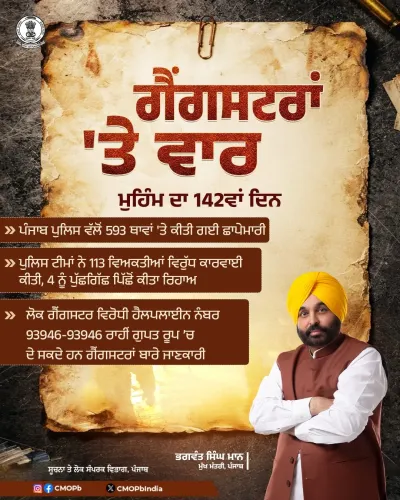
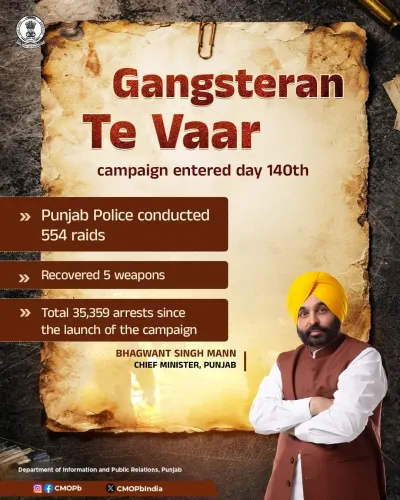
Punjab Police nets 371 in Gurdaspur blitz under Gangsteran Te Vaar
Synopsis
Punjab Police completed a two-day Operation Prahaar-4.0 in Gurdaspur district under the Gangsteran Te Vaar campaign, arresting 371 people and seizing heroin, pistols and drug money in one of Punjab's most sensitive border zones.
Key Takeaways
371 arrests were made during the two-day Operation Prahaar-4.0 in Gurdaspur district .
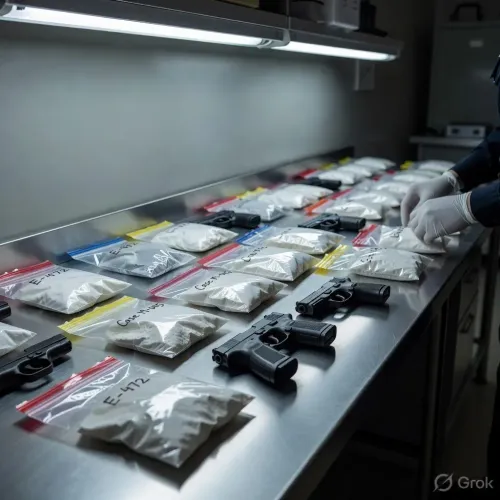
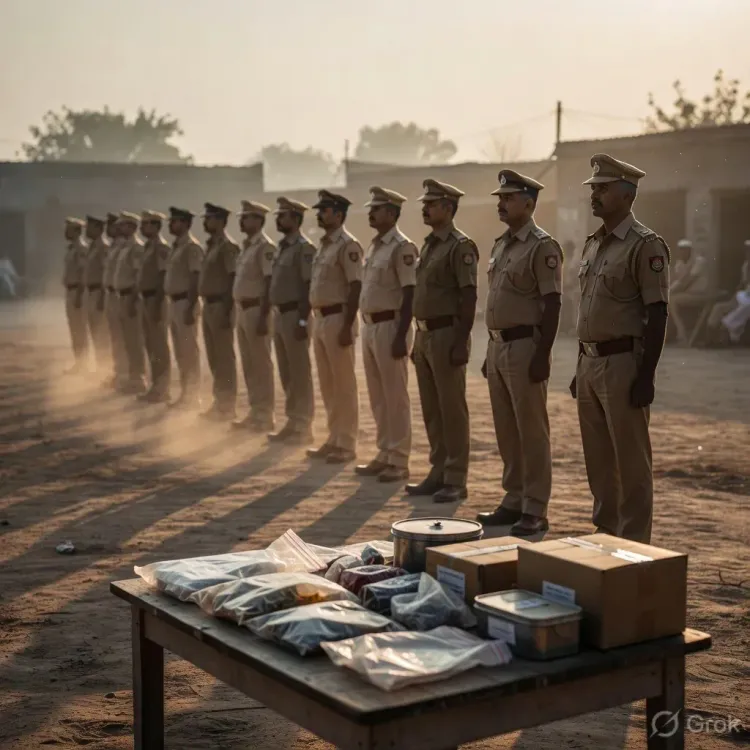
Seizures included 448 grams of heroin , 110 intoxicant pills , two pistols with four live cartridges , and Rs 8,920 in drug money.
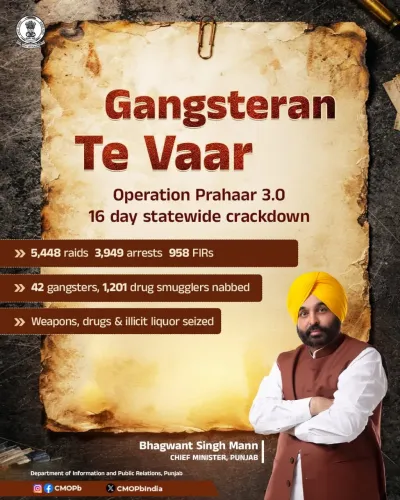
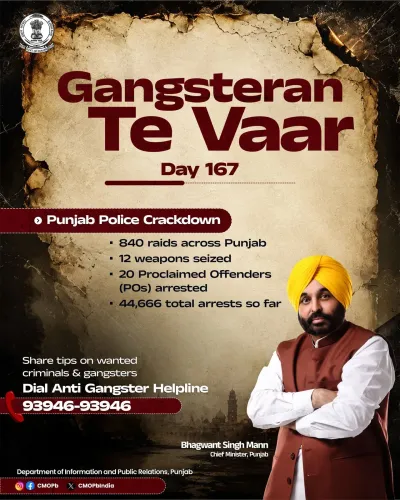
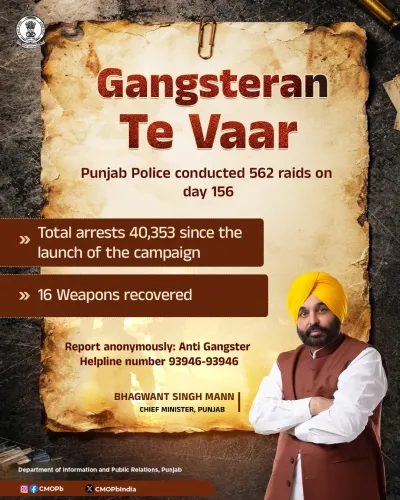
The operation is part of the Gangsteran Te Vaar campaign run by the Bhagwant Mann government since 2022.
Gurdaspur borders Pakistan and is a known node in cross-border narcotics trafficking routes linked to the Golden Crescent.
Prahaar-4.0 is the fourth named operation in the series, reflecting a sustained, branded enforcement strategy by Punjab Police.
In a sweeping two-day crackdown across Gurdaspur district, Punjab Police executed Operation Prahaar-4.0 — the latest salvo in the state's Gangsteran Te Vaar campaign — pulling in 371 arrests and seizing a cache of narcotics and weapons that lays bare the scale of the trafficking problem in one of Punjab's most porous border belts.
What the Gurdaspur sweep turned up
The haul from Operation Prahaar-4.0 is specific and telling: two pistols with four live cartridges, 448 grams of heroin, 110 intoxicant pills, and Rs 8,920 in drug money recovered alongside the arrests. The Chief Minister's Office of Punjab confirmed the figures on Monday, August 10, 2026, framing the operation explicitly under the twin hashtags #YudhNashianVirudh (War Against Drugs) and #GangsteranTeVaar.
Gurdaspur is not a random choice of theatre. The northern Punjab district shares a border with Pakistan and sits astride smuggling corridors that feed into what security analysts call the Golden Crescent pipeline — the heroin and synthetic-drug supply chain that has devastated Punjab's youth for over two decades. A two-day operation yielding this volume of arrests signals a concentrated, intelligence-led sweep rather than routine patrolling.
Prahaar in the wider Gangsteran Te Vaar arc
Operation Prahaar-4.0 is the fourth iteration of a series, which means the state has now run at least four named enforcement surges under the broader Gangsteran Te Vaar ('War Against Gangsters') umbrella. The Bhagwant Mann government, in office since March 2022, has made simultaneous pressure on drug networks and organised criminal gangs a signature of its law-and-order posture — a deliberate pivot from the perception that Punjab's drug crisis had been politically tolerated for years.
Punjab Police has a long institutional history of district-level anti-narcotics drives, but the current series distinguishes itself by branding operations and publicising granular seizure data — a communications strategy designed to demonstrate accountability and deter trafficking networks in parallel.
Border district, persistent pressure
Gurdaspur's geography makes it a recurring flashpoint. Cross-border drone drops and tunnel-linked smuggling have kept the district in focus for both state police and central security agencies. The 371 arrests in a single two-day window suggest the operation targeted not just street-level users but the mid-tier networks that distribute narcotics once they cross the border — the layer that links supply to the retail trade reaching Punjab's villages and towns.
With adjacent districts watching, the pressure is now on Punjab Police to sustain the tempo. The next test will be whether follow-up operations roll out across neighbouring districts and whether the state's rehabilitation infrastructure can absorb the human fallout from a campaign that is, at its core, as much a public-health crisis as a law-enforcement one.
Point of View
Named police surges to signal governance credibility on Punjab's most politically charged issue — drugs. The granular data release (exact gram weights, rupee amounts, pill counts) is a deliberate transparency play, designed to make enforcement measurable and publicly auditable. Gurdaspur's selection as the theatre is strategically sound: a border-district crackdown carries symbolic weight about supply-side interdiction that an interior-district operation would not. The real test, however, is whether arrest volumes translate into durable disruption of trafficking networks or remain a recurring show of force without structural impact on supply chains.
NationPress
24 Sept 2026
Frequently Asked Questions
What is Operation Prahaar-4.0 in Punjab?
Operation Prahaar-4.0 is a two-day anti-drug and anti-gangster police operation conducted in Gurdaspur district under Punjab's Gangsteran Te Vaar campaign. It resulted in 371 arrests and the seizure of heroin, pistols, intoxicant pills and drug money.
What was seized during Operation Prahaar-4.0 in Gurdaspur?
Police recovered 448 grams of heroin, 110 intoxicant pills, two pistols with four live cartridges, and Rs 8,920 in drug money during the two-day operation.
What is the Gangsteran Te Vaar campaign in Punjab?
Gangsteran Te Vaar is a Punjab Police campaign launched under the Bhagwant Mann government targeting organised criminal gangs and drug trafficking networks across the state through coordinated district-level operations.
Why is Gurdaspur a focus for Punjab's anti-drug operations?
Gurdaspur is a northern Punjab district bordering Pakistan and lies along cross-border smuggling corridors associated with the Golden Crescent narcotics trade, making it a recurring hotspot for heroin and synthetic drug trafficking.
How many people were arrested in Operation Prahaar-4.0?
A total of 371 people were arrested during the two-day Operation Prahaar-4.0 in Gurdaspur district, according to the Chief Minister's Office of Punjab.