Punjab's Operation Prahaar-4.0 Nets 262 in Ferozepur
Synopsis
Punjab's 'Gangsteran Te Vaar' campaign escalated with Operation Prahaar-4.0 in Ferozepur, yielding 262 arrests and recovery of heroin, ICE, and firearms in a focused two-day border-district crackdown under CM Bhagwant Mann's AAP government.
Key Takeaways
262 arrests were made during the two-day Operation Prahaar-4.0 in Ferozepur district .
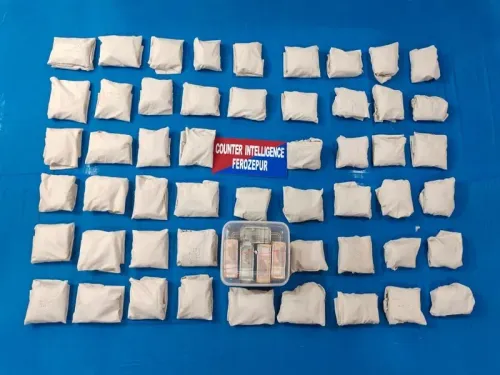
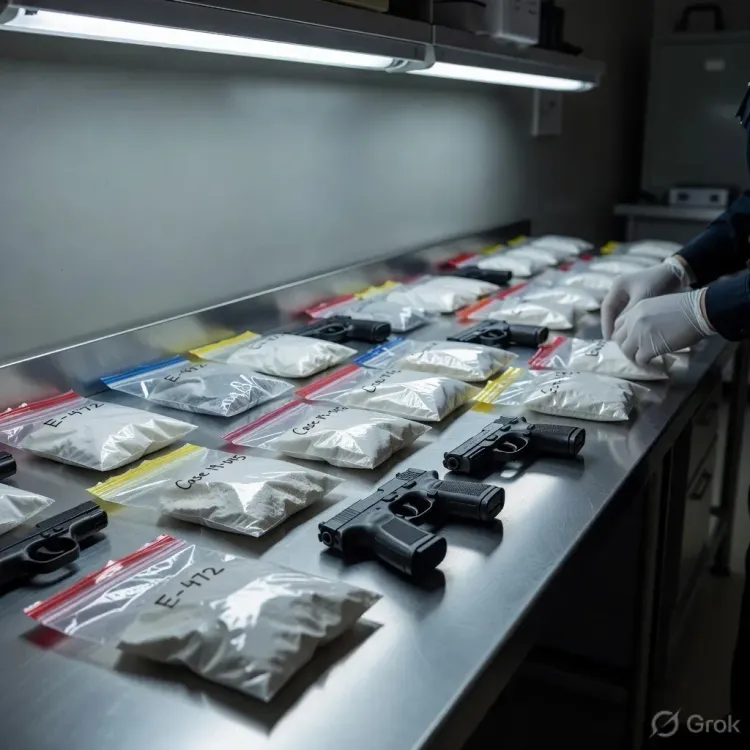
Police recovered 2.9 kg heroin and 309 grams of ICE (crystal methamphetamine) in the operation.
Five pistols and seven live cartridges were also seized, indicating armed criminal networks were targeted.
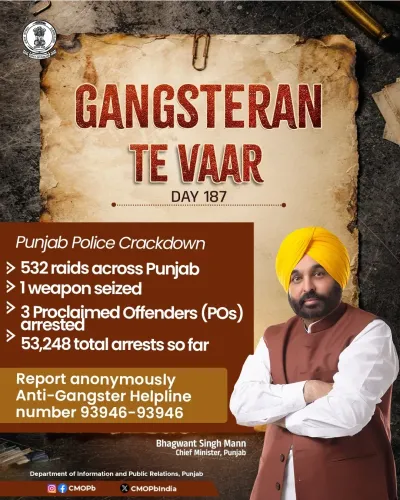
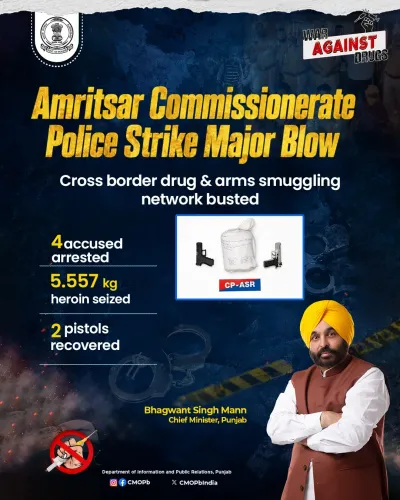
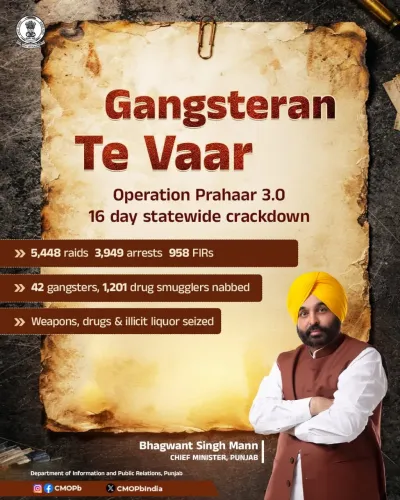
The operation is part of the 'Gangsteran Te Vaar' campaign run by the Chief Minister's Office of Punjab under CM Bhagwant Mann .
Ferozepur is a known border-district smuggling corridor on the India-Pakistan frontier, making it a priority target for anti-narcotics drives.
The ICE seizure signals a diversifying drug supply chain in Punjab beyond the historically dominant heroin trade.
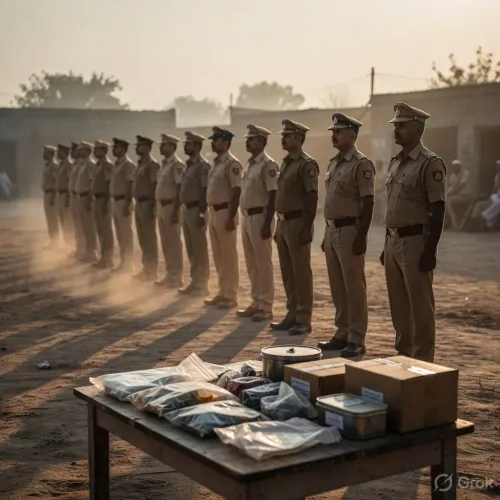
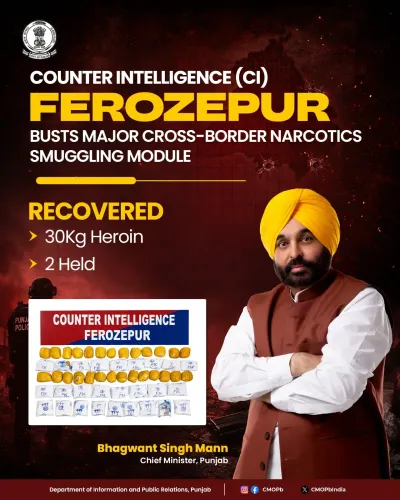
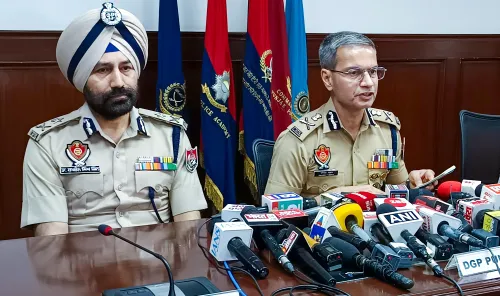
A two-day dragnet in one of Punjab's most porous border districts just delivered its sharpest results yet. Operation Prahaar-4.0, conducted in Ferozepur as part of the Chief Minister's Office of Punjab's 'Gangsteran Te Vaar' campaign, concluded with 262 arrests and the seizure of 2.9 kg heroin, 309 grams of ICE (crystal methamphetamine), five pistols, and seven live cartridges — a haul that underscores how much the state is pushing into its most vulnerable corridors.
Why Ferozepur, and why now
Ferozepur sits along the India-Pakistan border and has long been identified by security agencies as a primary entry point for heroin moving through cross-border smuggling networks. The district's geography — flat agricultural land, canal systems, and a historically porous frontier — has made it a persistent flashpoint in Punjab's drug crisis. Choosing it as the theatre for Prahaar-4.0 is deliberate, not incidental.
The 'Gangsteran Te Vaar' campaign, launched under Chief Minister Bhagwant Mann's AAP government, was designed to target precisely this intersection: organised crime networks that feed on narcotics supply chains and use the proceeds to fuel gang violence. Earlier phases of Operation Prahaar have swept through multiple Punjab districts since 2022, progressively building an arrest and seizure record the administration has staked significant political capital on.
262 arrests, five weapons, and a synthetic drug signal
The numbers from Prahaar-4.0 tell two stories at once. The 262 arrests in a single two-day operation represent a concentrated enforcement surge — the kind of round-up designed to disrupt local networks before they can regroup. The five pistols and seven live cartridges confirm that the targets were not petty offenders but individuals embedded in armed criminal ecosystems.
The 309 grams of ICE is the detail that demands attention. Crystal methamphetamine has been spreading through Punjab's drug landscape alongside the more entrenched heroin trade, and its appearance in a border-district haul signals that smugglers are diversifying their cargo. Heroin remains the dominant threat — 2.9 kg recovered in two days is a significant quantity — but the ICE seizure points to a shifting, more complex supply chain that enforcement strategy will need to track.
The political arithmetic of anti-drug policing
For CM Bhagwant Mann, these operations are not just law enforcement — they are a governance statement. Punjab's drug problem has been a live political wound for successive administrations, and the AAP government has consistently framed Gangsteran Te Vaar as proof of a harder, more systematic approach than what came before. Each Prahaar phase adds to a cumulative record the ruling party can point to ahead of any electoral reckoning.
Border communities in Ferozepur, meanwhile, have lived with the consequences of drug trafficking for decades — addiction rates, gang coercion, and the corrosive normalisation of illicit networks. Whether operations of this scale translate into durable relief on the ground, or whether networks reconstitute after the sweep, is the question that will define the campaign's real legacy.
The next phase of Operation Prahaar will be the real test: whether the pressure holds, or whether Ferozepur's networks simply wait out the storm.
Point of View
Complicating single-commodity enforcement frameworks. Whether repeated Prahaar phases are disrupting networks at the supply-chain level, or primarily generating arrest statistics, will be the defining question for independent assessment of the campaign's effectiveness.
NationPress
26 Sept 2026
Frequently Asked Questions
What is Operation Prahaar-4.0 in Punjab?
Operation Prahaar-4.0 is the fourth phase of a targeted police operation conducted under Punjab's 'Gangsteran Te Vaar' anti-crime and anti-narcotics campaign. The latest phase was carried out over two days in Ferozepur district, resulting in 262 arrests and recovery of heroin, ICE, and firearms.
What drugs were seized in Operation Prahaar-4.0?
Punjab police seized 2.9 kg of heroin and 309 grams of ICE (crystal methamphetamine) during Operation Prahaar-4.0 in Ferozepur.
What is the 'Gangsteran Te Vaar' campaign?
'Gangsteran Te Vaar' is an anti-gangster and anti-narcotics campaign launched by the Punjab government under Chief Minister Bhagwant Mann's AAP administration, aimed at dismantling organised crime and drug trafficking networks across the state.
Why is Ferozepur a focus of Punjab's anti-drug operations?
Ferozepur is a border district adjoining Pakistan and has historically been identified as a major entry point for heroin and other narcotics smuggled into India. Its geography makes it a persistent priority for Punjab's anti-narcotics enforcement.
How many people were arrested in Operation Prahaar-4.0?
A total of 262 people were arrested during the two-day Operation Prahaar-4.0 conducted in Ferozepur district as part of the Gangsteran Te Vaar campaign.