Punjab Police Arrests 75,806 Drug Smugglers in 530-Day Drive
Synopsis
Punjab's 'Yudh Nashian Virudh' anti-drug campaign hit its 530th consecutive day on August 14, 2026, with cumulative arrests reaching 75,806 drug smugglers. Daily seizures included 2.1 kg heroin, 31 kg poppy husk, and 3,363 pills. Sixteen persons were also guided into de-addiction treatment, reflecting the drive's dual enforcement-rehabilitation approach.
Key Takeaways
75,806 drug smugglers arrested cumulatively under Yudh Nashian Virudh in 530 days as of August 14, 2026.
Single-day seizures included 2.1 kg heroin , 31 kg poppy husk , 3,363 intoxicant pills , and Rs 1,910 in drug money.
16 persons were persuaded to voluntarily enter de-addiction and rehabilitation treatment on the same day.
The campaign has maintained an unbroken daily operational tempo since its launch under the Bhagwant Mann -led AAP government.
Punjab's anti-drug strategy combines supply-side enforcement with demand-side rehabilitation, addressing both smugglers and users.
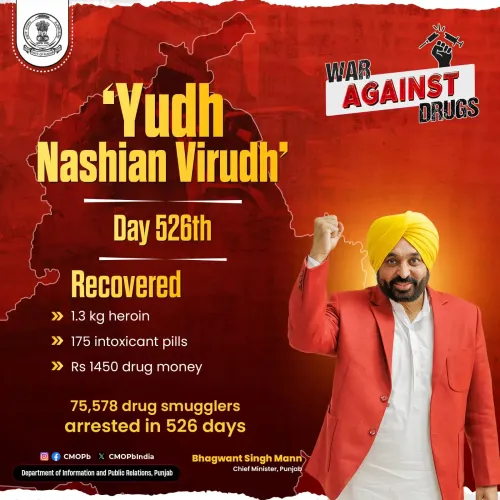
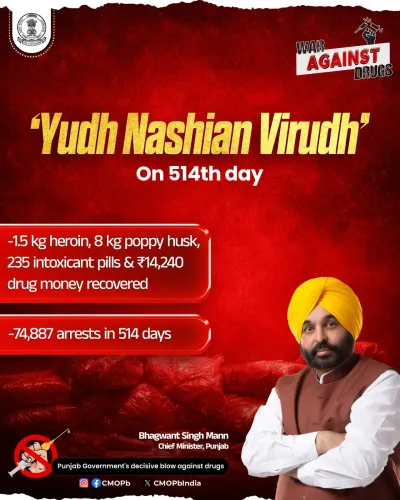
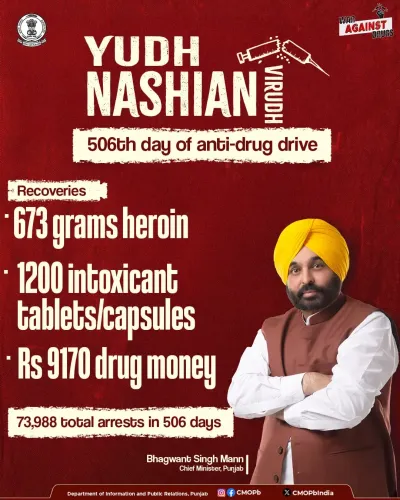
Seven hundred and fifty-eight hundred drug smugglers off Punjab's streets — and the clock is still running. On Friday, August 14, 2026, the Chief Minister's Office of Punjab announced that the state's sustained anti-drug campaign Yudh Nashian Virudh ('War Against Drugs') has crossed its 530th consecutive day, with cumulative arrests reaching 75,806 drug smugglers since the drive began.
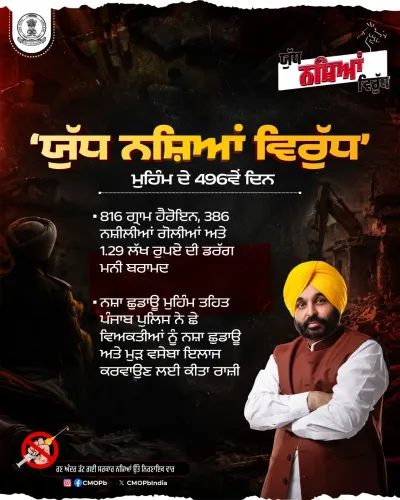
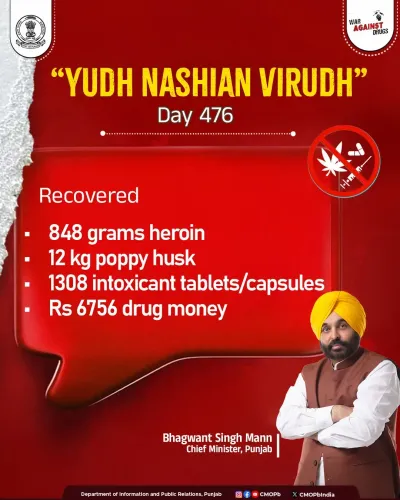
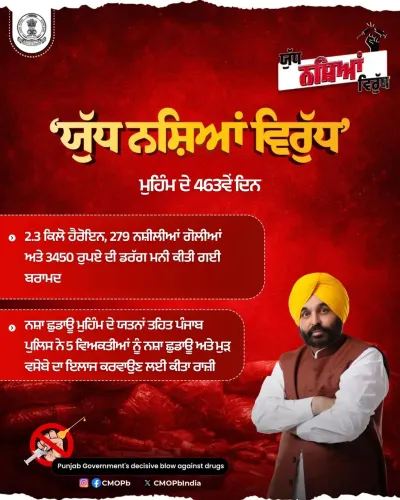
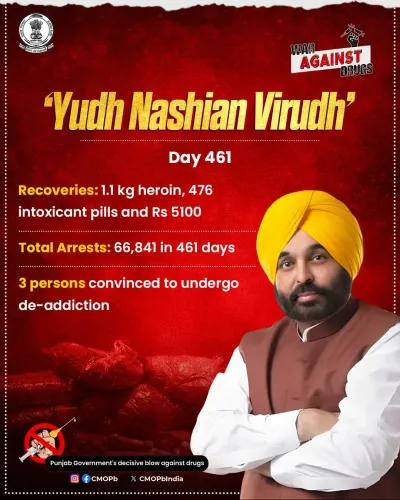
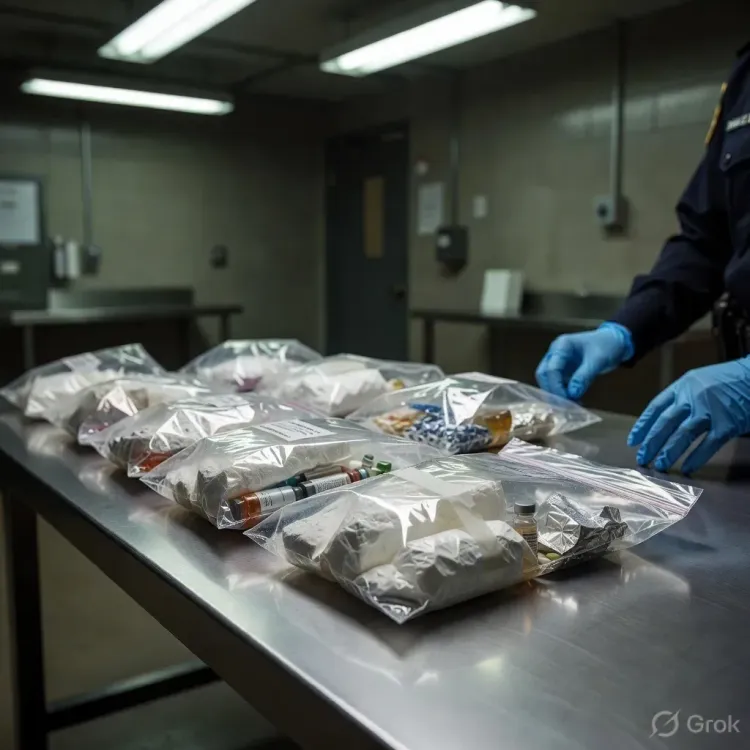
In the latest single-day sweep, Punjab Police seized 2.1 kg of heroin, 31 kg of poppy husk, and 3,363 intoxicant pills, while recovering Rs 1,910 in drug money from the arrested smugglers. The numbers are relentless — and deliberately so.
530 Days Without a Pause: The Operational Tempo Behind the Numbers
What makes Yudh Nashian Virudh structurally different from past Punjab anti-drug drives is its unbroken daily cadence. Previous administrations launched enforcement surges that peaked and faded; the Aam Aadmi Party government of Chief Minister Bhagwant Mann, which took office in March 2022, has built a campaign designed to sustain operational pressure without a single day's gap. The daily public reporting of seizure figures is itself part of the strategy — accountability baked into the announcement cycle.
Punjab's drug problem has deep structural roots. The state's geography — sharing a border with Pakistan and sitting along well-documented smuggling corridors — has made it a transit and consumption hotspot for decades. Heroin, poppy derivatives, and pharmaceutical opioids have all featured prominently in successive crises that have hollowed out families and communities, particularly among the youth.
Beyond Arrests: 16 More Persons Steered Toward Rehabilitation
The enforcement headline is only half the story. Alongside the seizures, Punjab Police reported that officers convinced 16 persons to voluntarily enter de-addiction and rehabilitation treatment as part of the campaign's demand-reduction arm. That figure — modest on any single day, compounding over 530 — points to a deliberate dual-track approach: lock up the supply chain, rehabilitate the demand side.
The rehabilitation component matters because enforcement alone has historically failed to break Punjab's drug cycle. Each arrest that feeds into the 75,806 cumulative total removes a supplier; each person steered into treatment removes a customer. Whether the scale of rehabilitation infrastructure can keep pace with the ambition of the enforcement numbers is the live question for the months ahead.
At 530 days and counting, Yudh Nashian Virudh is no longer a campaign — it is a governing posture. The real test is whether the arrest curve keeps climbing while the addiction curve in Punjab's villages finally bends down.
Point of View
Signalling an awareness that arrest numbers alone do not translate into reduced addiction. The sustainability question looms large: whether Punjab's de-addiction infrastructure can absorb the rehabilitation pipeline the campaign is generating will determine whether this drive rewrites the state's drug story or merely produces record arrest tallies.
NationPress
14 Aug 2026
Frequently Asked Questions
What is Yudh Nashian Virudh?
'Yudh Nashian Virudh' means 'War Against Drugs' in Punjabi. It is an ongoing Punjab Police campaign launched under the Bhagwant Mann government to arrest drug smugglers and simultaneously steer addicts toward rehabilitation, running continuously since the AAP administration took office in March 2022.
How many drug smugglers has Punjab Police arrested so far?
As of the 530th day of the campaign on August 14, 2026, Punjab Police had arrested a cumulative total of 75,806 drug smugglers under Yudh Nashian Virudh.
What drugs were seized by Punjab Police on August 14, 2026?
On August 14, 2026, Punjab Police recovered 2.1 kg of heroin , 31 kg of poppy husk , 3,363 intoxicant pills , and Rs 1,910 in drug money from arrested smugglers.
Does Punjab's anti-drug campaign include rehabilitation?
Yes. Alongside enforcement, Punjab Police officers actively convince drug users to voluntarily enter de-addiction and rehabilitation treatment. On August 14, 2026 alone, 16 persons were guided into treatment as part of this component.
Who is leading Punjab's anti-drug drive?
The campaign is spearheaded by Punjab Police under the political leadership of Chief Minister Bhagwant Mann , whose Aam Aadmi Party government made tackling drug trafficking a central plank of its 2022 election mandate.