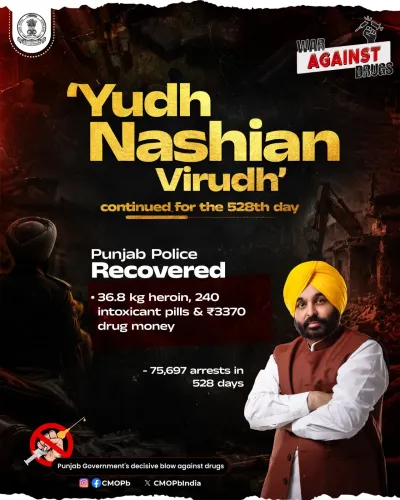
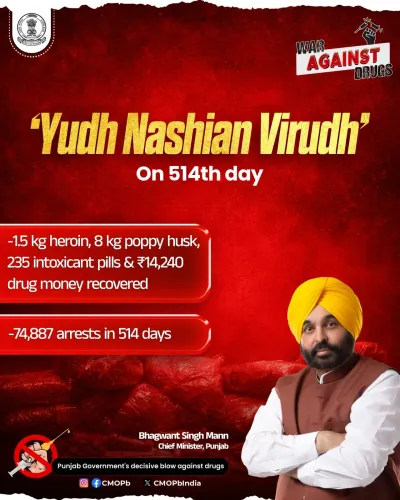
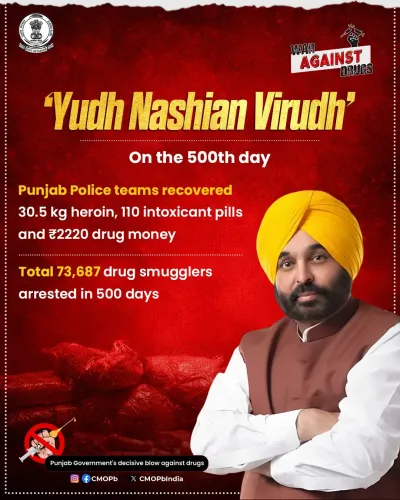
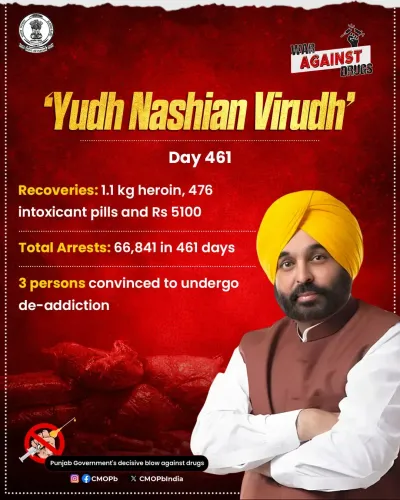
Punjab Police hits Day 609 of Yudh Nashian Virudh, 89,774 arrested
Synopsis
On Day 609 of 'Yudh Nashian Virudh', Punjab Police arrested multiple drug smugglers, recovered 10 kg heroin and 680 intoxicant pills, and persuaded 39 persons into rehabilitation — taking the campaign's cumulative arrest count to 89,774.
Key Takeaways
Day 609 of the Yudh Nashian Virudh anti-drug campaign was completed on 1 November 2026 .
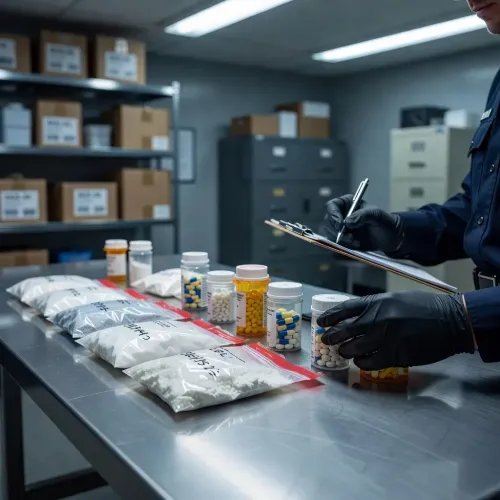
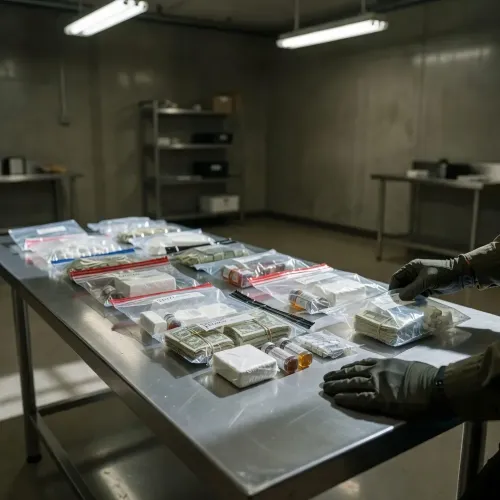
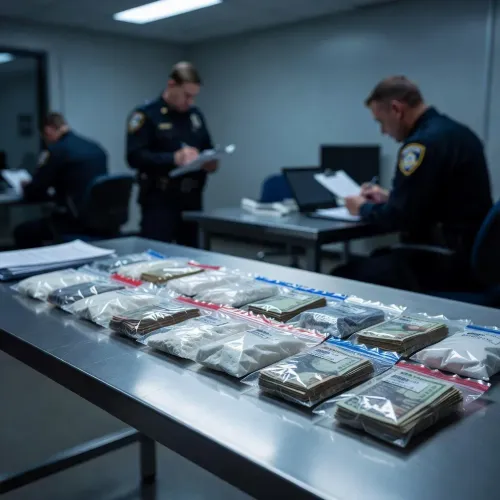
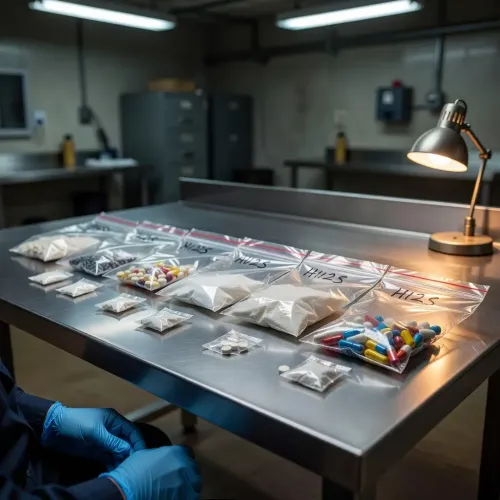
Punjab Police recovered 10 kg heroin , 1 kg opium , 680 intoxicant pills , and ₹13,400 in drug money in the latest operations.
Cumulative drug smuggler arrests since the campaign launched now stand at 89,774 .
39 persons were persuaded to voluntarily enter de-addiction and rehabilitation treatment on this single day.
The campaign, launched by the Aam Aadmi Party government under CM Bhagwant Mann after the 2022 elections, runs enforcement and rehabilitation in parallel.
Punjab's border location makes it a primary entry point for cross-border heroin, giving the drive both local and national security significance.
Nearly 610 days without a pause — and Punjab Police is still clocking in. On Sunday, 1 November 2026, the Chief Minister's Office of Punjab reported that the state's flagship anti-drug drive, Yudh Nashian Virudh ('War Against Drugs'), completed its 609th consecutive day of operations, with fresh arrests pushing the cumulative total to a staggering 89,774 drug smugglers since the campaign began.
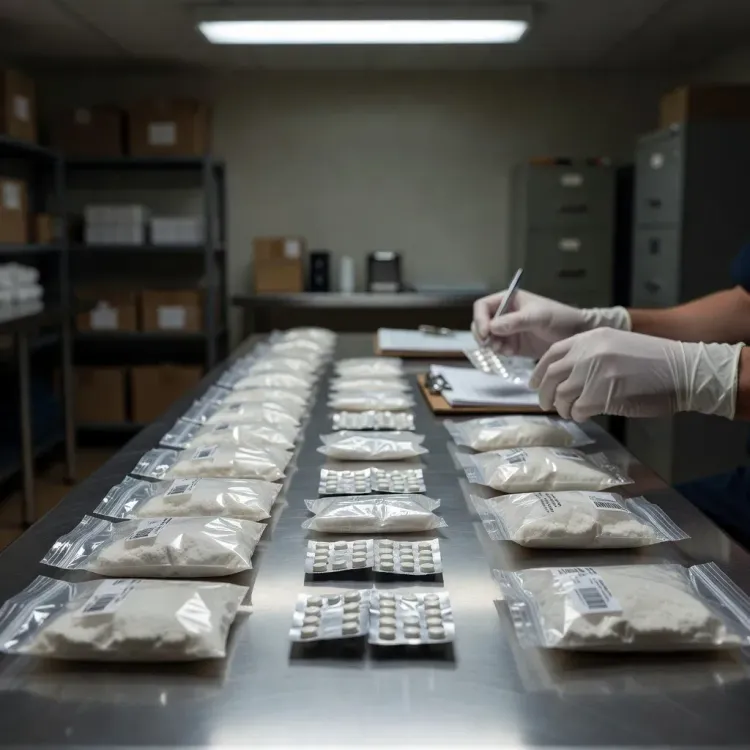
In the latest round of operations, Punjab Police arrested multiple drug smugglers and recovered 10 kg of heroin, 1 kg of opium, 680 intoxicant pills, and ₹13,400 in drug money — a single day's haul that underlines both the scale of the problem and the relentlessness of the response. Alongside the enforcement action, officers persuaded 39 persons to voluntarily undergo de-addiction and rehabilitation treatment, a quiet but consequential number in a campaign that now runs on two tracks simultaneously.A two-year campaign born from an election promise
When the Aam Aadmi Party swept to power in Punjab in 2022, Chief Minister Bhagwant Mann placed drug eradication at the very top of his governance agenda. The state has wrestled with cross-border heroin smuggling and synthetic drug abuse for more than two decades, a crisis rooted in its long, porous border with Pakistan and deepened by poverty and unemployment among rural youth. Yudh Nashian Virudh was the government's answer: a structured, daily-accountable police drive that would not let enforcement fatigue set in.
What distinguishes this campaign from earlier crackdowns is its insistence on reporting every single day — no quiet weekends, no seasonal lulls. Each daily update logs arrests, seizures by substance type, drug money recovered, and — crucially — individuals referred to rehabilitation. That dual emphasis on punishment and treatment reflects a deliberate policy choice: the state has argued that locking up smugglers while ignoring the demand side only shifts the problem.
Heroin at the front, rehab at the side
The 10 kg heroin seizure on Day 609 is consistent with the pattern that has defined this campaign: heroin remains the dominant contraband, reflecting Punjab's proximity to the so-called 'Golden Crescent' supply routes that funnel the drug from Afghanistan through Pakistan. Opium seizures and synthetic pill recoveries run alongside it, pointing to a diversified illicit market. The ₹13,400 in drug money recovered may appear modest, but it is part of a broader effort to choke the financial ecosystem that sustains street-level dealing.
The rehabilitation arm of the campaign — 39 more persons convinced to seek treatment on this day alone — is where the government's long-term bet lies. Each person who enters a de-addiction programme represents one fewer potential repeat customer for smugglers. Whether Punjab's de-addiction infrastructure can absorb the referral pipeline the campaign is generating is a question that will shape the drive's ultimate legacy.
What the numbers mean for Punjab's border communities
An arrest tally of nearly 90,000 in under two years is a number that demands context. Punjab's border districts — Amritsar, Gurdaspur, Ferozepur, Fazilka — have historically borne the sharpest edge of the drug crisis, with families losing young men to addiction and smuggling networks recruiting teenagers as couriers. Daily enforcement visibility in these communities carries a signal value beyond the seizure statistics: it tells residents that the state has not looked away.
The campaign's daily reporting rhythm also creates political accountability that previous drives lacked. Every skipped day or dip in numbers would be instantly visible — a self-imposed transparency mechanism that the CMO's regular social-media updates now enforce publicly. Whether that accountability sustains momentum or eventually becomes a metric to be managed will be one of the defining questions as the drive moves deeper into its third year.
Day 609 is not a finish line. It is a checkpoint — and the campaign shows no sign of stopping.
Point of View
Publicly reported daily enforcement — rather than periodic crackdowns — can shift the baseline of drug activity in a border state with deep structural vulnerabilities. The daily CMO updates function as both a transparency mechanism and a political communication tool, making the campaign's progress legible to citizens in real time. The dual-track approach of arrests plus rehabilitation referrals is more sophisticated than previous Punjab anti-drug drives, but it raises an accountability question the numbers alone cannot answer: is de-addiction infrastructure keeping pace with the referral pipeline? As the drive enters its third year, the integrity of its reporting and the capacity of its rehabilitation ecosystem will determine whether Day 609 represents genuine progress or managed optics.
NationPress
1 Nov 2026
Frequently Asked Questions
What is Yudh Nashian Virudh?
'Yudh Nashian Virudh' — meaning 'War Against Drugs' in Punjabi — is a statewide daily anti-drug enforcement campaign launched by the Punjab government under Chief Minister Bhagwant Mann after the 2022 elections, combining police arrests with de-addiction referrals.
How many drug smugglers have been arrested in Punjab's anti-drug drive so far?
According to the Chief Minister's Office of Punjab, the total number of drug smugglers arrested under Yudh Nashian Virudh has reached 89,774 as of Day 609 of the campaign.
What drugs were seized by Punjab Police on Day 609 of the campaign?
On Day 609, Punjab Police recovered 10 kg of heroin , 1 kg of opium , 680 intoxicant pills , and ₹13,400 in drug money from arrested smugglers.
Why is Punjab particularly affected by drug smuggling?
Punjab shares a long border with Pakistan and lies along supply routes linked to Afghanistan's opium production, making it a primary entry point for heroin into India. The state has faced drug abuse challenges for over two decades, disproportionately affecting border district communities.
Does Punjab Police also help drug users get treatment under this campaign?
Yes. Alongside arrests, the campaign includes a rehabilitation component. On Day 609 alone, Punjab Police officers convinced 39 persons to voluntarily undergo de-addiction and rehabilitation treatment, reflecting the government's dual enforcement-and-treatment strategy.