Punjab delegation visits Karnataka to study BESS energy storage models
Synopsis
Punjab is scouting Karnataka's battery energy storage playbook. A PEDA-led delegation visited KREDL in Bengaluru to study standalone, solar-plus-storage and hybrid BESS models — signalling that Punjab is moving toward a concrete storage procurement strategy to tackle its peak-demand challenge.
Key Takeaways
Punjab delegation led by Principal Secretary (Energy) Gurkirat Kirpal Singh and PEDA CEO Rahul visited KREDL in Bengaluru on 20 November 2025 .
The visit focused on evaluating standalone BESS , solar-plus-storage , and hybrid energy storage models for deployment in Punjab.
KREDL Managing Director Divya Prabhu G.R.J. shared Karnataka's energy storage roadmap and RE projects led by Energy Minister K.J.
Representatives from private companies provided industry perspectives on BESS configurations and implementation approaches.
The delegation also visited the Pavagada Solar Park to observe large-scale renewable energy infrastructure firsthand.
Discussions included waste-to-energy initiatives and broader sustainable energy diversification opportunities.
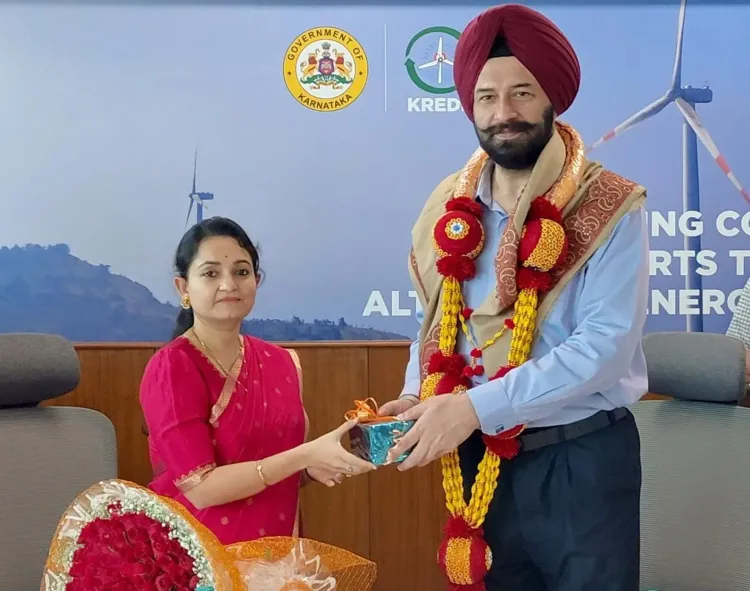
A high-level delegation from Punjab, led by Gurkirat Kirpal Singh, IAS, Principal Secretary (Energy), and Rahul, Chief Executive Officer of the Punjab Energy Development Agency (PEDA), visited Karnataka Renewable Energy Development Limited (KREDL) in Bengaluru on Thursday, 20 November 2025, to study the state's experience in deploying Battery Energy Storage Systems (BESS) and identify suitable implementation models for Punjab.
Purpose of the Visit
The delegation's primary goal was to evaluate different BESS deployment approaches — including standalone BESS, solar-plus-storage, and hybrid models — and assess their techno-commercial viability. The team also examined average power procurement costs and the potential of storage systems to optimise power management, particularly during peak demand periods.
Gurkirat Kirpal Singh said, 'The primary objective of the visit was to explore various business models for BESS implementation, understand the economics of energy storage, assess average power costs and identify the most suitable approach for Punjab's energy requirements.'
Karnataka's Roadmap and Key Discussions
Divya Prabhu G.R.J., IAS, Managing Director of KREDL, presented Karnataka's roadmap for advancing energy storage infrastructure and highlighted the state's renewable energy projects undertaken under the leadership of Energy Minister K.J. George. Discussions covered the role of storage systems in strengthening grid stability, enhancing renewable energy integration, and ensuring efficient utilisation of available power.
Divya Prabhu said, 'Karnataka is committed to building a robust energy storage ecosystem that strengthens grid stability and enables greater integration of renewable energy. We are happy to share our experience and learnings with Punjab. Such exchanges between states will help us identify scalable, cost-effective and sustainable storage solutions for the country's evolving power sector.'
Industry Perspectives and Comparative Models
Representatives from several private companies also participated in the deliberations, offering industry insights on different BESS configurations. The discussions compared the advantages of standalone storage, solar-plus-BESS, and hybrid projects, alongside strategies for managing peak power demand and the commercial considerations involved in model selection.
The interaction additionally explored broader opportunities, including waste-to-energy initiatives, as part of a wider conversation on sustainable and diversified energy solutions.
Visit to Pavagada Solar Park
As part of the exchange, the Punjab delegation also visited the Pavagada Solar Park — one of India's largest solar installations — providing an on-ground perspective on large-scale renewable energy infrastructure. Senior officials from KREDL were present throughout the interaction.
What This Means for Punjab's Energy Sector
Punjab, which faces significant peak-demand management challenges owing to its agricultural load profile, is actively evaluating energy storage as a tool for grid balancing. This visit reflects a growing trend of inter-state knowledge exchange on energy transition, with states increasingly looking to peers rather than waiting for a centralised federal blueprint. The insights gathered from Karnataka's model are expected to inform Punjab's upcoming BESS procurement and deployment strategy.
Point of View
Weather-sensitive demand spikes that standard procurement cannot cushion. The fact that PEDA is evaluating hybrid and solar-plus-storage models rather than a single template suggests a more nuanced approach than past renewable tenders. The bigger question is whether knowledge exchange translates into procurement action, or whether cost economics — BESS remains expensive per unit of storage — stalls deployment as it has in several other states.
NationPress
20 Nov 2026
Frequently Asked Questions
Why did Punjab visit Karnataka to study BESS?
Punjab sent a delegation to Karnataka to learn from KREDL's experience in deploying Battery Energy Storage Systems, with the aim of identifying the most suitable BESS model for Punjab's own grid management and peak-demand challenges. Karnataka has an established renewable energy infrastructure and a defined energy storage roadmap that Punjab sought to benchmark against.
What is BESS and why does it matter for India's power sector?
Battery Energy Storage Systems (BESS) store electricity generated from renewable sources and release it during peak demand, helping stabilise the grid and reduce dependence on fossil-fuel peaker plants. As India scales up solar and wind capacity, BESS is increasingly critical for managing intermittency and ensuring reliable power supply.
What models did the Punjab delegation evaluate?
The delegation evaluated three primary approaches: standalone BESS, solar-plus-storage, and hybrid models. Each was assessed for techno-commercial viability, average power procurement costs, and suitability for Punjab's energy requirements, particularly peak-demand management.
Who led the Punjab delegation to Karnataka?
The delegation was led by Gurkirat Kirpal Singh, IAS, Principal Secretary (Energy), Punjab, and Rahul, CEO of the Punjab Energy Development Agency (PEDA). They met with KREDL Managing Director Divya Prabhu G.R.J. and senior officials from the Karnataka agency.
What is the Pavagada Solar Park that the delegation visited?
The Pavagada Solar Park, located in Karnataka, is one of India's largest solar power installations. The Punjab delegation visited it to gain firsthand insight into large-scale renewable energy infrastructure and its integration with storage solutions.