Punjab VB Launches Vigilance Awareness Week Under 'Probity for Prosperity'

Synopsis
The Punjab Vigilance Bureau has launched Vigilance Awareness Week 2026 (Oct 26–Nov 1) under the Central Vigilance Commission's 'Probity for Prosperity' theme, with all bureau personnel taking a formal anti-corruption pledge at its Mohali headquarters — timed to Sardar Vallabhbhai Patel's 31 October birth anniversary.
Key Takeaways
Punjab Vigilance Bureau is observing Vigilance Awareness Week from 26 October to 1 November 2026 .
The theme for 2026 is 'Probity for Prosperity' , set by the Central Vigilance Commission as a nationwide directive.
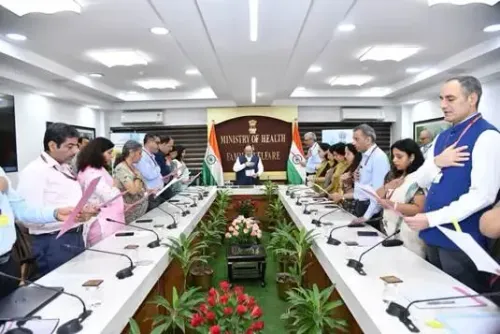
All VB officers and staff took a formal anti-corruption pledge at the bureau's Mohali headquarters .
The week is observed annually during the week containing Sardar Vallabhbhai Patel's birthday on 31 October .
The CVC has run this national awareness initiative since the late 1990s , with state agencies aligning their programmes to it each year.
Corruption does not survive scrutiny — and once a year, India's entire vigilance machinery pauses to make that point loudly. The Punjab Vigilance Bureau (VB) launched the state leg of Vigilance Awareness Week 2026 on 26 October, observing the theme 'Probity for Prosperity' ('ਪ੍ਰੋਬਿਟੀ ਫਾਰ ਪ੍ਰੌਸਪੈਰਿਟੀ') in alignment with a nationwide initiative led by the Central Vigilance Commission (CVC), the Chief Minister's Office of Punjab announced on 27 October 2026.
The week-long observance runs from 26 October to 1 November 2026 — a window chosen deliberately. Every year, Vigilance Awareness Week is anchored to the birth anniversary of Sardar Vallabhbhai Patel, India's first Deputy Prime Minister and Home Minister, who was born on 31 October. Patel's legacy as the architect of national integration has made him an enduring symbol of decisive, integrity-driven governance — precisely the spirit the CVC seeks to invoke.
The Mohali Pledge: A Unified Stand at VB Headquarters
To open the week, all VB officers and staff assembled at the bureau's headquarters in Mohali for a formal ceremony. Together, they took a solemn pledge — a collective, public commitment to fight corruption as one. The gesture is deliberate: a pledge taken in a room full of peers carries institutional weight that a memo does not.
The function at Mohali set the tone for what is designed to be seven days of integrity-focused outreach across Punjab's government departments — awareness drives, training sessions, and transparency-reinforcing activities aligned with CVC guidelines.
The CVC's Annual Framework and Why Punjab Is Participating
The Central Vigilance Commission, the apex statutory body for anti-corruption oversight in central government organisations, has run Vigilance Awareness Week annually since the late 1990s. State vigilance agencies like Punjab's VB routinely align their own programmes to this national calendar — creating a coordinated, multi-layered push for preventive vigilance rather than reactive enforcement alone.
The distinction matters. Preventive vigilance — awareness campaigns, integrity pledges, process audits — builds a culture of accountability from the ground up. It complements the bureau's core mandate of investigating corruption cases by making the institutional environment less hospitable to corrupt conduct in the first place.
What 'Probity for Prosperity' Actually Signals
This year's theme, 'Probity for Prosperity', frames integrity not as a moral abstraction but as an economic condition. The argument is direct: public money lost to corruption is investment lost to citizens. Clean governance, the theme implies, is not simply ethical — it is the precondition for the state's development ambitions to deliver. For Punjab, a state navigating fiscal pressures and reform priorities under Chief Minister Bhagwant Mann, that framing carries particular resonance.
Seven days of pledges and awareness programmes will not by themselves dismantle entrenched corruption. But as part of a sustained, nationally-coordinated institutional culture — repeated every year, anchored to a founding father's legacy — Vigilance Awareness Week keeps the pressure visible. The Mohali oath is the starting gun.
Point of View
High-visibility instrument in India's preventive anti-corruption architecture — and Punjab's participation signals the Bhagwant Mann government's willingness to stay formally aligned with central institutional norms. The 'Probity for Prosperity' framing is politically shrewd: it repositions anti-corruption work as a development imperative rather than a punitive exercise, which is easier to sell to a civil service audience. Sustained institutional repetition — the same oath, the same week, every year — is how bureaucratic culture shifts incrementally. The real test, as always, is whether the week's pledges translate into measurable outcomes in the bureau's case pipeline and process reforms throughout the year.
NationPress
28 Oct 2026
Frequently Asked Questions
What is Vigilance Awareness Week in India?
Vigilance Awareness Week is an annual observance coordinated by the Central Vigilance Commission across India, held during the week containing 31 October — the birth anniversary of Sardar Vallabhbhai Patel — to promote integrity and transparency in public administration.
What is the theme of Vigilance Awareness Week 2026?
The theme for Vigilance Awareness Week 2026 is 'Probity for Prosperity' , which frames ethical governance as a prerequisite for economic development.
When is Vigilance Awareness Week 2026 being observed in Punjab?
Punjab is observing Vigilance Awareness Week from 26 October to 1 November 2026 , in line with the nationwide Central Vigilance Commission initiative.
What did the Punjab Vigilance Bureau do to mark the start of the week?
All Punjab Vigilance Bureau officers and staff took a solemn anti-corruption pledge at a formal ceremony held at the VB headquarters in Mohali on 26 October 2026 .
Why is Vigilance Awareness Week held in the week of 31 October?
The week is timed to include 31 October , the birthday of Sardar Vallabhbhai Patel , India's first Deputy Prime Minister, whose legacy of principled governance makes him a fitting symbol for the anti-corruption observance.