BBMB at 50: Punjab minister warns Centre against encroaching on state rights
Synopsis
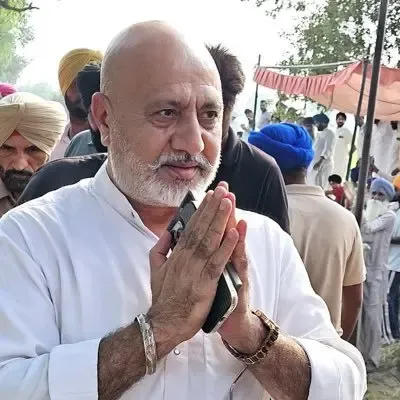
At a meeting marking 50 years of BBMB, Punjab minister Barinder Goyal delivered a pointed warning to the Centre: the state will not accept rule changes that dilute its traditional role in the board's leadership, nor will it accept CISF replacing the Punjab Police at its dams — framing both moves as violations of federalism and Punjab's hard-earned rights.
Key Takeaways
Punjab Cabinet Minister Barinder Goyal raised the state's objections at a BBMB 50th anniversary meeting with the Central government on 16 May .
A 13 April rule amendment replaced the fixed Punjab-Haryana appointment convention for BBMB members with a 'preference' clause — Punjab demands the original structure be restored.
Punjab has opposed the deployment of the CISF at BBMB complexes, calling it an affront to the Punjab Police and against the spirit of federalism.
Goyal denied Union Minister Manohar Lal Khattar's claim of a 'lapse' by Punjab, saying the state only defended its rights.
Haryana reportedly exhausted its water allocation by March last year and sought Punjab's share, which Punjab refused.
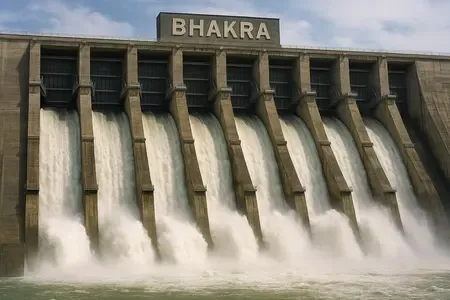
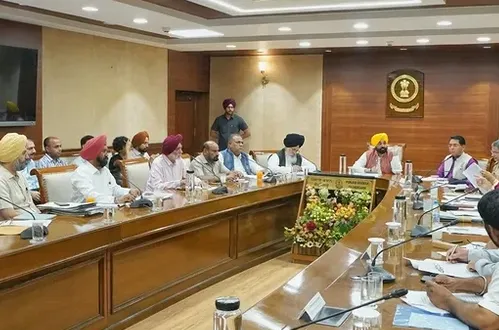
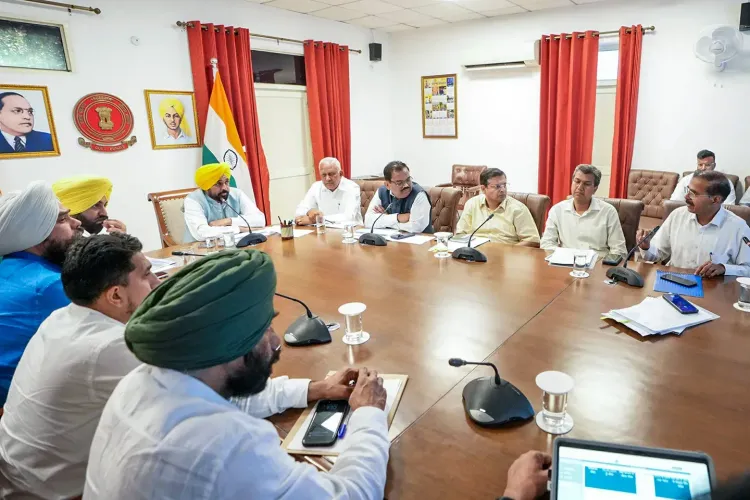
Punjab Cabinet Minister Barinder Goyal on Saturday, 16 May placed the state's concerns squarely before the Central government at a meeting marking the completion of 50 years of the Bhakra Beas Management Board (BBMB), asserting that Punjab will not tolerate any encroachment on its rights over water, power, or security arrangements.
The Membership Rule Change
Goyal's sharpest objection centred on a rule amendment introduced by the Centre on 13 April, which altered the decades-old convention governing BBMB appointments. Under the original arrangement, the Power (Electricity) Member was always drawn from Punjab and the Irrigation Member from Haryana — a structure that had held without dispute for 50 years.
The amended rules now permit either member to be appointed from anywhere in the country, with Punjab and Haryana given only a 'preference.' 'The word preference creates serious concern in the minds of Punjabis; the decades-old traditional structure should be continued as it is,' Goyal said. He questioned why a functioning arrangement was disturbed when no partner state had raised any complaint.
CISF Deployment Opposed
The minister also pushed back against the Centre's move to deploy the Central Industrial Security Force (CISF) at BBMB complexes, calling it an affront to the Punjab Police and contrary to the spirit of federalism. He pointed out that the Punjab Police has managed security at major dams — including Ranjit Sagar Dam and Shahpur Kandi Dam, both located near the border — without objection from any partner state.
Goyal expressed surprise at Union Minister Manohar Lal Khattar's claim of a 'lapse' on Punjab's part as justification for the CISF deployment. 'Punjab has committed no lapse; rather, Punjab has only guarded its rights,' he said, adding that the Punjab Police had made immense sacrifices during the period of terrorism to protect the nation's integrity.
The Water Dispute Backdrop
Goyal also addressed the broader water-sharing tensions underlying the BBMB standoff. He said Haryana had exhausted its entire allocated share of water by March last year and subsequently sought access to Punjab's share — a demand Punjab refused. He alleged that Haryana had been repeatedly advised to use water judiciously but did not heed those warnings.
The minister argued that since the rivers flow through Punjab, the state alone bears the burden of maintenance and flood losses, and therefore must be given priority in decisions relating to water storage and management. 'Even at the cost of losing its precious groundwater, the state has been happily providing every partner state with its rightful share of water,' he said.
What Happens Next
Punjab's formal objections are now on record with the Centre following the BBMB anniversary meeting. The state's twin demands — reverting the membership appointment rules and withdrawing the CISF deployment — are likely to sharpen the ongoing federal friction between Chandigarh and New Delhi over river-water governance. How the Centre responds will set the tone for BBMB's functioning in its next half-century.
Point of View
Coming together at the board's 50th anniversary, look less like administrative reform and more like a recalibration of power over a strategically vital water-energy body. Punjab's objections have historical weight — the police sacrifices during the terrorism era are real, and the unbroken appointment convention did function without friction. What the Centre has not explained is the specific operational rationale for both changes simultaneously. Without that explanation, the optics of federal overreach will stick, and the water-sharing tensions with Haryana — already a perennial flashpoint — will only harden Punjab's posture.
NationPress
5 Oct 2026
Frequently Asked Questions
What is the BBMB and why is it significant to Punjab?
The Bhakra Beas Management Board (BBMB) is a Central body that manages the Bhakra-Nangal and Beas river projects, controlling water and power distribution among Punjab, Haryana, Rajasthan, and other states. Because the rivers flow through Punjab and the dams lie on its territory, the state considers BBMB decisions directly tied to its water security and electricity interests.
What rule change has Punjab objected to?
On 13 April, the Central government amended BBMB rules to allow the Power Member and Irrigation Member posts to be filled by candidates from anywhere in the country, with Punjab and Haryana given only 'preference.' Previously, the Power Member was always from Punjab and the Irrigation Member always from Haryana — an arrangement that had held for 50 years.
Why is Punjab opposing CISF deployment at BBMB complexes?
Punjab argues that the Punjab Police has managed dam security since BBMB's inception, including at sensitive border installations like Ranjit Sagar Dam and Shahpur Kandi Dam, without any complaint from partner states. The state says replacing it with the CISF undermines the police force's credibility and contradicts the spirit of cooperative federalism.
What is the background to the Punjab-Haryana water dispute?
According to Minister Barinder Goyal, Haryana exhausted its entire allocated water share by March last year and then sought access to Punjab's share, which Punjab refused. Goyal said Haryana had been repeatedly advised to use water carefully but did not act on those advisories.
What has Union Minister Manohar Lal Khattar said about the CISF deployment?
Union Minister Manohar Lal Khattar reportedly cited a 'lapse' on Punjab's part as the reason for deploying the CISF. Punjab's minister Barinder Goyal has denied any lapse, saying the state acted solely to protect its legitimate rights over water distribution.