Anti-drone tech cuts heroin supply in Punjab; 486 drones seized since 2025
Synopsis
Punjab's nine-system anti-drone grid — combining jamming tech, mobile detection platforms, 52 ground response teams and nearly 2,400 CCTV cameras — has pushed heroin availability into decline along the Pakistan border. But traffickers are adapting: pharmaceutical drugs smuggled from Himachal Pradesh, Gujarat and UP have become the state's new frontline drug challenge, signalling the battle is shifting from the border inward.
Key Takeaways
Punjab Police reported a decline in heroin availability on 13 September 2026 , crediting a multi-layered anti-drone response with the BSF .
Nine anti-drone systems are deployed, including three 'Baaj Akh' units in Amritsar , Tarn Taran , and Ferozepur since August 2025 .
52 Drone Response Teams with 147 personnel , backed by 64 nakas and 2,367 CCTV cameras , form the ground response network.
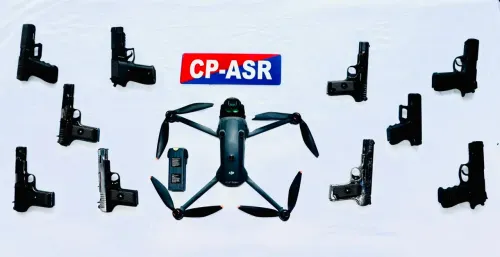
The 'Yudh Nashiyan Virudh' campaign has led to nearly 80,000 arrests and recovery of 486 drones since 1 March 2025 .
Property worth more than ₹336 crore has been frozen; nearly ₹2 crore in informant rewards disbursed this year.
Pharmaceutical drugs smuggled from states such as Himachal Pradesh , Gujarat , and Uttar Pradesh have emerged as the new primary drug enforcement challenge in Punjab.
Punjab Police on Sunday, 13 September 2026, reported a measurable decline in the availability of heroin in the state, attributing the shift to a multi-layered counter-drone strategy implemented in close coordination with the Border Security Force (BSF) along the international border with Pakistan. The announcement underlines one of the most operationally intensive anti-narcotics pushes in Punjab's recent history.
The Anti-Drone Arsenal on the Border
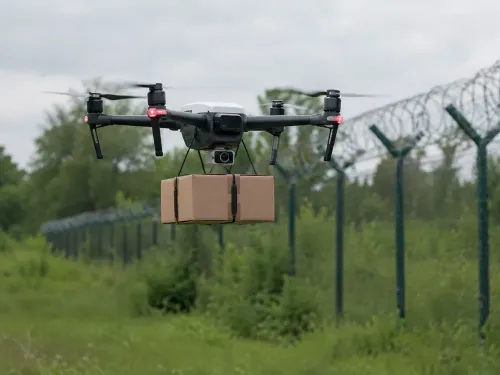
Punjab Police are currently deploying nine anti-drone systems across sensitive border districts. Three 'Baaj Akh' systems — operational in Amritsar, Tarn Taran, and Ferozepur since August 2025 — provide early detection and jamming of rogue drones attempting to ferry narcotics across the border.
In addition, three units of Drone Sense D200 Pro, a long-endurance mobile drone detection platform, were deployed at strategic locations in border districts from 3 September, and are already showing results. According to a police spokesperson, the platform 'precisely detects and pinpoints drone-related activity and actual dropping locations, enabling timely ground intervention.'
Ground Response: Teams, Nakas and CCTV
On the ground, 52 Drone Response Teams (DRTs) comprising 147 police personnel operate in tandem with the BSF, responding to drone alerts, reaching suspected drop locations, conducting searches, and intercepting individuals collecting smuggled consignments. Backing them up are 64 second-line defence nakas staffed by 600 police personnel, complemented by 2,367 CCTV cameras installed at 585 locations across the border belt.
Village Defence Committees (VDCs) in border areas have been formally integrated into the drone response architecture, serving as what officials describe as the 'eyes and ears' of the police — extending surveillance reach into rural communities that were previously difficult to monitor centrally.
Yudh Nashiyan Virudh: Key Numbers
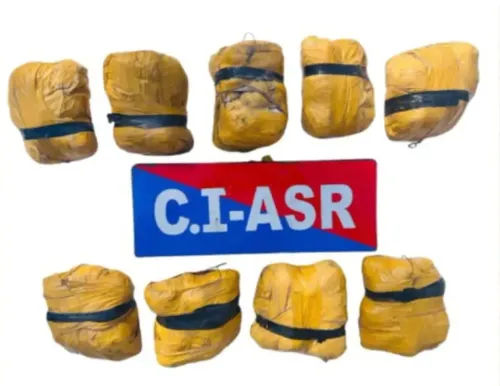
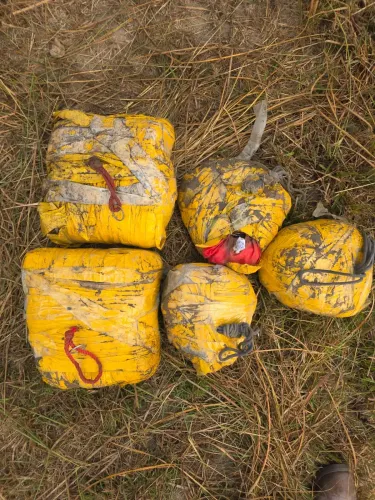
The state-wide 'Yudh Nashiyan Virudh' (War Against Drugs) campaign, running since 1 March 2025, has resulted in the arrest of nearly 80,000 people. A total of 486 drones have been recovered during this period. Financial investigations have led to the freezing of property worth more than ₹336 crore, targeting the economic base of drug networks. Under the reward policy, informants receive ₹25,000 for every drone recovery, with nearly ₹2 crore disbursed in rewards this year alone.
New Threat: Pharmaceutical Drugs from Other States
Despite the heroin decline, Punjab Police flagged that pharmaceutical drugs smuggled from other Indian states have now emerged as the most significant drug law enforcement challenge in the state. Analysis of pharmaceutical seizures indicates that most of these drugs are manufactured not in Punjab but in Himachal Pradesh, Gujarat, Uttar Pradesh, Rajasthan, Haryana, and Delhi, among other states — pointing to a complex inter-state supply chain that border technology alone cannot address.
This development signals that while the drone-heroin corridor is being effectively disrupted, traffickers are adapting, shifting to pharmaceutical abuse vectors that are harder to intercept at the border and require coordination with state governments and the Centre's drug regulatory machinery. Punjab's anti-narcotics battle, by all indications, is far from over.
Point of View
Gujarat, and UP is structurally harder to address than border drone interdiction, because it implicates licensed manufacturers, inter-state transport networks, and regulatory gaps that Punjab Police cannot fix unilaterally. The Centre's drug regulatory machinery and the states where these pharmaceuticals originate must now come into the picture, or Punjab risks winning the drone battle while losing the broader war on addiction.
NationPress
13 Sept 2026
Frequently Asked Questions
How has Punjab reduced heroin availability near the Pakistan border?
Punjab Police deployed nine anti-drone systems — including 'Baaj Akh' jamming units and Drone Sense D200 Pro mobile detection platforms — backed by 52 Drone Response Teams and 2,367 CCTV cameras along the border. This grid, operating in coordination with the BSF, has disrupted drone-based heroin smuggling routes and contributed to a reported decline in heroin availability in the state.
What is the 'Yudh Nashiyan Virudh' campaign and what has it achieved?
'Yudh Nashiyan Virudh' (War Against Drugs) is a Punjab Police-led anti-narcotics campaign launched on 1 March 2025. As of 13 September 2026, it has resulted in nearly 80,000 arrests, recovery of 486 drones, and the freezing of property worth more than ₹336 crore.
What is the new drug threat emerging in Punjab despite the heroin decline?
Punjab Police have identified pharmaceutical drugs smuggled from other Indian states as the most pressing drug enforcement challenge now. Most of these pharmaceuticals are reportedly manufactured in Himachal Pradesh, Gujarat, Uttar Pradesh, Rajasthan, Haryana, and Delhi, pointing to a complex inter-state supply chain that requires multi-state coordination to disrupt.
How are citizens incentivised to report drone activity in Punjab?
Punjab Police's reward policy offers ₹25,000 for every drone recovery based on public information. Nearly ₹2 crore has been disbursed under this policy in the current year, and Village Defence Committees have been formally integrated into the drone response framework as community-level informants.
Which anti-drone systems is Punjab Police using on the border?
Punjab Police are operating three 'Baaj Akh' systems in Amritsar, Tarn Taran, and Ferozepur since August 2025 for detection and jamming, along with three Drone Sense D200 Pro mobile platforms deployed from 3 September in strategic border-district locations, totalling nine anti-drone systems across the state.